
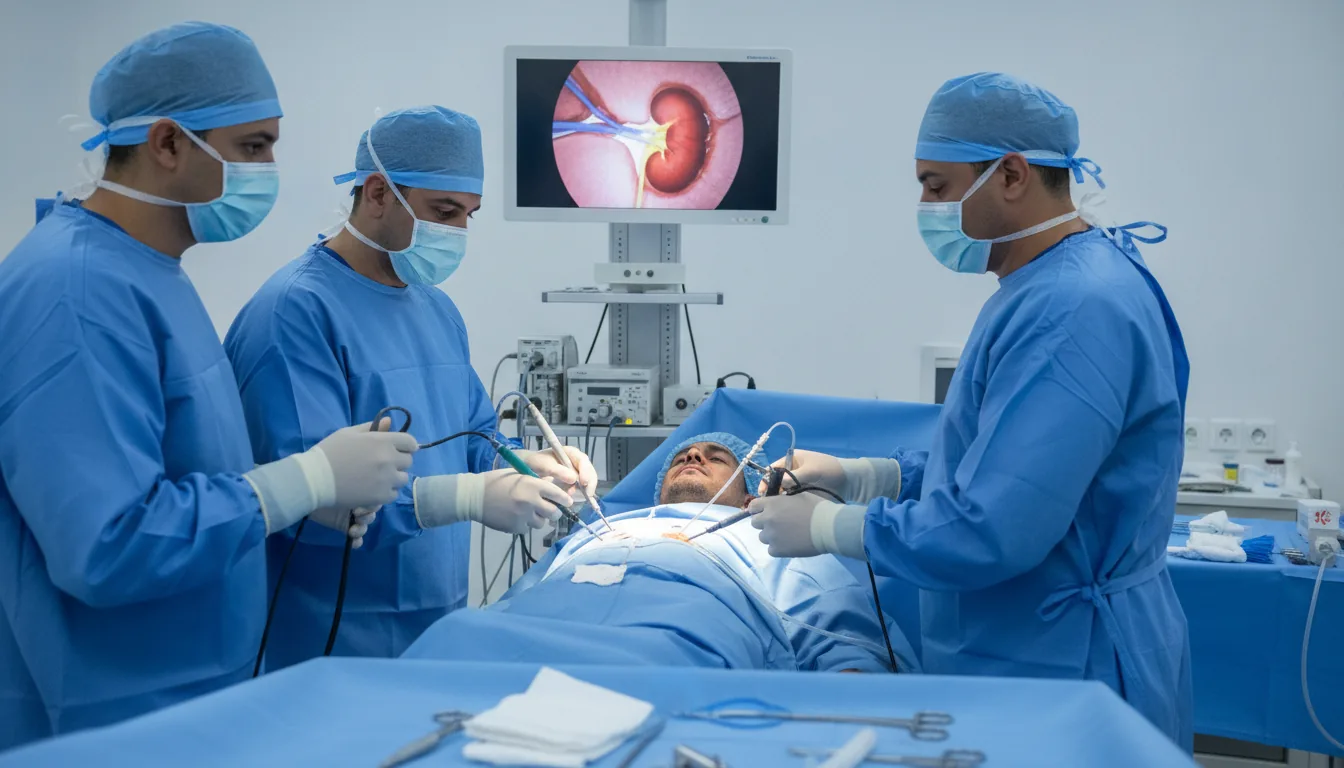
Nephrectomy (kidney removal)
Total or partial removal of a kidney, performed preferably laparoscopically, to treat a tumor or a non-functioning kidney.
What is it?
When is it indicated?
When a CT scan or MRI reveals a kidney tumor, its removal — total or limited to the diseased area — is the reference treatment.
A kidney that no longer works can become a source of infections and pain. Removing it eliminates these complications, with the remaining kidney taking over all the work.
In certain rare cases, a diseased kidney sustains very high blood pressure that medications fail to control. Its removal can help normalize it.
When a kidney malformation causes recurrent pain, infections or stones, surgery may be the best way to resolve the problem permanently.
Preparation
Procedure
General anesthesia
Positioning appropriately on the operating table
Creation of small incisions for the laparoscopic approach (or a single incision for open surgery)
Careful dissection of the kidney and control of its blood vessels
Removal of the entire kidney or of the diseased area only
Careful verification that there is no bleeding, then closure
Close postoperative monitoring
Duration
2 to 3 hours
Aftercare & Recovery
The hospital stay generally lasts a few days. Eating and walking resume early. Kidney function is monitored with simple blood tests, and the remaining kidney gradually compensates. Regular follow-up with the urologist is then put in place.
Risks and side effects
These risks remain rare. Your surgeon will inform you in detail before the procedure.
Request a Quote
Contact us to schedule a consultation or receive a personalized quote.
Request a Quote +216 36 402 000