
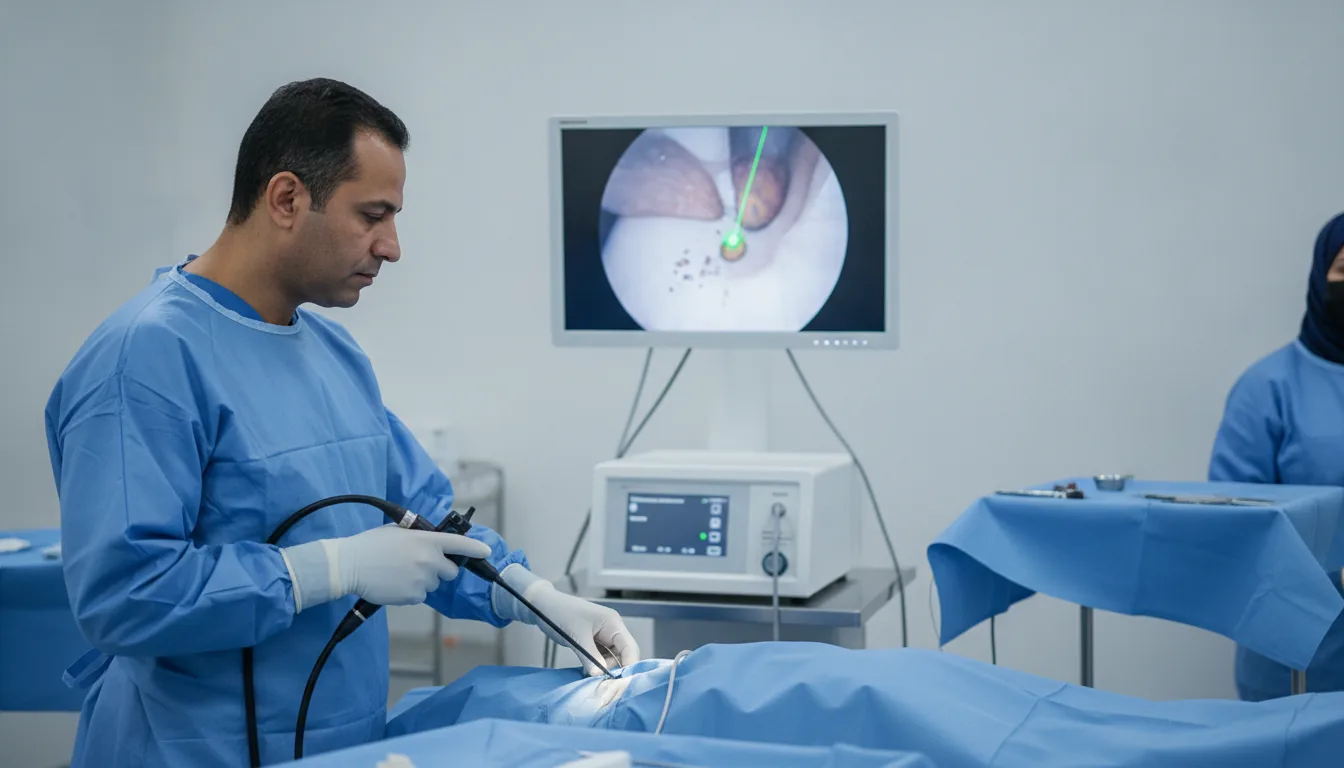
Kidney stone surgery (lithotripsy)
Modern treatment of urinary stones by laser fragmentation, performed through the natural passages in the vast majority of cases.
What is it?
When is it indicated?
Many small stones pass on their own with good hydration. When a stone remains stuck, laser fragmentation gets rid of it without any incision.
Renal colic attacks are among the most intense forms of pain. Treating the responsible stone puts an end to these episodes and prevents their recurrence.
A stone that blocks the flow of urine puts the kidney under pressure and can damage it. Removing it quickly protects kidney function.
A stone can sustain urinary infections, a situation that can become serious. Removing it treats the infection at its source.
Large stones cannot pass naturally: the laser reduces them to fine dust or small fragments that are easy to extract or pass.
Preparation
Procedure
General anesthesia in most cases
Introduction of the endoscope through the natural passages up to the stone
Fragmentation of the stone with the laser under visual control
Extraction of the fragments or natural passage of the dust
Possible placement of a temporary internal stent (JJ stent) to protect the kidney
Monitoring in the recovery room
Duration
30 minutes to 1 hour 30 depending on the size of the stone
Aftercare & Recovery
Returning home is possible the same day or the next day in most cases. If an internal stent has been placed, it is removed at a later consultation. Analysis of the stone helps tailor prevention advice to limit recurrence.
Risks and side effects
These risks remain rare. Your surgeon will inform you in detail before the procedure.
Request a Quote
Contact us to schedule a consultation or receive a personalized quote.
Request a Quote +216 36 402 000