
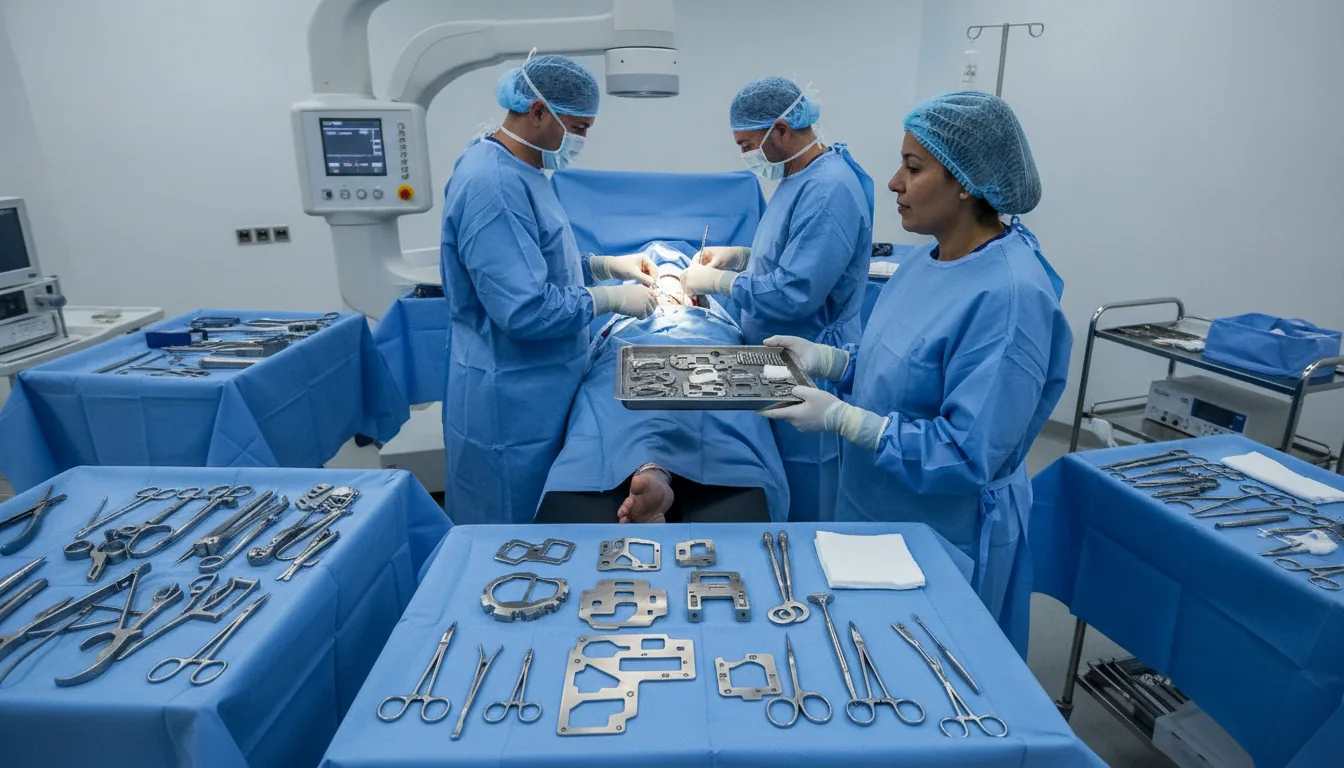
Internal fixation (osteosynthesis)
Surgical fixation of fractures using plates, screws, nails or pins, to allow bone healing under good conditions.
What is it?
When is it indicated?
When the bone fragments are displaced or at risk of moving under a simple cast, fixation with a plate, screws or a nail holds them in a good position during healing.
A fracture that crosses a joint must be reconstructed with great precision to prevent premature wear of the joint.
These frequent fractures, particularly after a fall, most often require prompt surgical fixation so the patient can get up and walk again as soon as possible.
Certain locations or types of fracture heal poorly in a cast: surgical fixation then offers more reliable stability and faster mobilization.
When an old fracture has never healed and remains painful, a new fixation, often combined with a bone graft, restarts the healing of the bone.
Preparation
Procedure
General or regional anesthesia depending on the location
Reduction of the fracture under radiological guidance
Fixation with a plate, nail, screws or pins depending on the type of fracture
Radiological verification of the construct and its stability
Closure and dressing
Supervised early mobilization according to the surgeon's instructions
Duration
45 minutes to 2 hours depending on the fracture
Aftercare & Recovery
Fixation most often allows early mobilization and greater comfort than prolonged immobilization. Bone healing is achieved in a few weeks to a few months, monitored by regular X-rays, with appropriate rehabilitation to regain strength and mobility.
Risks and side effects
These risks remain rare. Your surgeon will inform you in detail before the procedure.
Request a Quote
Contact us to schedule a consultation or receive a personalized quote.
Request a Quote +216 36 402 000