
Spine surgery (herniated disc, scoliosis)
Surgeries/Orthopedic/Spine surgery

Spine surgery (herniated disc, scoliosis)

Surgical management of conditions of the spine: herniated disc, lumbar spinal stenosis, deformities and instabilities.

What is it?

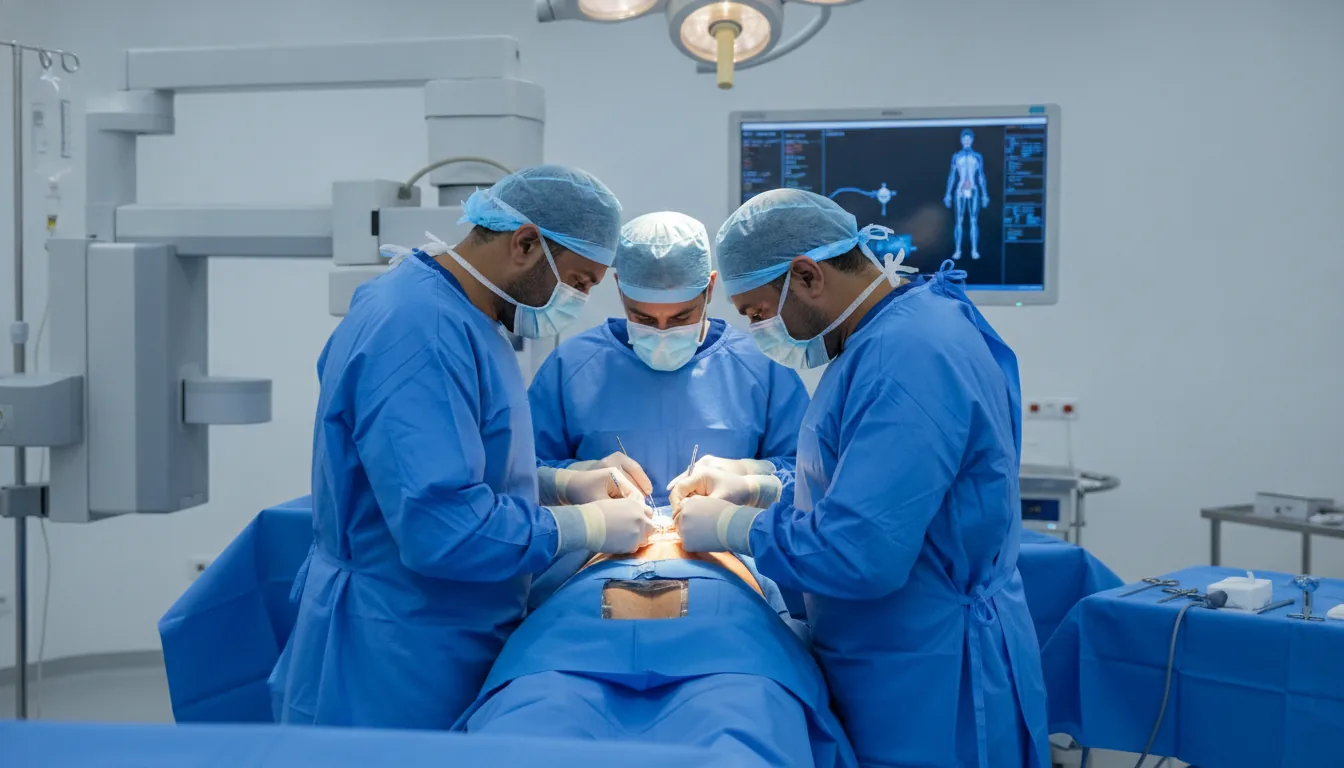
Spine surgery encompasses all procedures performed on the spinal column. The most frequent concern herniated discs, responsible for sciatica or intractable nerve pain, lumbar spinal stenosis, which impairs walking, and deformities such as scoliosis. Certain vertebral instabilities may also require stabilization by fusion (arthrodesis). These procedures are only proposed after well-conducted medical treatment (medication, rehabilitation, injections) has proved insufficient, or in the event of a neurological complication requiring prompt management. The work-up is based on a thorough clinical examination and precise imaging (MRI, CT scan, dynamic X-rays). Modern techniques favor minimally invasive approaches that preserve the back muscles, reduce post-operative pain and shorten hospitalization. Mobilization is early and the return to activities takes place progressively, guided by the care team. At Clinique Pasteur Tunis, spine surgery benefits from complete technical facilities, with fluoroscopic imaging in the operating theater, attentive post-operative monitoring and close coordination with the rehabilitation teams.
Spine surgery (herniated disc, scoliosis)

When is it indicated?

Herniated disc with sciatica or femoral nerve pain resistant to medical treatment

A disc fragment can compress a nerve and cause pain radiating down the leg. When medical treatments are no longer sufficient, surgery frees the nerve and relieves the pain.

Lumbar spinal stenosis impairing walking

With age, the canal housing the nerves of the lower back can narrow and make walking difficult. The operation gives the nerves more space, allowing the patient to walk farther and more comfortably.

Scoliosis or progressive deformity of the spine

When a curvature of the spine worsens and affects posture, breathing or pain, surgical correction may be proposed to stabilize and straighten the back.

Vertebral instability (spondylolisthesis)

A vertebra slipping over its neighbor can cause chronic pain and threaten the nerves. Surgery stabilizes the vertebrae together to eliminate this painful movement.

Nerve compression with neurological deficit

When a compressed nerve begins to lose its strength or sensation, it is important to free it quickly to promote a good recovery.

Certain vertebral fractures

Some spinal fractures are unstable or threaten the nerves and must be fixed surgically so they heal in a good position.

Preparation

1Complete imaging work-up (MRI, CT scan, X-rays)
2Pre-operative anesthesia consultation
3Laboratory work-up and screening for sources of infection
4Stopping smoking strongly recommended to promote healing
5Fast for 6 hours before the operation

Procedure

1

General anesthesia and careful positioning on a dedicated operating table

2

Precise localization of the vertebral level under radiological guidance

3

Minimally invasive approach to the spine whenever possible

4

Release of the compressed nerve structures (discectomy, laminectomy)

5

Stabilization with implants if necessary (fusion)

6

Final radiological check and closure

7

Close post-operative monitoring and early mobilization

Duration

1 to 3 hours depending on the procedure

Aftercare & Recovery

Radicular pain (sciatica, femoral nerve pain) is most often relieved quickly after the nerve is released. The patient gets up the next day and daily activities resume progressively, with instructions to protect the back and an appropriate rehabilitation program.

Risks and side effects

Temporary scar pain
Tear of the nerve envelope (dura mater), generally repaired during the same operation
Recurrence of disc herniation, possible but uncommon
Neurological complications, rare thanks to intra-operative monitoring techniques

These risks remain rare. Your surgeon will inform you in detail before the procedure.

Request a Quote

Contact us to schedule a consultation or receive a personalized quote.

Request a Quote +216 36 402 000

At a glance

Duration: 1 to 3 hours depending on the procedure
Preparation: Required
Dedicated specialist team