
Total hip replacement (THR)
Surgeries/Orthopedic/Hip replacement

Total hip replacement (THR)

Surgical replacement of the worn hip joint with an implant, to restore pain-free walking and lasting mobility.

What is it?

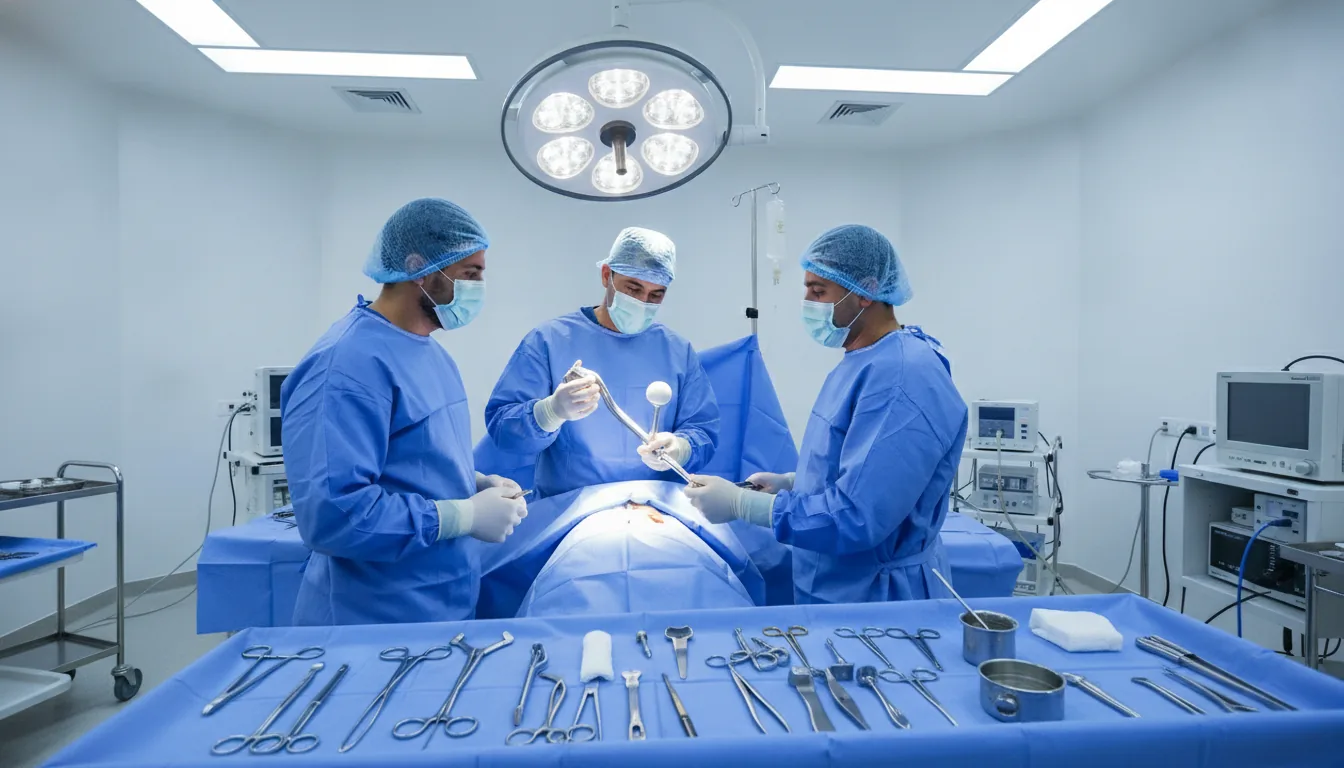
Total hip replacement consists of replacing the damaged hip joint with an implant made up of a femoral stem, a prosthetic head and an acetabular cup. This procedure is one of the most frequently performed and best mastered in orthopedic surgery, with remarkable functional results on pain and mobility. It is primarily intended for patients suffering from advanced wear of the hip cartilage (hip osteoarthritis), when medical treatments are no longer sufficient to relieve the pain and the impact on daily life becomes significant. The choice of implant and surgical approach is tailored to each patient according to their anatomy, age and activity level. Current techniques favor minimally invasive approaches, which preserve the muscles as much as possible and allow a faster recovery. Rehabilitation begins very early, often the day after the operation, with the help of the physiotherapy team. At Clinique Pasteur Tunis, total hip replacement is performed by experienced orthopedic surgeons, in modern operating theaters, with an enhanced recovery after surgery protocol and personalized follow-up until full return to activities.
Total hip replacement (THR)

When is it indicated?

Advanced and disabling hip osteoarthritis (wear of the hip cartilage)

When the hip cartilage is severely worn, every step becomes painful and daily life is limited as a result. Replacing the joint makes it possible to walk comfortably again.

Hip pain resistant to medical treatment

When medication, rehabilitation and injections no longer provide sufficient relief, the prosthesis becomes the most effective solution to eliminate the pain permanently.

Avascular necrosis of the femoral head

This is a condition of the bone of the femoral head, which weakens and deforms due to poor blood supply. The prosthesis replaces the damaged area and makes the pain disappear.

Sequelae of femoral neck fracture

After certain hip fractures, the joint may remain painful or poorly healed. Fitting a prosthesis restores stable, pain-free weight-bearing.

Rheumatoid arthritis or other inflammatory rheumatic diseases affecting the hip

These inflammatory diseases can progressively destroy the hip cartilage. When the joint is too damaged, the prosthesis restores mobility and comfort.

Sequelae of hip malformations or trauma

A hip malformed since childhood or marked by an old accident can wear out prematurely. The prosthesis corrects these sequelae and restores a functional joint.

Preparation

1Consultation with the orthopedic surgeon and complete radiological work-up
2Mandatory anesthesia consultation a few days before the operation
3Pre-operative work-up (blood tests, cardiac assessment if necessary)
4Screening for and treatment of any sources of infection (dental, urinary)
5Fast for 6 hours before the operation
6Plan for the return home and rehabilitation arrangements

Procedure

1

Welcome and admission to the inpatient unit

2

General anesthesia or spinal anesthesia depending on the anesthesiologist's assessment

3

Surgical approach to the hip, most often via a minimally invasive route

4

Removal of the worn joint surfaces

5

Placement of the femoral implant and the cup

6

Verification of the stability and mobility of the prosthesis

7

Closure and transfer to the recovery room

8

Early first mobilization with the physiotherapist

Duration

1 to 2 hours

Aftercare & Recovery

Pain relief is generally rapid and walking resumes within the first few days with a walking aid. Full recovery takes place progressively over a few weeks to a few months, with appropriate rehabilitation. Most patients return to a normal, active daily life.

Risks and side effects

Risks common to all surgery (infection, hematoma), prevented by strict protocols
Risk of deep vein thrombosis, limited by early mobilization and preventive anticoagulant treatment
Dislocation of the prosthesis, rare with current techniques and implants
Wear of the implant in the very long term, monitored during regular follow-up

These risks remain rare. Your surgeon will inform you in detail before the procedure.

Request a Quote

Contact us to schedule a consultation or receive a personalized quote.

Request a Quote +216 36 402 000

At a glance

Duration: 1 to 2 hours
Preparation: Required
Dedicated specialist team