
Shoulder replacement
Surgeries/Orthopedic/Shoulder replacement

Shoulder replacement

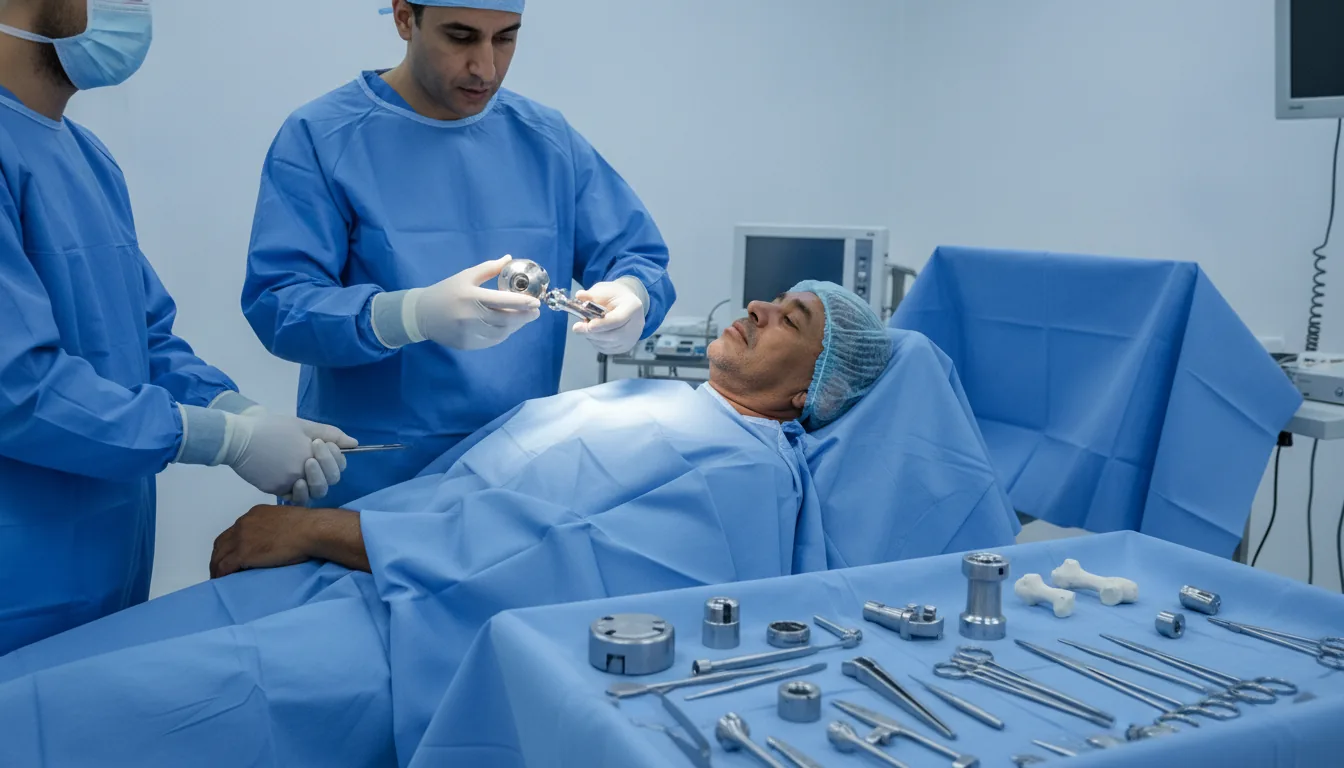
Replacement of the shoulder joint with an anatomic or reverse prosthesis, to relieve pain and restore arm mobility.

What is it?

Shoulder replacement consists of replacing the worn or destroyed joint surfaces of the shoulder with a suitable implant. Depending on the condition of the rotator cuff tendons and the nature of the disease, the surgeon chooses between an anatomic prosthesis, which reproduces the normal anatomy of the shoulder, and a reverse prosthesis, designed to function even when the tendons are too damaged. This procedure is intended for patients suffering from shoulder osteoarthritis, sequelae of complex fractures of the humerus or massive, irreparable rotator cuff tears. It is considered when pain and loss of mobility significantly affect the gestures of daily life. Recovery is based on a short period of immobilization followed by gentle, progressive rehabilitation, supervised by the surgeon and the physiotherapist. Simple everyday gestures are recovered within a few weeks, with mobility continuing to improve over several months. At Clinique Pasteur Tunis, prosthetic shoulder surgery is performed by orthopedic surgeons specialized in the upper limb, with precise planning of each implant and tailor-made rehabilitation support.
Shoulder replacement

When is it indicated?

Painful and disabling shoulder osteoarthritis

When the shoulder cartilage is worn, raising the arm becomes painful, even for simple gestures such as combing one's hair. The prosthesis eliminates this painful friction.

Massive, irreparable rotator cuff tear with loss of function

When the shoulder tendons are too damaged to be repaired, the arm loses its strength. The reverse prosthesis is designed to function despite this wear and to restore mobility.

Sequelae of complex fractures of the upper end of the humerus

Some shoulder fractures leave painful sequelae or a deformed joint. The prosthesis then makes it possible to regain an arm that is usable in everyday life.

Avascular necrosis of the humeral head

This is a condition of the bone of the humeral head, which deforms due to poor blood supply. Prosthetic replacement relieves the pain and preserves movement.

Inflammatory rheumatic diseases destroying the shoulder joint

Inflammatory rheumatic diseases can progressively destroy the shoulder. When treatments are no longer sufficient, the prosthesis restores comfort and range of motion.

Preparation

1Complete imaging work-up (X-rays, CT scan or MRI of the shoulder)
2Pre-operative anesthesia consultation
3Laboratory work-up and screening for sources of infection
4Fast for 6 hours before the operation
5Plan loose-fitting clothing that is easy to put on for the post-operative period

Procedure

1

General anesthesia, often combined with a nerve block of the upper limb

2

Surgical approach at the front of the shoulder

3

Preparation of the bone surfaces of the humerus and the shoulder blade

4

Placement of the anatomic or reverse prosthesis according to the planning

5

Check of stability and range of motion

6

Closure and fitting of a protective sling

Duration

1 to 2 hours

Aftercare & Recovery

Pain is relieved quickly after the operation. The arm is protected by a sling for a few weeks, while progressive rehabilitation makes it possible to recover the gestures of daily life and then an increasingly wide range of motion over the months.

Risks and side effects

Shoulder stiffness, prevented by appropriate rehabilitation
Post-operative hematoma, generally harmless
Infection, rare thanks to strict asepsis protocols
Loosening or wear of the implant in the very long term, monitored during follow-up

These risks remain rare. Your surgeon will inform you in detail before the procedure.

Request a Quote

Contact us to schedule a consultation or receive a personalized quote.

Request a Quote +216 36 402 000

At a glance

Duration: 1 to 2 hours
Preparation: Required
Dedicated specialist team