
Surgery for urological cancers (kidney, bladder, prostate)
Surgeries/Cancer Surgery/Urological cancers

Surgery for urological cancers (kidney, bladder, prostate)

Surgical treatment of tumours of the kidney, bladder and prostate, using minimally invasive techniques whenever possible.

What is it?

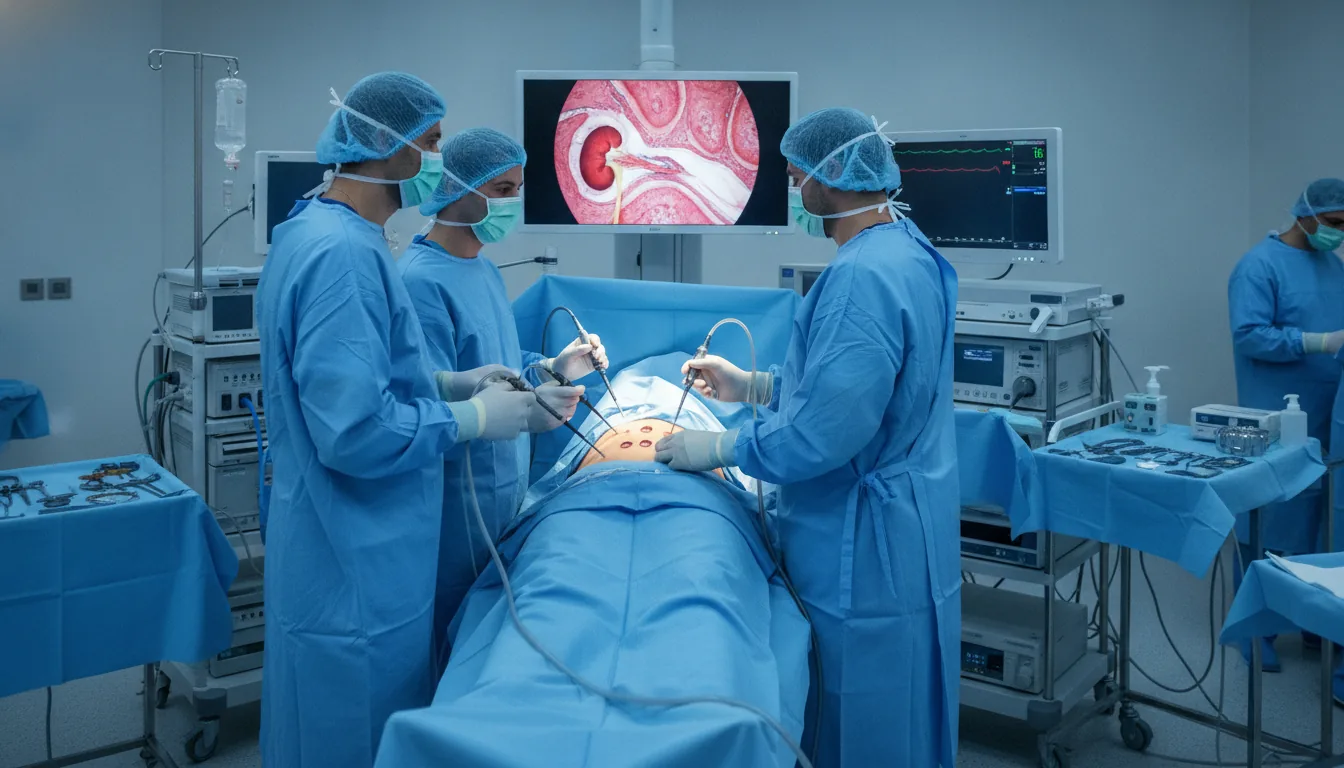
Urological cancer surgery treats tumours of the kidney, bladder, prostate and urinary tract. Depending on the organ and the stage of the disease, it may consist of a partial removal preserving the organ, or a complete removal combined with lymph node dissection. The choice of strategy is always validated at a multidisciplinary team meeting, and minimally invasive techniques — laparoscopy, endoscopic surgery through the natural passages for certain bladder tumours — are favoured whenever they offer the same oncological quality, in order to ease the post-operative course. At Clinique Pasteur Tunis, the urologists manage this entire pathway: initial work-up with on-site imaging, surgery in fully equipped operating theatres, post-operative monitoring and long-term follow-up. Pathological analysis of the surgical specimens is carried out and precisely guides the next stage of treatment.
Surgery for urological cancers (kidney, bladder, prostate)

When is it indicated?

Kidney tumour discovered on imaging

Often detected during an imaging examination, kidney tumours can be removed while preserving the rest of the organ whenever possible.

Bladder tumour diagnosed by endoscopy

Bladder tumours are most often treated through the natural passages, without an incision, using endoscopic instruments that remove the lesion.

Localised prostate cancer after a complete work-up

When the disease remains confined to the prostate, removal of the gland offers very good chances of cure; the strategy is always discussed after a complete work-up.

Tumours of the upper urinary tract

The ducts that carry urine from the kidney to the bladder can also develop tumours, treated with surgery adapted to their location.

Testicular tumours requiring removal

Removal of the affected testicle is the first step in treating these tumours, whose prognosis is generally very favourable in young men.

Preparation

1Complete urological work-up: imaging, endoscopy and biopsies depending on the organ
2Presentation of the case at a multidisciplinary team meeting
3Pre-operative work-up and anaesthesia consultation
4Adjustment of anticoagulants according to medical advice
5Fast for 6 hours before the procedure

Procedure

1

General anaesthesia

2

Appropriate approach: endoscopy through the natural passages, laparoscopy or open surgery

3

Removal of the tumour, partial or total depending on the situation

4

Lymph node dissection when oncological rules require it

5

Urinary reconstruction or diversion if necessary

6

Post-operative monitoring adapted to the procedure performed

Duration

1 to 5 hours depending on the organ and the technique

Aftercare & Recovery

The post-operative course depends on the organ treated: a short hospital stay for endoscopic procedures, a more closely supervised convalescence for major removals. The pathology result guides the next stage of treatment, and a regular urological follow-up schedule is put in place.

Risks and side effects

Bleeding or infection, uncommon and treated promptly
Temporary urinary disturbances depending on the procedure performed
Possible impact on continence or sexual function for certain operations, explained beforehand and supported

These risks remain rare. Your surgeon will inform you in detail before the procedure.

Request a Quote

Contact us to schedule a consultation or receive a personalized quote.

Request a Quote +216 36 402 000

At a glance

Duration: 1 to 5 hours depending on the organ and the technique
Preparation: Required
Dedicated specialist team