
Surgery for thyroid cancers
Surgeries/Cancer Surgery/Thyroid cancers

Surgery for thyroid cancers

Partial or total removal of the thyroid for a suspicious nodule or confirmed cancer, with particular attention to the nerves of the voice and the parathyroid glands.

What is it?

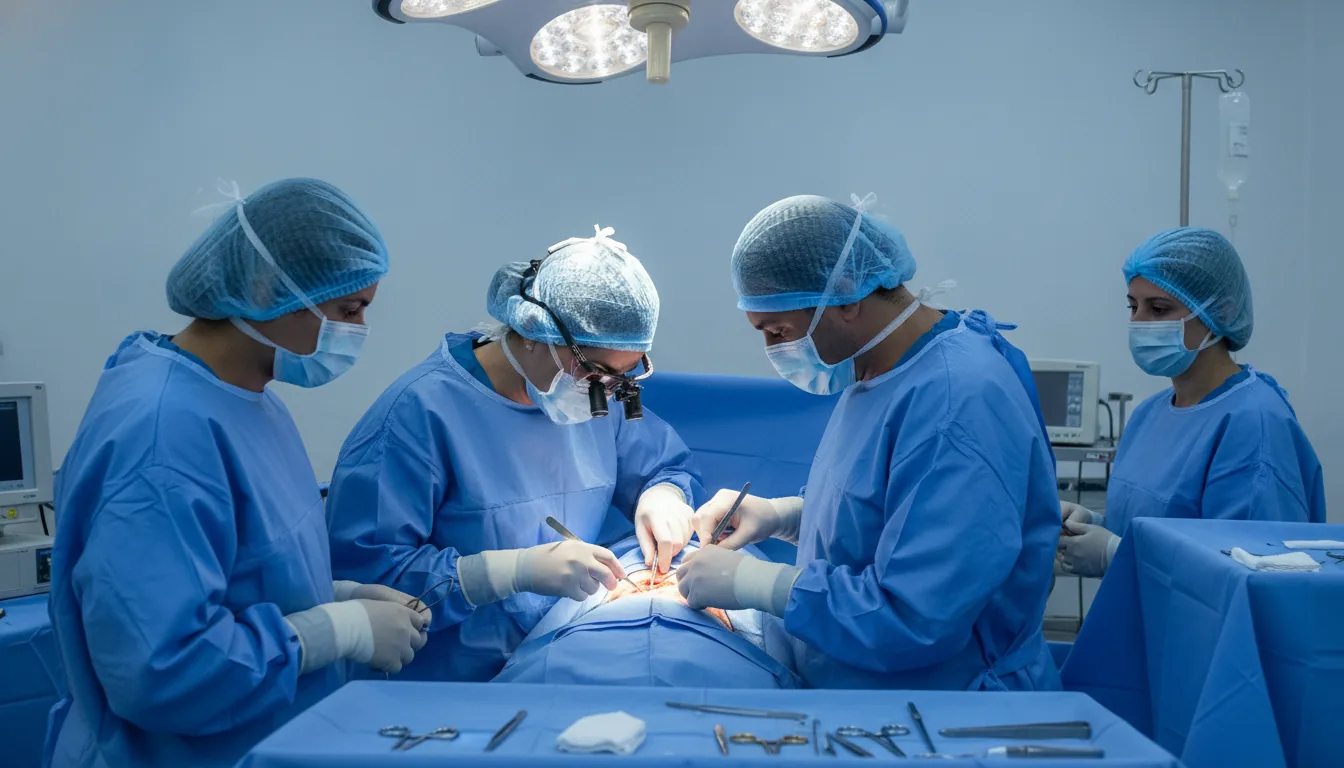
Surgery is the first-line treatment for most thyroid cancers, whose prognosis is generally favourable. It consists of removing one lobe of the gland or the whole gland, sometimes together with the neighbouring lymph nodes, depending on the nature and extent of the lesion. The operation is performed through a discreet incision at the base of the neck. Two structures receive constant attention: the recurrent laryngeal nerves, which control the vocal cords, and the parathyroid glands, which regulate calcium. Identifying and preserving them is at the heart of the surgical technique. At Clinique Pasteur Tunis, thyroid surgery is performed by experienced surgeons, working with the endocrinologists for the work-up and follow-up. Pathological analysis of the surgical specimen is carried out, including frozen-section examination during the procedure if necessary, and simple hormone replacement therapy is put in place when the gland is removed entirely.
Surgery for thyroid cancers

When is it indicated?

Thyroid nodule that is suspicious on needle aspiration or ultrasound

When the examinations cannot formally rule out a cancer, removal of the nodule provides a definitive answer while treating the lesion.

Thyroid cancer confirmed by tissue samples

Surgery is the first-line treatment for thyroid cancers, whose course is most often very favourable after the operation.

Nodular goitre with an associated suspicious nodule

When an enlarged gland harbours a doubtful nodule, removing the affected area treats the goitre and resolves the doubt at the same time.

Nodule growing in size or compressing neighbouring organs

A growing nodule can interfere with swallowing, breathing or the voice: its removal relieves these symptoms and allows its complete analysis.

Preparation

1Complete work-up: neck ultrasound, needle aspiration of the nodule and hormone assays
2Examination of the vocal cords before the procedure if necessary
3Anaesthesia consultation
4Fast for 6 hours before the procedure

Procedure

1

General anaesthesia

2

Discreet incision at the base of the neck, in a natural skin fold

3

Identification and preservation of the recurrent laryngeal nerves and the parathyroid glands

4

Removal of the affected lobe or of the whole gland depending on the case

5

Frozen-section analysis during the procedure if necessary

6

Associated lymph node dissection when the situation requires it

7

Careful closure for a discreet scar

Duration

1 to 3 hours

Aftercare & Recovery

The hospital stay is short and the scar, placed in a fold of the neck, becomes very discreet over time. In the event of total removal, simple daily hormone replacement therapy takes over the function of the gland. The definitive pathology result guides the follow-up, organised with the endocrinologist.

Risks and side effects

Temporary change in the voice, most often reversible
Temporary drop in blood calcium, corrected with supplementation
Post-operative neck haematoma, rare and closely monitored
Scar, usually fine and discreet

These risks remain rare. Your surgeon will inform you in detail before the procedure.

Request a Quote

Contact us to schedule a consultation or receive a personalized quote.

Request a Quote +216 36 402 000

At a glance

Duration: 1 to 3 hours
Preparation: Required
Dedicated specialist team