
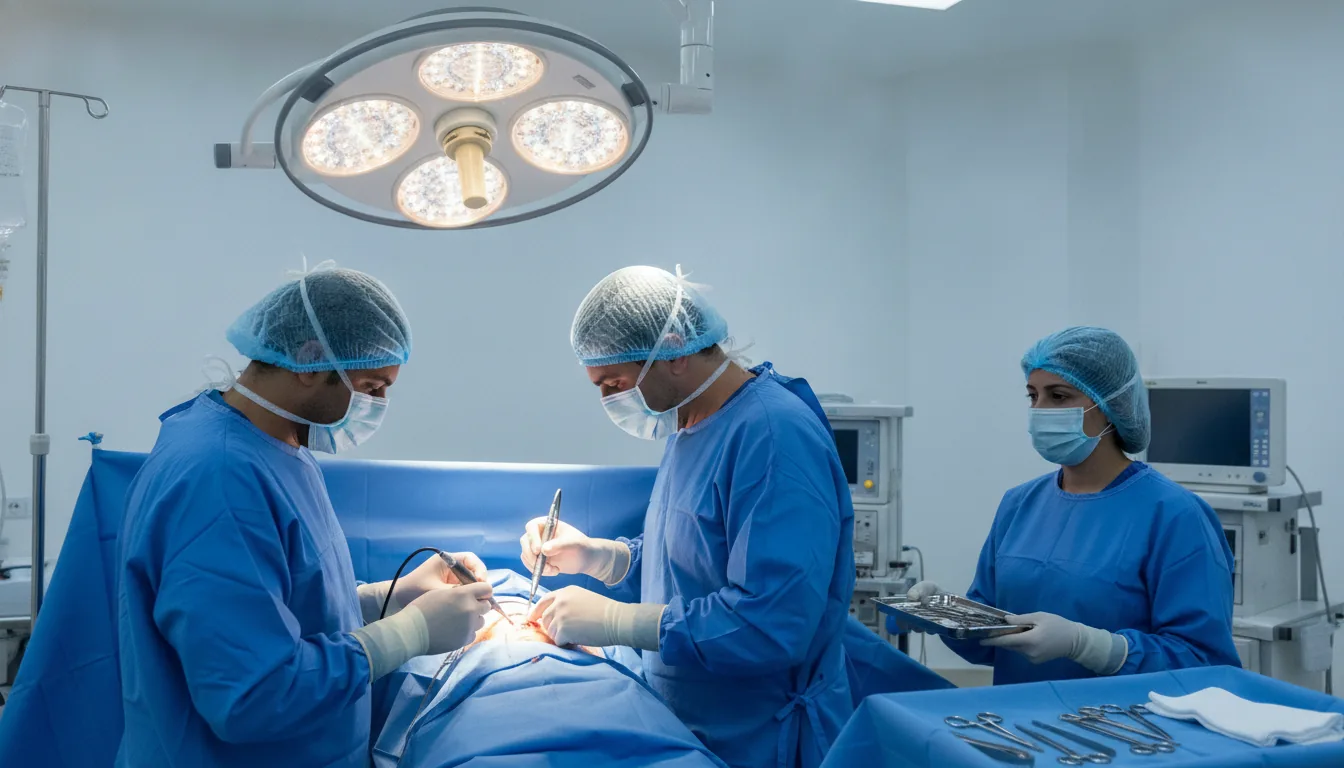
Breast cancer surgery
Surgeries/Cancer Surgery/Breast cancers

Breast cancer surgery

Surgical treatment of breast cancer, breast-conserving whenever possible, with the sentinel lymph node technique and personalised support.

What is it?

Surgery is a cornerstone of breast cancer treatment. Whenever the size and location of the tumour allow it, breast-conserving treatment is favoured: only the diseased area is removed, with safety margins, preserving the breast. When complete removal (mastectomy) is necessary, reconstruction can be considered, either immediate or delayed. Assessment of the lymph nodes in the armpit is an integral part of the treatment: in many cases, the sentinel lymph node technique makes it possible to analyse only the first draining nodes and to avoid an extensive dissection when it is not necessary. At Clinique Pasteur Tunis, each case is discussed at a multidisciplinary team meeting bringing together the surgeon, oncologist and radiologist, and the patient is supported at every stage, including psychologically. Pathological analysis of the surgical specimens is carried out, with frozen-section examination during the procedure when useful.
Breast cancer surgery

When is it indicated?

Breast cancer confirmed by biopsy

Once the diagnosis has been established by biopsy, surgery removes the diseased area, conserving the breast whenever the size and location of the tumour allow it.

Suspicious breast lesion requiring diagnostic removal

When an image remains doubtful despite the examinations, removing the lesion to analyse it in full provides a clear and definitive answer.

Extensive precancerous lesions (carcinoma in situ)

These still-localised lesions have not crossed the boundaries of the tissue where they arose: removing them at this stage offers excellent chances of cure.

Local recurrence after breast-conserving treatment

If the disease reappears in a previously treated breast, appropriate further surgery is offered, as part of a strategy reviewed by the team.

Risk-reducing surgery in very specific situations, after specialist advice

In some women with a very high hereditary risk, preventive surgery can be considered, always after specialist advice and supported reflection.

Preparation

1Complete breast work-up: mammography, ultrasound, MRI if necessary and biopsy
2Presentation of the case at a multidisciplinary team meeting
3Radiological localisation of the lesion before the procedure if it is not palpable
4Anaesthesia consultation
5Fast for 6 hours before the procedure

Procedure

1

General anaesthesia

2

Removal of the tumour with safety margins (breast-conserving treatment) or mastectomy depending on the case

3

Identification and removal of the sentinel lymph node, or axillary dissection if necessary

4

Frozen-section examination during the procedure when useful

5

Careful reshaping of the breast for an optimal aesthetic result

6

Discreet closure and appropriate dressing

Duration

1 to 3 hours

Aftercare & Recovery

The hospital stay is short and pain is generally moderate. The complete pathology results, available after a few days, are presented at the multidisciplinary team meeting to define any additional treatments and the follow-up. The team supports the patient at every stage, including for a possible reconstruction project.

Risks and side effects

Haematoma or infection of the operated area, uncommon
Swelling of the arm (lymphoedema) after axillary dissection, prevented through monitoring and appropriate advice
Altered sensation in the operated area, often temporary
Possible need for further surgery depending on the definitive margin results

These risks remain rare. Your surgeon will inform you in detail before the procedure.

Request a Quote

Contact us to schedule a consultation or receive a personalized quote.

Request a Quote +216 36 402 000

At a glance

Duration: 1 to 3 hours
Preparation: Required
Dedicated specialist team