
Surgery for gynaecological cancers
Surgeries/Cancer Surgery/Gynaecological cancers

Surgery for gynaecological cancers

Surgical management of cancers of the uterus, cervix, ovary and other gynaecological cancers, within a multidisciplinary framework.

What is it?

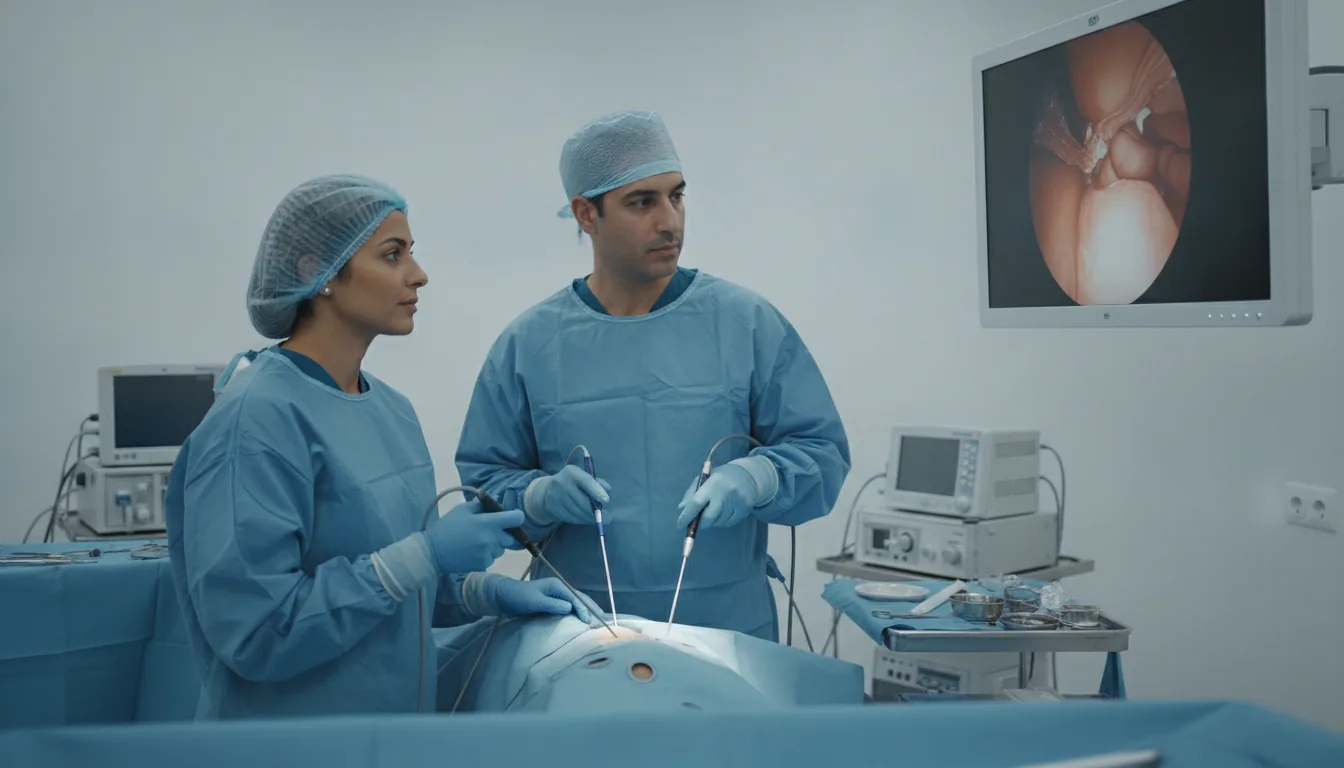
Gynaecological cancer surgery treats tumours of the uterus, cervix, ovaries, fallopian tubes, vagina and vulva. Depending on the location and the stage, it may range from a conservative procedure to a more extensive removal combined with pelvic lymph node dissection. The strategy is defined for each patient at a multidisciplinary team meeting, taking her personal situation into account, in particular any wish to preserve fertility when the disease allows it. Minimally invasive approaches are used whenever they are appropriate from an oncological standpoint. At Clinique Pasteur Tunis, patients are cared for by gynaecological surgeons experienced in oncology, in an attentive and respectful environment. Pathological analysis of the surgical specimens is carried out, including frozen-section examination during the procedure when useful, and psychological support can be offered throughout the pathway.
Surgery for gynaecological cancers

When is it indicated?

Cancer of the endometrium (body of the uterus) confirmed by tissue sampling

Often revealed by unusual bleeding, this cancer is treated first and foremost by surgery, with a good prognosis when it is discovered early.

Cervical cancer suitable for surgical treatment

At certain stages, surgery is the reference treatment for cervical cancer, sometimes with fertility-preserving techniques in young women.

Suspicious or confirmed ovarian tumours

When faced with a suspicious ovarian mass, surgery makes it possible both to determine its nature and to remove it according to oncological rules.

Extensive precancerous lesions requiring removal

Removing a lesion before it transforms is the best way to prevent a cancer: these preventive procedures are most often simple and conservative.

Selected cancers of the vulva or vagina

These rarer cancers call for surgery adapted to each situation, decided at a multidisciplinary team meeting and supported with particular care.

Preparation

1Complete work-up: gynaecological examination, imaging (MRI, CT scan) and tissue sampling
2Presentation of the case at a multidisciplinary team meeting
3Discussion with the patient of the options and their consequences, including on fertility
4Anaesthesia consultation and pre-operative work-up
5Fast for 6 hours before the procedure

Procedure

1

General anaesthesia

2

Appropriate approach: laparoscopy, vaginal route or incision depending on the situation

3

Removal of the tumour according to oncological rules

4

Pelvic lymph node dissection when the stage requires it

5

Frozen-section analysis during the procedure if necessary

6

Attentive post-operative monitoring

Duration

2 to 4 hours depending on the procedure

Aftercare & Recovery

Convalescence is gradual, supported by the care team. The pathology results, discussed at the multidisciplinary team meeting, determine whether additional treatment is needed and set the pace of gynaecological follow-up.

Risks and side effects

Post-operative haematoma or infection, uncommon
Lymphocele or swelling of the lower limbs after lymph node dissection, monitored and managed
Temporary urinary disturbances depending on the extent of the procedure
Impact on fertility for certain operations, always discussed beforehand

These risks remain rare. Your surgeon will inform you in detail before the procedure.

Request a Quote

Contact us to schedule a consultation or receive a personalized quote.

Request a Quote +216 36 402 000

At a glance

Duration: 2 to 4 hours depending on the procedure
Preparation: Required
Dedicated specialist team