
Laparoscopic adrenalectomy
Surgeries/Laparoscopic/Adrenalectomy

Laparoscopic adrenalectomy

Removal of an adrenal gland by laparoscopy, the gold-standard technique for accessible adrenal tumours.

What is it?

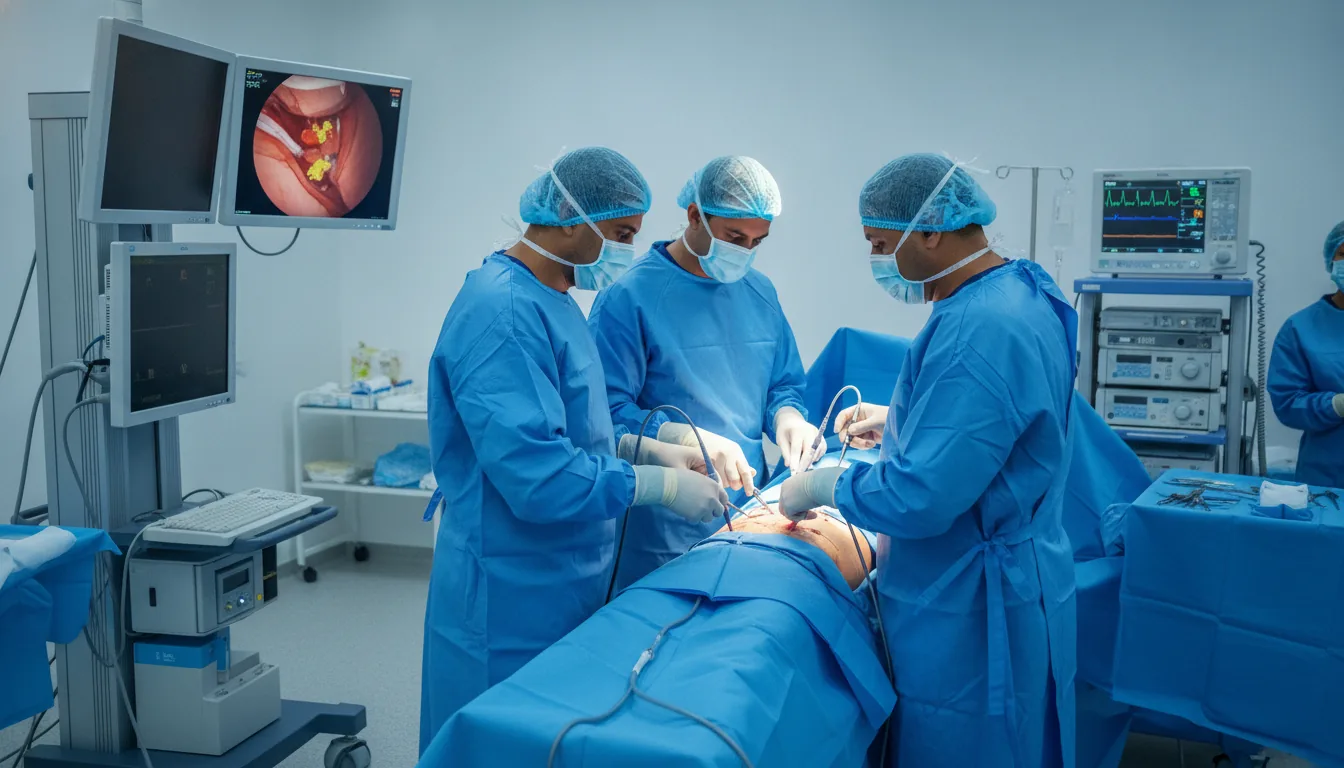
The adrenal glands, located above each kidney, produce essential hormones. Certain tumours, most often benign, can develop in them and secrete hormones in excess, causing hypertension or other disorders; others warrant removal because of their size or appearance. Laparoscopic adrenalectomy involves removing the affected gland through small incisions, under camera guidance. This approach has become the standard for most adrenal tumours: it offers remarkable dissection precision in this deep region, with a much simpler recovery than open surgery. At Clinique Pasteur Tunis, this procedure is prepared in close collaboration with endocrinologists and anaesthetists, particularly when the tumour secretes hormones, so as to manage the operation in complete safety. The surgical specimen is sent for pathological analysis.
Laparoscopic adrenalectomy

When is it indicated?

Adrenal tumour secreting hormones in excess (Conn adenoma, Cushing syndrome, phaeochromocytoma)

When a small tumour of the adrenal gland produces too many hormones, it can cause hypertension or other disorders; removing it treats the cause.

Adrenal tumour of significant size discovered on imaging

A large adrenal tumour is removed as a precaution, even in the absence of symptoms.

Adrenal lesion of suspicious appearance requiring excision

When imaging shows a lesion of unusual appearance, its removal allows it to be analysed and any doubt to be ruled out.

Arterial hypertension of adrenal origin confirmed by the work-up

When high blood pressure is caused by an overactive adrenal gland, the operation can normalise it or reduce the need for treatments.

Preparation

1Complete endocrine work-up to characterise the hormone secretion
2Precise imaging of the gland (CT scan or MRI)
3Specific drug preparation if the tumour secretes hormones
4Specialised anaesthesia consultation
5Fasting for 6 hours before the procedure

Procedure

1

General anaesthesia with enhanced haemodynamic monitoring

2

Appropriate positioning and introduction of the instruments through small incisions

3

Careful dissection of the adrenal gland and its vessels

4

Vascular control followed by removal of the gland in a protective bag

5

Check for absence of bleeding

6

Closure of the incisions and close post-operative monitoring

Duration

1 hour 30 to 3 hours

Aftercare & Recovery

Recovery is generally straightforward, with a short hospital stay. When the tumour was secreting hormones, symptoms such as hypertension most often improve gradually. Endocrine follow-up is organised, with adjustment of hormone treatments if needed.

Risks and side effects

Blood pressure fluctuations during the procedure, anticipated by preparation and anaesthetic monitoring
Bleeding, rare thanks to early vascular control
Adrenal insufficiency requiring temporary or long-term hormone treatment depending on the case

These risks remain rare. Your surgeon will inform you in detail before the procedure.

Request a Quote

Contact us to schedule a consultation or receive a personalized quote.

Request a Quote +216 36 402 000

At a glance

Duration: 1 hour 30 to 3 hours
Preparation: Required
Dedicated specialist team