
Laparoscopic colorectal surgery
Surgeries/Laparoscopic/Colorectal surgery

Laparoscopic colorectal surgery

Laparoscopic resections of the colon and rectum, for faster recovery and a lighter post-operative course.

What is it?

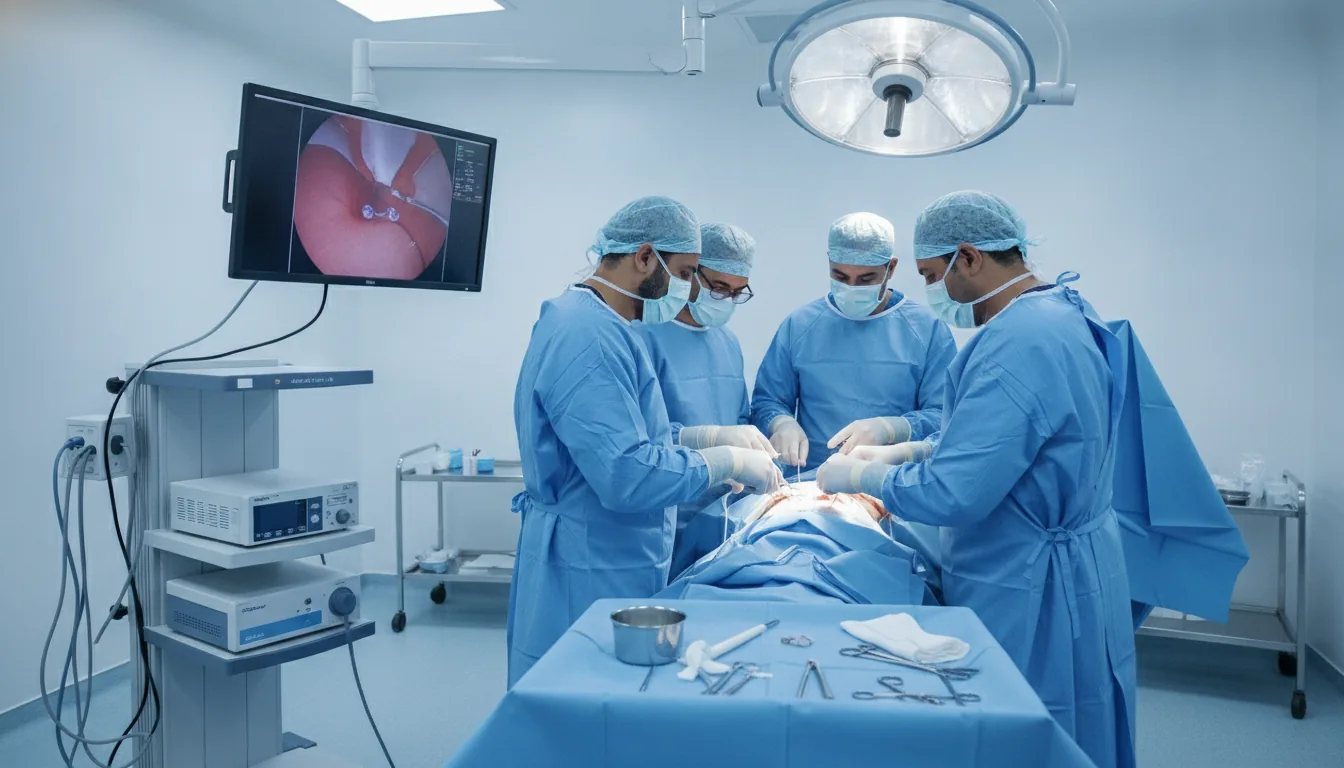
Laparoscopic colorectal surgery makes it possible to treat diseases of the colon and rectum — complicated diverticula, tumours, certain inflammatory diseases — through small incisions, under the guidance of a high-definition camera. The diseased segment is freed, removed, and digestive continuity is then restored during the same operation whenever possible. Compared with open surgery, the laparoscopic approach reduces pain, shortens the hospital stay and allows an earlier return of bowel function and eating, while offering the same quality of treatment of the disease. At Clinique Pasteur Tunis, these procedures are performed by experienced digestive surgeons, in operating theatres equipped with latest-generation laparoscopic towers, with an attentive post-operative recovery programme: early mobilisation, gradual return to eating and support from the nursing team.
Laparoscopic colorectal surgery

When is it indicated?

Tumours of the colon or rectum requiring resection

When a tumour is discovered in the colon or rectum, removing the affected segment is the gold-standard treatment.

Complicated or recurrent diverticular disease

When small pockets formed on the colon become repeatedly infected, removing the weakened segment puts an end to the attacks.

Inflammatory bowel diseases resistant to medical treatment

When medication is no longer sufficient to control inflammation of the intestine, surgery removes the most affected area.

Extensive polyps that cannot be removed endoscopically

When a polyp is too extensive to be removed during a colonoscopy, minimally invasive surgical resection is proposed.

Rectal prolapse requiring surgical correction

When the rectum descends abnormally, an operation repositions and fixes it to restore everyday comfort.

Preparation

1Complete work-up: colonoscopy, imaging and blood tests
2Anaesthesia consultation
3Bowel preparation according to the instructions provided
4Fasting for 6 hours before the procedure
5Adjustment of ongoing treatments according to medical advice

Procedure

1

General anaesthesia

2

Introduction of the camera and instruments through small incisions

3

Mobilisation of the affected segment of colon or rectum

4

Resection of the diseased area

5

Restoration of digestive continuity by suturing or stapling

6

Careful checking followed by closure of the incisions

7

Early mobilisation and gradual return to eating from the first days

Duration

2 to 4 hours depending on the procedure

Aftercare & Recovery

Bowel function usually resumes within a few days and the hospital stay is shorter than after open surgery. The surgical specimen undergoes pathological analysis, the results of which guide further management and follow-up.

Risks and side effects

Transient bowel disturbances during convalescence
Anastomotic leak, a rare complication monitored closely
Wound infection, uncommon with the minimally invasive approach
Conversion to open surgery if necessary, in the patient's best interest

These risks remain rare. Your surgeon will inform you in detail before the procedure.

Request a Quote

Contact us to schedule a consultation or receive a personalized quote.

Request a Quote +216 36 402 000

At a glance

Duration: 2 to 4 hours depending on the procedure
Preparation: Required
Dedicated specialist team