
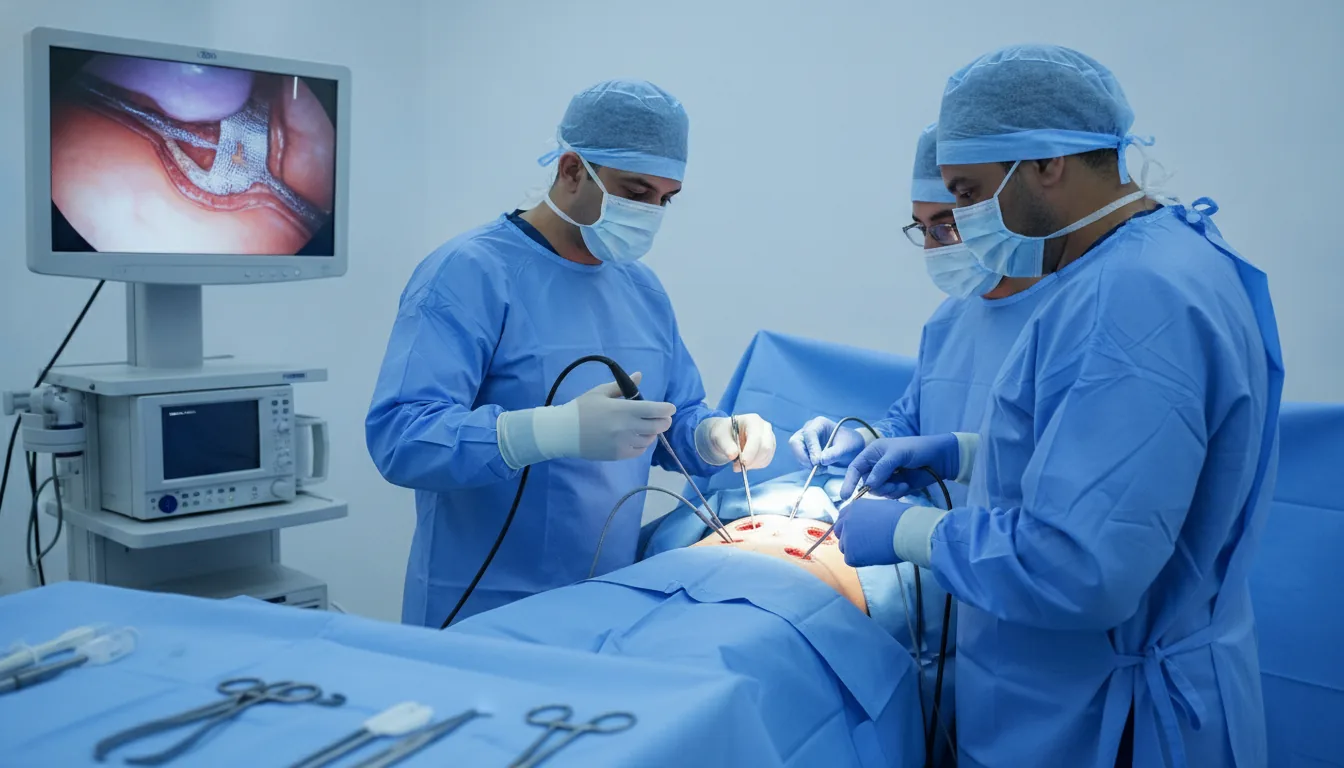
Laparoscopic hernia repair
Surgeries/Laparoscopic/Hernia repair

Laparoscopic hernia repair

Minimally invasive repair of abdominal wall hernias (inguinal, umbilical) with mesh reinforcement and rapid recovery.

What is it?

A hernia is the passage of part of the abdominal contents through a weak point in the wall, most often at the groin (inguinal hernia) or the navel. Laparoscopic repair corrects this weakness from the inside, through small incisions, by positioning a mesh reinforcement that durably strengthens the wall. This minimally invasive approach offers appreciated advantages: reduced post-operative pain, discreet scars, and a rapid return to walking and normal activities. It is particularly valuable for hernias on both sides, treated during the same operation, and for recurrences after conventional surgery. At Clinique Pasteur Tunis, laparoscopic hernia repair is performed with a short hospital stay, often as day surgery, by surgeons highly experienced in abdominal wall repair techniques. The choice of technique is discussed with each patient during the consultation.
Laparoscopic hernia repair

When is it indicated?

Bothersome or enlarging inguinal hernia

When a lump appears in the groin crease and becomes bothersome or grows, repairing it prevents pain and complications.

Bilateral inguinal hernia, treated in a single operation

When both sides of the groin are affected, laparoscopy makes it possible to repair both hernias during the same operation.

Hernia recurrence after conventional surgery

When a previously operated hernia reappears, approaching it from inside the abdomen avoids the previous scar and provides a solid repair.

Umbilical or midline (linea alba) hernia

A weakness of the wall at the navel or in the middle of the abdomen can be reinforced using the same gentle technique.

Prevention of the risk of hernia strangulation

Repairing the hernia prevents a portion of intestine from becoming trapped in it, a painful situation that would require emergency surgery.

Preparation

1Surgical consultation to confirm the diagnosis and choose the technique
2Pre-operative work-up and anaesthesia consultation
3Fasting for 6 hours before the procedure
4Adjustment of anticoagulants according to medical advice
5Pre-operative shower according to the instructions provided

Procedure

1

General anaesthesia

2

Small incisions to introduce the camera and instruments

3

Return of the hernia contents into the abdomen

4

Placement of a mesh reinforcement covering the area of weakness

5

Fixation of the mesh according to the chosen technique

6

Closure of the incisions with absorbable sutures

Duration

45 minutes to 1 hour 30

Aftercare & Recovery

Walking resumes the same day and discharge takes place on the day of the procedure or the next day. Pain is generally moderate and the return to work occurs within a few days, avoiding heavy lifting during the period advised by the surgeon.

Risks and side effects

Haematoma or transient swelling of the operated area
Residual pain, most often transient
Recurrence, rare with mesh reinforcement techniques

These risks remain rare. Your surgeon will inform you in detail before the procedure.

Request a Quote

Contact us to schedule a consultation or receive a personalized quote.

Request a Quote +216 36 402 000

At a glance

Duration: 45 minutes to 1 hour 30
Preparation: Required
Dedicated specialist team