
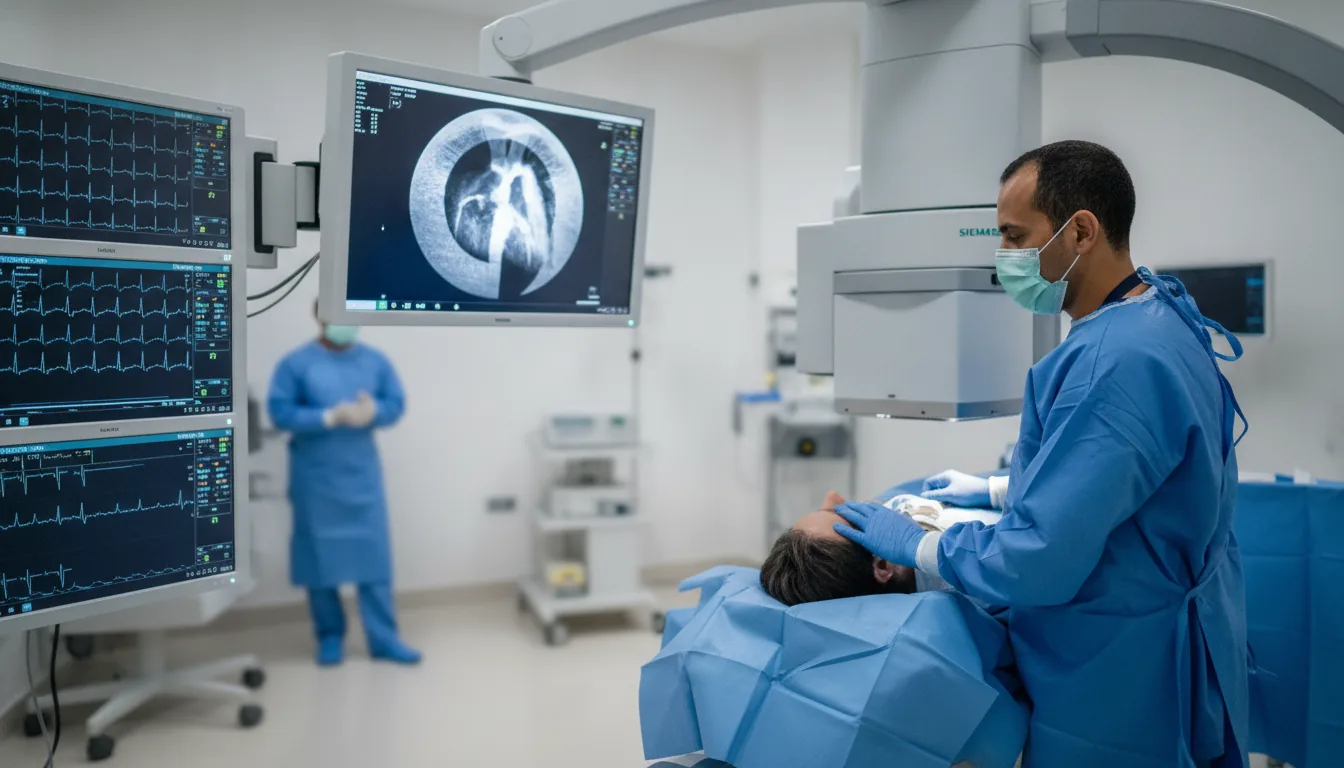
Pacemaker and defibrillator implantation
Implantation of cardiac devices that regulate the heart's rhythm or protect it against serious rhythm disorders.
What is it?
When is it indicated?
When the heart beats too slowly and causes fatigue or fainting spells, the pacemaker stimulates it to maintain an appropriate rhythm.
When the heart's electrical current flows poorly between its chambers, the pacemaker takes over to ensure regular beats.
When losses of consciousness are linked to an excessively slow heart rhythm, the pacemaker prevents them effectively.
In patients at risk of dangerous racing of the heart, the defibrillator monitors continuously and intervenes automatically if needed.
When the heart is weakened, certain devices help it beat in a more coordinated way and protect it from serious rhythm disorders.
Preparation
Procedure
Positioning in a dedicated room and local anaesthesia with sedation
Small incision below the collarbone
Introduction of the leads through a vein under X-ray guidance
Positioning of the leads in the heart and function testing
Connection to the generator and closure of the subcutaneous pocket
Final check of the device before returning to the room
Duration
1 to 2 hours
Aftercare & Recovery
The device is operational immediately. After a short hospital stay of 24 to 48 hours, the patient quickly resumes activities, simply avoiding wide arm movements on the implanted side for a few weeks. Regular device checks are scheduled in consultation.
Risks and side effects
These risks remain rare. Your surgeon will inform you in detail before the procedure.
Request a Quote
Contact us to schedule a consultation or receive a personalized quote.
Request a Quote +216 36 402 000