
Closed-heart cardiac surgery
Surgeries/Cardiovascular/Closed-heart surgery

Closed-heart cardiac surgery

Cardiac procedures performed without stopping the heart or using cardiopulmonary bypass, on a heart that keeps beating.

What is it?

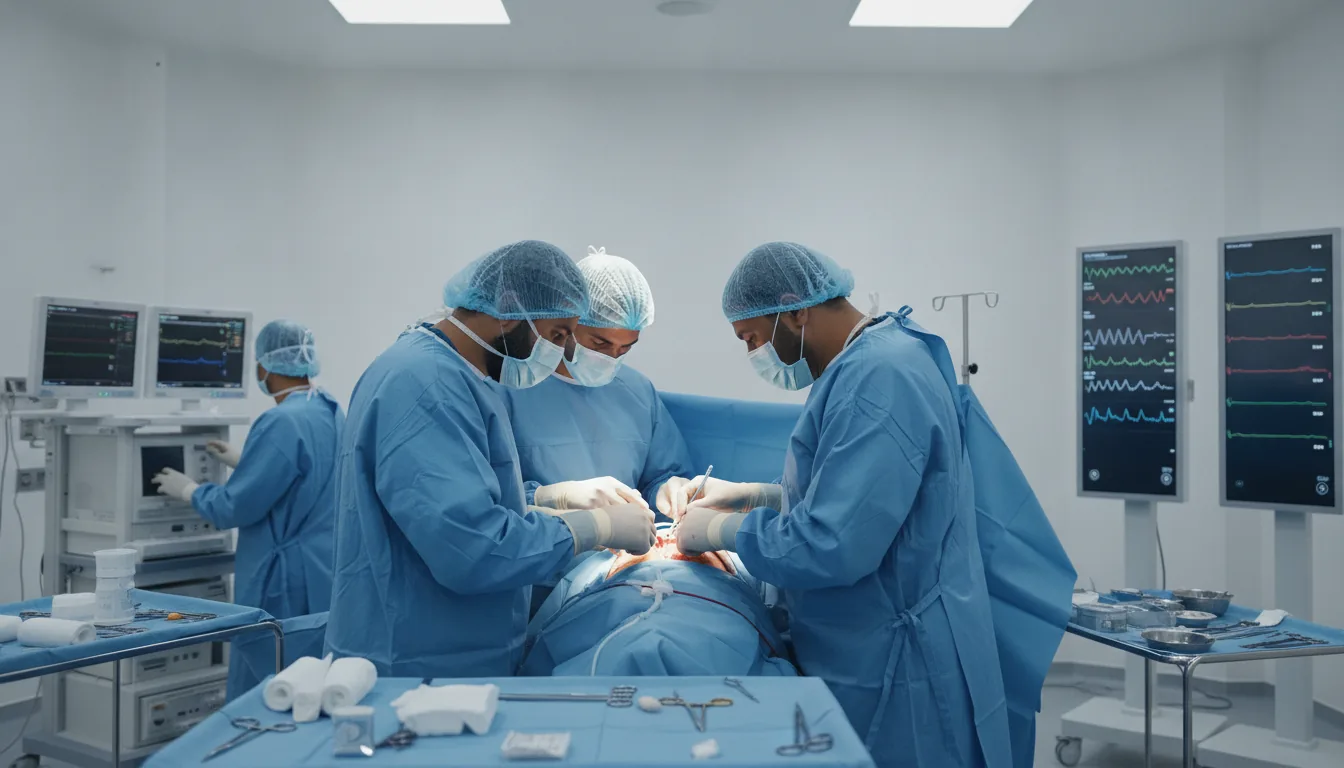
Closed-heart cardiac surgery covers procedures performed without opening the cardiac chambers and without using cardiopulmonary bypass. The heart continues to beat normally during the operation, avoiding the constraints associated with temporary cardiac arrest. This approach is used in particular for certain so-called "beating-heart" coronary artery bypass grafts, for procedures on the vessels close to the heart, and for certain corrections of malformations. The surgeon uses stabilisation devices that immobilise only the area being operated on, while the rest of the heart carries on working. When indicated, this technique can allow faster recovery and a simpler post-operative course. The choice between closed-heart surgery and surgery under CPB is always discussed case by case by the medical-surgical team, according to the condition and profile of each patient. At Clinique Pasteur Tunis, the cardiovascular surgery team has mastered all of these techniques and selects the most suitable approach for each patient, with post-operative monitoring provided in a specialised intensive care unit.
Closed-heart cardiac surgery

When is it indicated?

Beating-heart coronary artery bypass in selected patients

In some patients, the arteries of the heart can be bypassed without stopping the heart, which often simplifies the post-operative course.

Procedures on the great vessels close to the heart

Certain vessels located around the heart can be operated on without having to open the cardiac chambers.

Certain corrections of congenital malformations

A few malformations present from birth can be corrected without stopping the heart or using the heart-lung machine.

Patients for whom cardiopulmonary bypass is not advisable

When a patient's health makes the heart-lung machine risky, operating on a beating heart offers a gentler alternative.

Preparation

1Complete cardiology work-up with imaging
2Standard pre-operative work-up (blood tests, X-ray)
3Anaesthesia consultation
4Fast for 6 hours before the procedure
5Adjustment of anticoagulant medication as prescribed

Procedure

1

Positioning in the operating theatre and general anaesthesia

2

Surgical approach suited to the planned procedure

3

Local stabilisation of the area to be operated on, while the heart keeps beating

4

Performance of the surgical procedure

5

Closure and transfer to the post-operative monitoring unit

Duration

2 to 4 hours depending on the procedure

Aftercare & Recovery

The post-operative course is generally simpler than after surgery under CPB, with an often shorter stay in intensive care and early mobilisation encouraged from the first days.

Risks and side effects

Risks inherent in any cardiac surgery, reduced by rigorous selection of indications
Possible conversion to a CPB technique if necessary, decided in the patient's best interest
Close monitoring in intensive care during the first 24 to 48 hours

These risks remain rare. Your surgeon will inform you in detail before the procedure.

Request a Quote

Contact us to schedule a consultation or receive a personalized quote.

Request a Quote +216 36 402 000

At a glance

Duration: 2 to 4 hours depending on the procedure
Preparation: Required
Dedicated specialist team