
Coronary artery bypass grafting (CABG)
Surgical procedure that restores blood supply to the heart muscle by bypassing narrowed or blocked coronary arteries.
What is it?
When is it indicated?
When several arteries of the heart are narrowed at the same time, bypass surgery restores blood supply to the entire heart muscle.
This artery supplies a large part of the heart: when it narrows, bypass surgery is often the safest and most durable solution.
When the narrowings are too long or poorly located to be dilated with a balloon, the surgeon creates a bridge that bypasses the diseased area.
If chest pain persists despite medication, bypass surgery provides lasting relief by restoring blood flow to the heart.
In some patients with diabetes or a weakened heart, bypass surgery offers better long-term results.
Preparation
Procedure
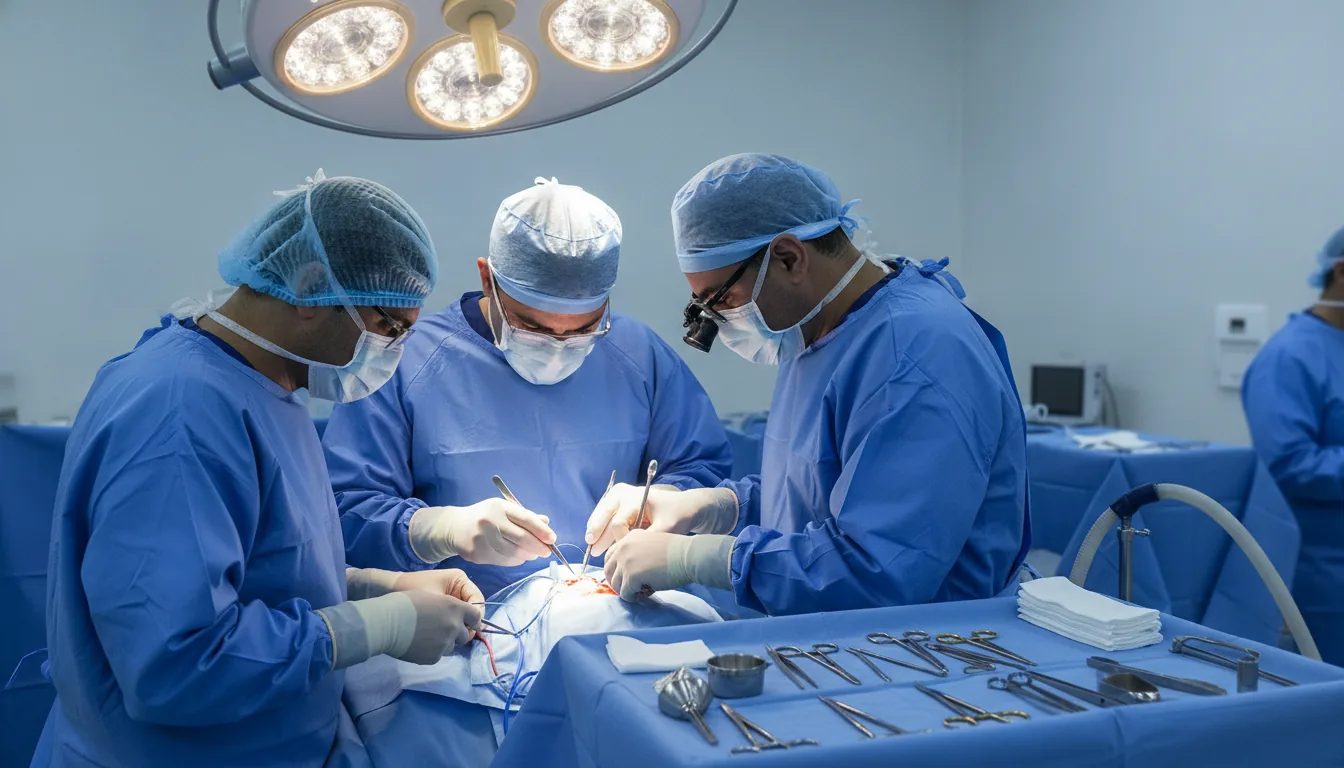
General anaesthesia and positioning in the cardiac surgery theatre
Harvesting of the grafts (mammary artery, leg vein or radial artery)
Performance of the bypasses, under CPB or on a beating heart depending on the chosen strategy
Verification of the quality of the anastomoses
Closure and transfer to the post-cardiac surgery intensive care unit
Duration
3 to 5 hours
Aftercare & Recovery
After 24 to 72 hours in intensive care followed by a few days in hospital, the patient begins a gradual convalescence. The disappearance of angina pain and the improvement in exercise tolerance are generally marked. Cardiac rehabilitation is often offered to optimise recovery.
Risks and side effects
These risks remain rare. Your surgeon will inform you in detail before the procedure.
Request a Quote
Contact us to schedule a consultation or receive a personalized quote.
Request a Quote +216 36 402 000