
Peripheral and aortic endovascular surgery
Surgeries/Cardiovascular/Endovascular surgery

Peripheral and aortic endovascular surgery

Treatment of arterial disease from within the vessels, using catheters, balloons and stent grafts, without a large surgical incision.

What is it?

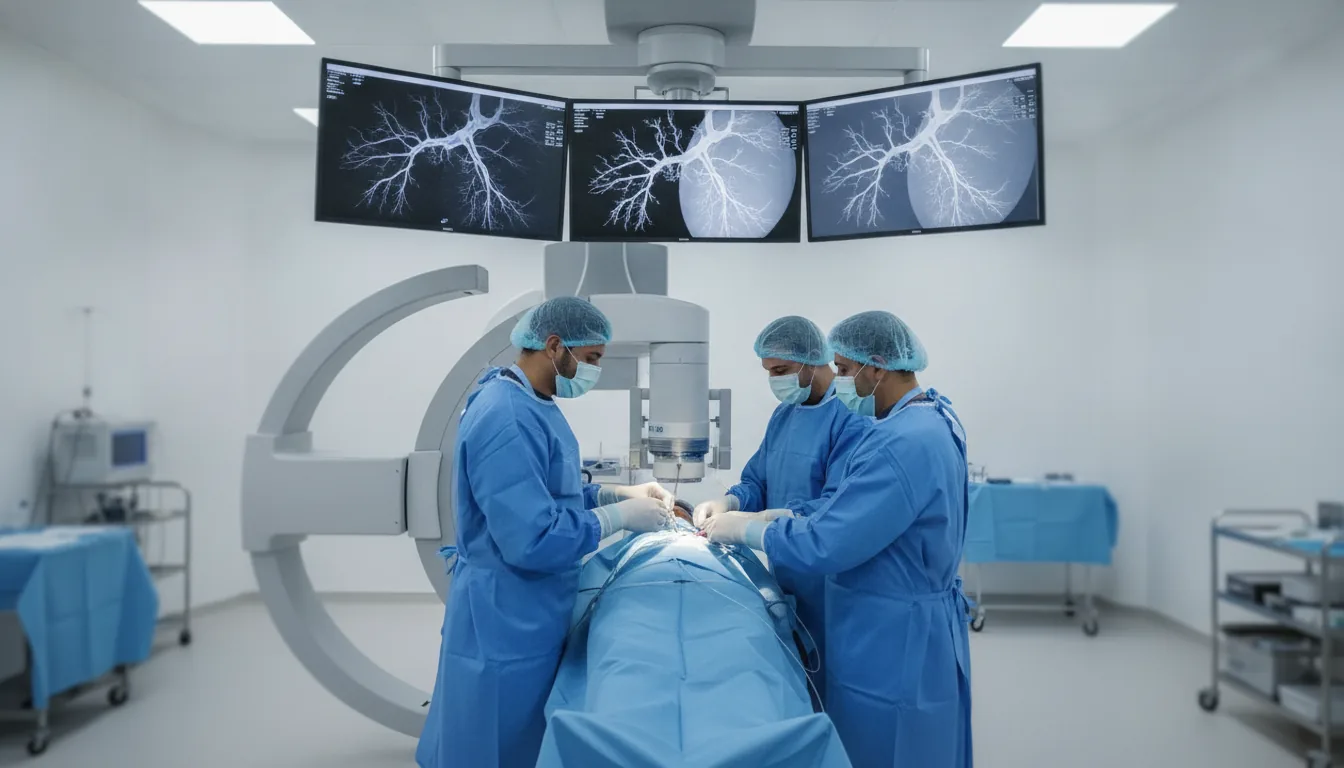
Endovascular surgery is a modern approach that treats arterial disease "from the inside", navigating through the vessels with catheters introduced via a simple puncture, most often at the groin. It thus avoids the large incisions of conventional vascular surgery. This technique makes it possible to dilate narrowed arteries with balloons, to place stents to keep the vessel open, or to deploy stent grafts to exclude an aortic aneurysm. The procedure is guided in real time by imaging, ensuring great precision. The benefits for the patient are significant: often lighter anaesthesia, no large scar, a short hospital stay and rapid recovery. Endovascular surgery is particularly suited to patients for whom open surgery would involve significant constraints. At Clinique Pasteur Tunis, these procedures are performed in a latest-generation catheterisation laboratory, by a team proficient in both endovascular techniques and conventional vascular surgery, guaranteeing comprehensive care tailored to each situation.
Peripheral and aortic endovascular surgery

When is it indicated?

Abdominal or thoracic aortic aneurysm eligible for a stent graft

When the body's great artery dilates, an internal prosthesis can be deployed through a simple puncture to protect it, without a large incision.

Narrowing of the arteries of the lower limbs (peripheral arterial disease)

When the leg arteries become blocked and cause pain on walking, a balloon or stent restores the circulation.

Stenoses of the renal or digestive arteries

The arteries that supply the kidneys or the intestine can be widened from the inside to restore good blood flow.

Certain lesions of the carotid arteries

Certain narrowings of the neck arteries, which supply the brain, can be treated from within the vessel.

Patients at high risk for open surgery

When a conventional operation would be too taxing, this gentle technique offers effective treatment with rapid recovery.

Preparation

1Vascular imaging work-up (CT angiography) to plan the procedure
2Blood tests including kidney function
3Anaesthesia consultation
4Fast for 6 hours before the procedure
5Report any allergy, particularly to contrast agents

Procedure

1

Positioning in the catheterisation laboratory and appropriate anaesthesia (local, regional or general)

2

Arterial puncture, most often at the groin crease

3

Navigation of the catheters under imaging guidance

4

Dilation, stent placement or deployment of the stent graft

5

Verification of the result by angiography

6

Closure of the puncture site and monitoring

Duration

1 to 3 hours depending on complexity

Aftercare & Recovery

The hospital stay is generally short, from 24 to 72 hours. Daily activities can be resumed quickly, and regular imaging follow-up is scheduled to check that the implanted device is working properly.

Risks and side effects

Haematoma at the puncture site, usually harmless
Reaction to the contrast agent, prevented by careful pre-procedure questioning
Need for regular imaging follow-up after stent graft placement

These risks remain rare. Your surgeon will inform you in detail before the procedure.

Request a Quote

Contact us to schedule a consultation or receive a personalized quote.

Request a Quote +216 36 402 000

At a glance

Duration: 1 to 3 hours depending on complexity
Preparation: Required
Dedicated specialist team