
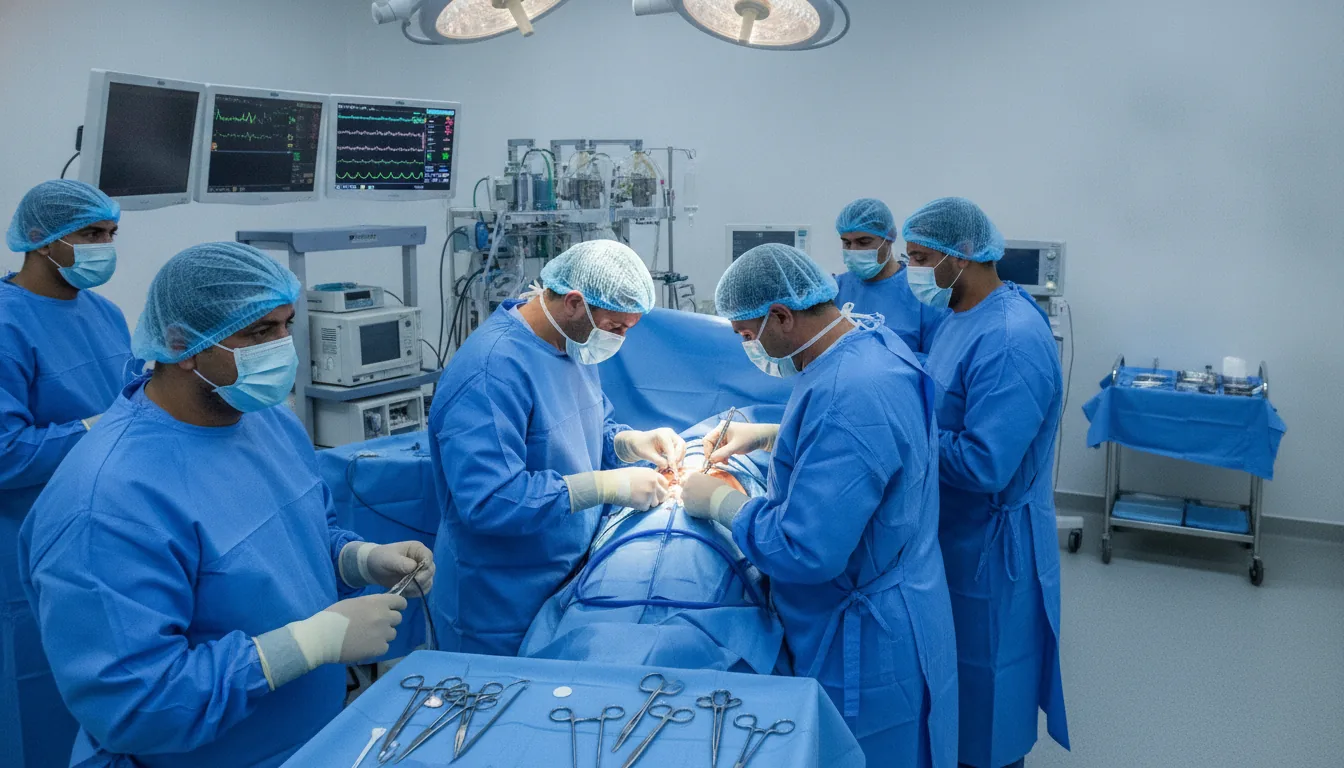
Surgery of the thoracic and abdominal aorta
Surgeries/Cardiovascular/Aortic surgery

Surgery of the thoracic and abdominal aorta

Surgical management of diseases of the aorta, the body's largest artery, using open or endovascular techniques.

What is it?

The aorta is the largest artery in the body: it carries blood from the heart to the entire body. Its diseases, mainly aneurysms (dilations) and dissections (tears in the wall), require specialised management, sometimes as an emergency. Aortic surgery consists of replacing the diseased segment with a vascular prosthesis, or reinforcing it from the inside with a stent graft depending on the location and anatomy. The segments concerned may be the ascending aorta close to the heart, the aortic arch, the descending thoracic aorta or the abdominal aorta. These procedures are among the most specialised in cardiovascular surgery and require a trained team, a complete technical platform and a high-performing intensive care unit. Modern techniques, particularly hybrid approaches combining open and endovascular surgery, make it possible to tailor treatment to each situation. Clinique Pasteur Tunis has all the resources needed for this high-level surgery: a dedicated operating theatre with cardiopulmonary bypass, a catheterisation laboratory for endovascular procedures and a specialised intensive care unit for post-operative monitoring.
Surgery of the thoracic and abdominal aorta

When is it indicated?

Aneurysm of the ascending aorta, the arch or the descending aorta

When a segment of the aorta in the chest dilates, it is replaced or reinforced before the weakened wall leads to complications.

Abdominal aortic aneurysm that has reached the treatment threshold

When the dilation of the aorta in the abdomen becomes too large, preventive treatment is required to rule out the risk of rupture.

Aortic dissection

A tear in the inner wall of the aorta is an emergency: surgery repairs the damaged segment and protects the organs.

Diseases of the elastic tissue that weaken the aorta

Certain diseases make the wall of the aorta more fragile; preventive surgery is sometimes offered before any complication occurs.

Monitoring of a progressively enlarging aortic dilation

When an aortic dilation grows from one check-up to the next, the team chooses the best time to intervene, without waiting for a complication.

Preparation

1CT angiography of the entire aorta to plan the procedure
2Echocardiography and complete cardiology work-up
3Blood tests, kidney and respiratory assessment
4Anaesthesia consultation
5Fast for 6 hours before the procedure

Procedure

1

General anaesthesia with advanced monitoring

2

Surgical approach or vascular puncture depending on the chosen technique

3

Replacement of the diseased aortic segment with a prosthesis, or deployment of a stent graft

4

Intraoperative checks of the circulation in all vascular territories

5

Closure and transfer to specialised intensive care

Duration

3 to 6 hours depending on the segment treated and the technique

Aftercare & Recovery

Initial monitoring takes place in intensive care for 24 to 72 hours. Convalescence extends over several weeks with a very gradual return to activities. Regular imaging follow-up is essential to monitor the prosthesis and the rest of the aorta.

Risks and side effects

Major surgery whose risks are controlled by an experienced team and a complete technical platform
Close kidney and neurological monitoring post-operatively
Long-term imaging follow-up is essential

These risks remain rare. Your surgeon will inform you in detail before the procedure.

Request a Quote

Contact us to schedule a consultation or receive a personalized quote.

Request a Quote +216 36 402 000

At a glance

Duration: 3 to 6 hours depending on the segment treated and the technique
Preparation: Required
Dedicated specialist team