
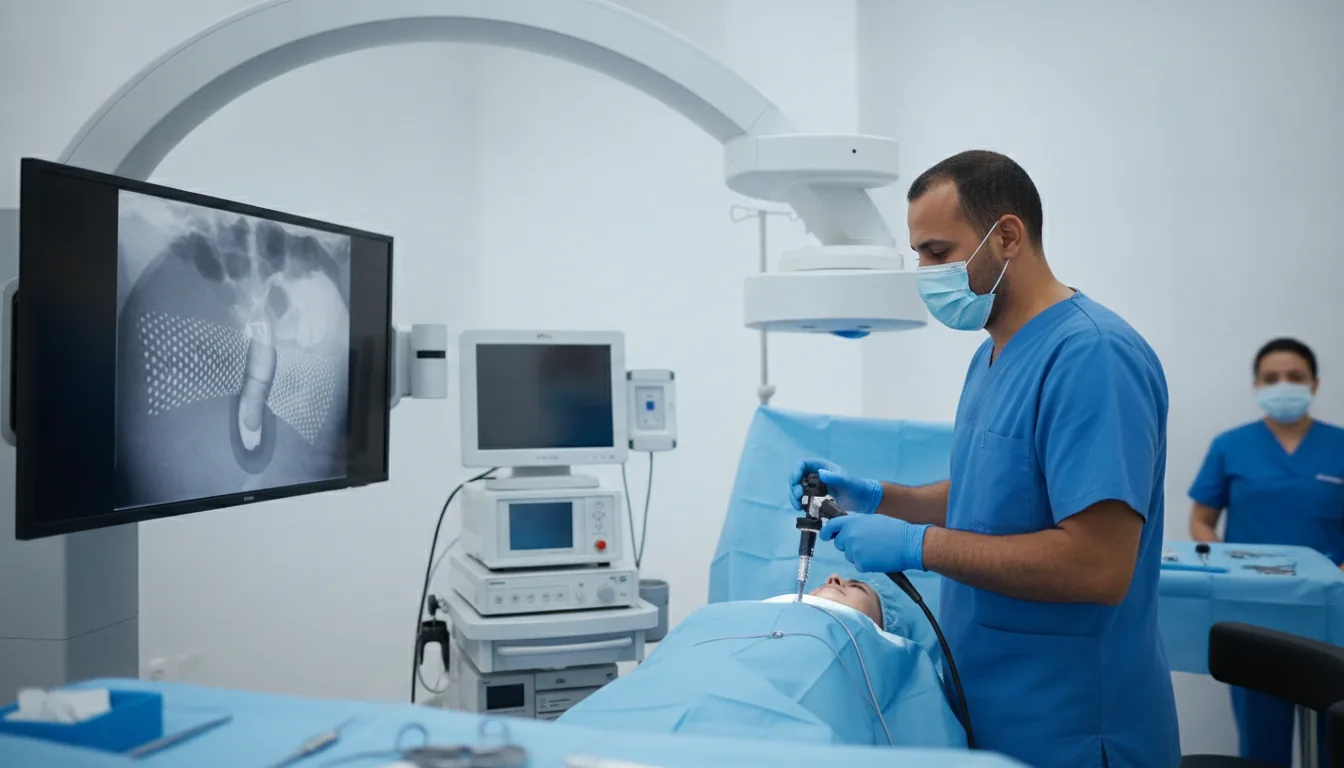
Digestive stent placement
Centres/Endoscopy/Digestive stents

Digestive stent placement

Endoscopic placement of metallic or plastic stents in the digestive tract, to relieve an obstruction and restore transit.

What is it?

Endoscopic placement of digestive stents is an interventional technique that involves deploying a metallic or plastic stent (endoprosthesis) in a narrowed or obstructed area of the digestive tract. This procedure restores the patency of the digestive passage and significantly improves the patient's quality of life, often in the context of tumor-related disease. Digestive stents can be placed in the esophagus, stomach, duodenum, colon, bile ducts or pancreatic duct. Self-expanding metallic stents are the most commonly used for tumor-related obstructions, while plastic stents are preferred for benign strictures or temporary obstructions of the bile ducts. The choice of stent type depends on the location, the nature of the obstruction and the patient's prognosis. This technique often provides a palliative alternative to surgery in patients with advanced or inoperable cancers. It restores oral feeding in patients suffering from tumor-related dysphagia, relieves obstructive jaundice or treats colonic obstruction. The placement is performed under endoscopic and fluoroscopic guidance to ensure precise positioning. At Clinique Pasteur in Tunis, digestive stent placement is performed by gastroenterologists specialized in interventional endoscopy, in collaboration with the anesthesia and radiology teams. All types of stents are available to address every clinical situation.
Digestive stent placement

When is it indicated?

Malignant esophageal stricture with dysphagia

When a tumor narrows the esophagus and prevents normal eating, placing a stent reopens the passage and allows the patient to eat by mouth again, which greatly improves their quality of life.

Tumor-related gastroduodenal stricture with vomiting

If the outlet of the stomach is blocked by a lesion, food can no longer pass and causes vomiting. A stent placed at this level restores transit and quickly relieves the patient.

Malignant colonic obstruction, as an emergency or palliative measure

In case of large bowel obstruction, placing a stent relieves the blockage without emergency surgery, either while awaiting a properly prepared operation or as comfort care.

Malignant biliary stricture with obstructive jaundice

When a tumor compresses the bile duct and causes jaundice, a stent placed in this duct restores the flow of bile and makes the jaundice and itching subside.

Post-operative bile or pancreatic leak

After certain operations, an abnormal leak of bile or pancreatic juice may persist. A temporary stent diverts the fluid back into the normal circuit while the leak heals.

Benign post-surgical anastomotic stricture

The suture area created during digestive surgery can sometimes narrow as it heals. A temporary stent helps keep the passage open during healing.

Digestive fistula

A fistula is a small abnormal opening in the wall of the digestive tract. By covering the opening, a stent allows it to close and promotes healing without further surgery.

Preparation

1Fast for at least 8 hours before the procedure
2Prior blood tests (coagulation, liver panel, complete blood count)
3Mandatory pre-anesthesia consultation
4Recent imaging (CT scan, MRI) to assess the stricture
5Report any ongoing anticoagulant treatment
6Hospitalization is required for post-procedure monitoring
7Patient information and informed consent

Procedure

1

General anesthesia is induced

2

The endoscope is introduced up to the strictured area

3

The stricture is crossed with a guidewire under fluoroscopic guidance

4

The degree and length of the stricture are assessed

5

Prior dilation may be necessary to allow passage of the delivery device

6

The stent is positioned at the level of the stricture and deployed under combined endoscopic and radiological guidance

7

The proper expansion of the stent and the restoration of the passage are verified

8

The patient is monitored in hospital for 24 to 48 hours

Duration

30 to 60 minutes for the procedure

Results

Restoration of transit or drainage is generally immediate after placement. The gastroenterologist provides a detailed report and schedules clinical and endoscopic follow-up.

Risks and side effects

Stent migration (5 to 10 % for uncovered metallic stents)
Stent obstruction due to tumor ingrowth or food impaction
Digestive perforation during placement (rare, 1 to 3 %)
Chest or abdominal pain after placement (common, transient)
Bleeding (rare)
Gastroesophageal reflux with low esophageal stents

These risks remain rare. Your physician will inform you in detail before the examination.

Book an Appointment

Contact us to schedule your examination or request a quote.

Request a Quote +216 36 402 000

At a glance

Duration: 30 to 60 minutes for the procedure
Preparation: Required
Book an appointment