
Endoscopic polypectomy
Centres/Endoscopy/Polypectomy

Endoscopic polypectomy

Removal of polyps (growths) from the digestive tract during an endoscopy, an essential technique in the prevention of colorectal cancer.

What is it?

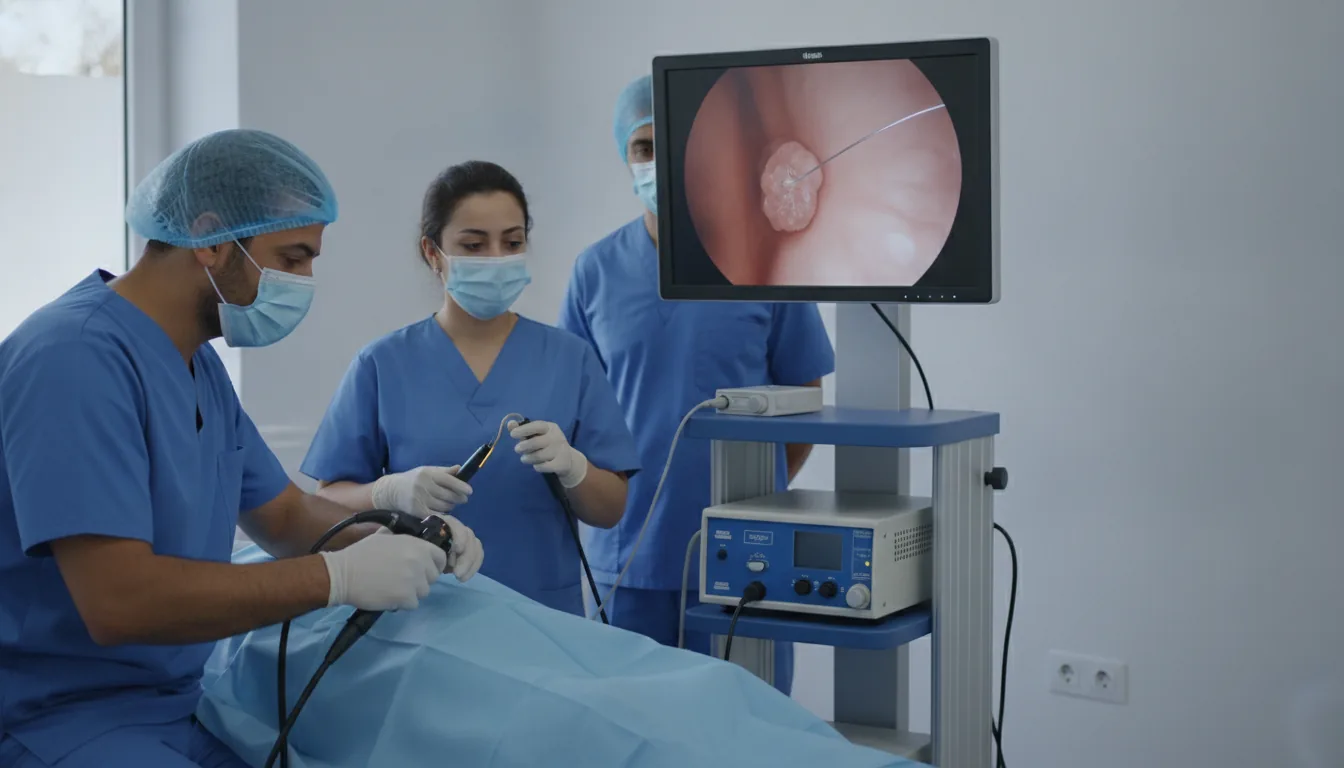
Endoscopic polypectomy is a therapeutic procedure performed during a digestive endoscopy (colonoscopy or gastroscopy) that involves removing polyps from the lining of the digestive tract. Polyps are abnormal growths of the mucosa that may be benign or carry a risk of malignant transformation. Their removal is a fundamental step in the prevention of colorectal cancer. Several polypectomy techniques exist depending on the size, shape and location of the polyp: biopsy forceps for very small polyps, cold snare for sessile polyps smaller than 10 mm, and diathermy snare with electric current for pedunculated or larger polyps. The choice of technique is made by the gastroenterologist in real time according to the characteristics of the polyp. After removal, the polyp is systematically retrieved and sent for histological analysis to the pathology laboratory. This analysis determines the histological type of the polyp (adenoma, hyperplastic polyp, serrated polyp) and, above all, verifies the absence of cancerous cells. The result of this analysis determines the subsequent surveillance and the timing of the next colonoscopy. At Clinique Pasteur in Tunis, polypectomies are performed by gastroenterologists proficient in the full range of endoscopic techniques. The technical facility is equipped with latest-generation electrosurgical generators and hemostasis devices for optimal and safe management.
Endoscopic polypectomy

When is it indicated?

Polyp(s) detected during a screening colonoscopy

When a polyp is discovered during a colonoscopy, it is generally removed immediately, during the same examination. The patient is thus treated without needing a further procedure.

Polyp(s) detected during a surveillance colonoscopy

In people being followed up after previous polyps, any new polyp spotted during a check-up is removed straight away, which maintains effective prevention over time.

Adenoma(s) with dysplasia

Some polyps contain cells that are beginning to change. Their complete removal eliminates the risk that they will one day progress to a more serious lesion.

Serrated polyps

These distinctive-looking polyps, often flat and inconspicuous, can progress silently. Their systematic removal is part of good preventive practice.

Gastric polyps discovered during a gastroscopy

Polyps can also form in the stomach. When they are discovered during a gastroscopy, their removal makes it possible to analyze them and rule out any abnormality.

Prevention of colorectal cancer

The great majority of colon cancers develop from benign polyps that progress slowly. Removing polyps as soon as they are discovered is therefore the most effective preventive measure.

Symptomatic polyps (bleeding, partial obstruction)

A large polyp can bleed or hinder passage through the intestine. Its endoscopic removal makes these symptoms disappear while allowing its complete analysis.

Preparation

1Same preparation as for colonoscopy: low-residue diet and bowel preparation
2Mandatory discontinuation of anticoagulants and antiplatelet agents according to recommendations (5 to 7 days before)
3A recent coagulation panel is mandatory
4Mandatory pre-anesthesia consultation
5Report any history of allergy or abnormal bleeding
6Arrange for someone to accompany you home

Procedure

1

The examination is performed under deep sedation or general anesthesia

2

The polyp is identified and examined (size, shape, vascularization)

3

The removal technique is chosen according to the characteristics of the polyp

4

For pedunculated polyps, a snare is placed around the stalk and an electric current is applied to cut and coagulate

5

For sessile polyps, a submucosal injection may be performed to lift the lesion

6

The polyp is retrieved for histological analysis

7

The removal site is examined to check for any bleeding

8

Hemostatic clips may be placed as a preventive measure

9

The patient is monitored in the recovery room

Duration

15 to 45 minutes depending on the number and size of the polyps

Results

The gastroenterologist informs the patient of the number and appearance of the polyps removed. The results of the histological analysis are available within 7 to 14 days and determine the surveillance schedule.

Risks and side effects

Immediate or delayed bleeding (1 to 2 % of cases, may occur up to 15 days after the procedure)
Colonic perforation (rare, about 0.1 to 0.5 %)
Post-polypectomy syndrome (abdominal pain, fever without perforation, rare)
Incomplete removal requiring a second endoscopic procedure (large polyps)
Anesthesia-related complications

These risks remain rare. Your physician will inform you in detail before the examination.

Book an Appointment

Contact us to schedule your examination or request a quote.

Request a Quote +216 36 402 000

At a glance

Duration: 15 to 45 minutes depending on the number and size of the polyps
Preparation: Required
Book an appointment