
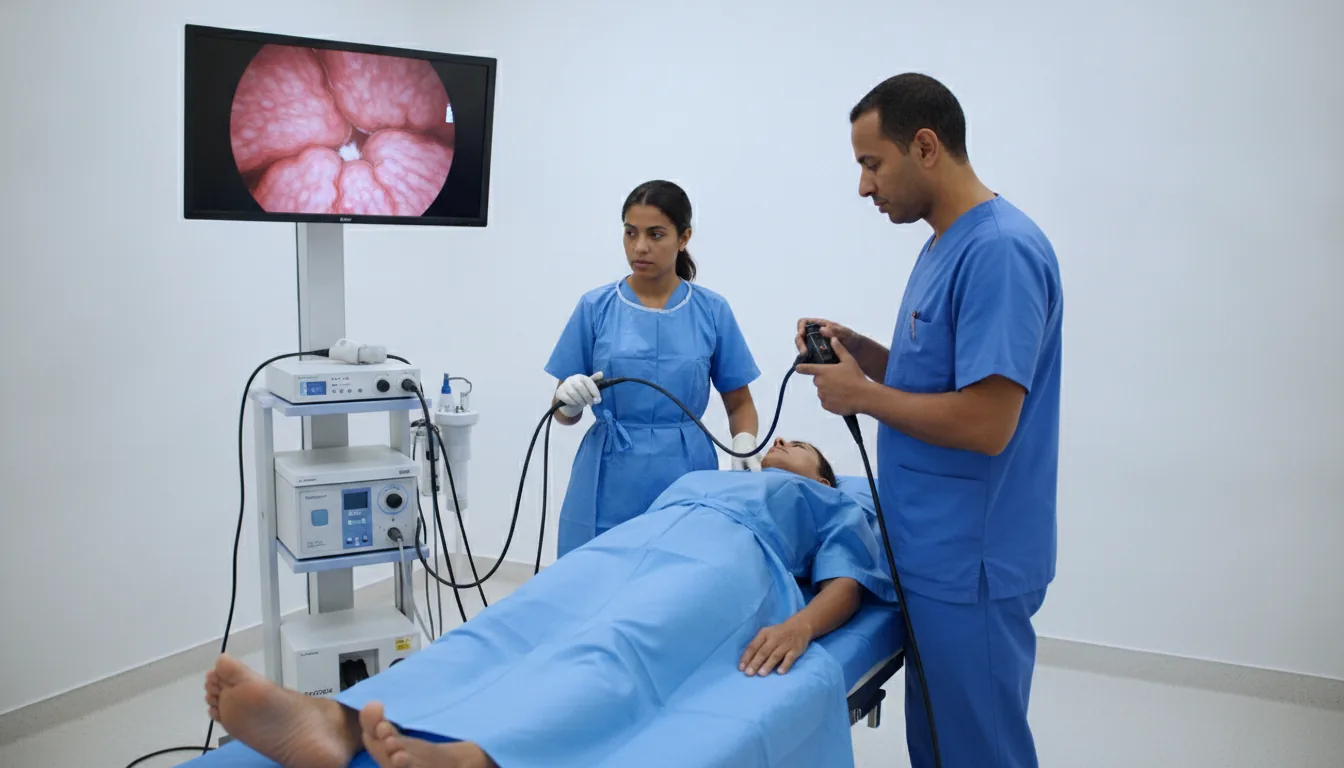
Colonoscopy
Complete visual examination of the colon and rectum using a flexible endoscope, essential for the screening and diagnosis of colorectal conditions.
What is it?
When is it indicated?
Even without symptoms, screening colonoscopy makes it possible to spot and remove polyps before they turn malignant. It is the most effective way to prevent colorectal cancer.
When a screening test reveals traces of blood invisible to the naked eye, colonoscopy is essential to determine the origin, most often benign, such as a polyp or hemorrhoids.
A lasting change in bowel habits, with no obvious cause, warrants an examination of the colon to check the condition of the lining and rule out a lesion.
The presence of red blood in the stool must always be investigated. Colonoscopy identifies its exact source and can treat it if necessary during the same examination.
Unexplained iron deficiency may be linked to silent bleeding in the colon. Colonoscopy looks for the responsible lesion in order to treat it and durably correct the anemia.
When abdominal pain persists without explanation despite initial tests, colonoscopy makes it possible to directly check the condition of the large intestine and guide the diagnosis.
After polyp removal or treatment of colon cancer, regular follow-up colonoscopies verify the absence of new lesions and provide reassuring monitoring.
For Crohn's disease or ulcerative colitis, colonoscopy assesses the extent and intensity of the inflammation, which helps the physician choose and adjust the treatment.
Preparation
Procedure
The patient lies down on their left side
Sedation is administered intravenously by the anesthesiologist
The colonoscope is gently inserted through the anus
Air is insufflated to open up the colon and allow good visualization
The endoscope is advanced to the cecum (the junction with the small intestine)
A meticulous examination is performed as the endoscope is withdrawn
Any polyps detected are removed during the same procedure whenever possible
Biopsies are taken from any suspicious lesion
The patient is monitored in the recovery room for 1 to 2 hours
Duration
20 to 45 minutes for the examination, 2 to 3 hours in total including preparation and monitoring
Results
The gastroenterologist communicates the visual findings to the patient and their companion after they wake up. The results of biopsies and of the analysis of removed polyps are available within 7 to 14 days.
Risks and side effects
These risks remain rare. Your physician will inform you in detail before the examination.
Book an Appointment
Contact us to schedule your examination or request a quote.
Request a Quote +216 36 402 000