
Cardiac resynchronisation therapy (CRT)
Centres/Interventional Cardiology/Resynchronisation (CRT)

Cardiac resynchronisation therapy (CRT)

Implantation of a specific pacemaker that re-coordinates the heart's contractions to improve the symptoms of heart failure.

What is it?

In some patients with heart failure, the different walls of the heart no longer contract in a coordinated manner: the left ventricle contracts in a desynchronised way, which reduces the efficiency of each beat and worsens breathlessness and fatigue. Cardiac resynchronisation therapy (CRT) involves implanting a special pacemaker fitted with an additional lead positioned on the lateral wall of the left ventricle. By stimulating both ventricles simultaneously, the device restores a harmonious contraction and improves the heart's performance with each beat. The expected benefits are tangible: reduced breathlessness, better exercise tolerance, improved quality of life and, in many patients, gradual improvement of cardiac function over the months. The device can be combined with a defibrillator function when the patient's profile justifies it. At Clinique Pasteur Tunis, resynchronisation devices are implanted by the heart rhythm team in the dedicated laboratory, with fine optimisation of the settings and joint follow-up with the treating cardiologist.
Cardiac resynchronisation therapy (CRT)

When is it indicated?

Symptomatic heart failure despite optimal medical treatment

When breathlessness and fatigue persist even though drug treatment is already well managed, resynchronisation provides additional mechanical support to the heart.

Desynchronisation of ventricular contractions visible on the ECG

If the electrical tracing shows that the walls of the heart are no longer contracting together, the device re-coordinates the beats to make each contraction more effective.

Impaired left ventricular function documented by echocardiography

When the ultrasound confirms that the left ventricle has lost strength, simultaneous stimulation of both ventricles can help it recover gradually.

Patients already fitted with a pacemaker requiring improved stimulation

In some patients who already have a device, switching to a resynchronisation device achieves a more harmonious contraction and better results on symptoms.

Preparation

1Complete heart failure work-up with detailed echocardiography
2ECG confirming the synchronisation disorder
3Blood tests and adjustment of treatments as prescribed
4Fast for 6 hours before the procedure
5Antiseptic shower the evening before and the morning of the procedure

Procedure

1

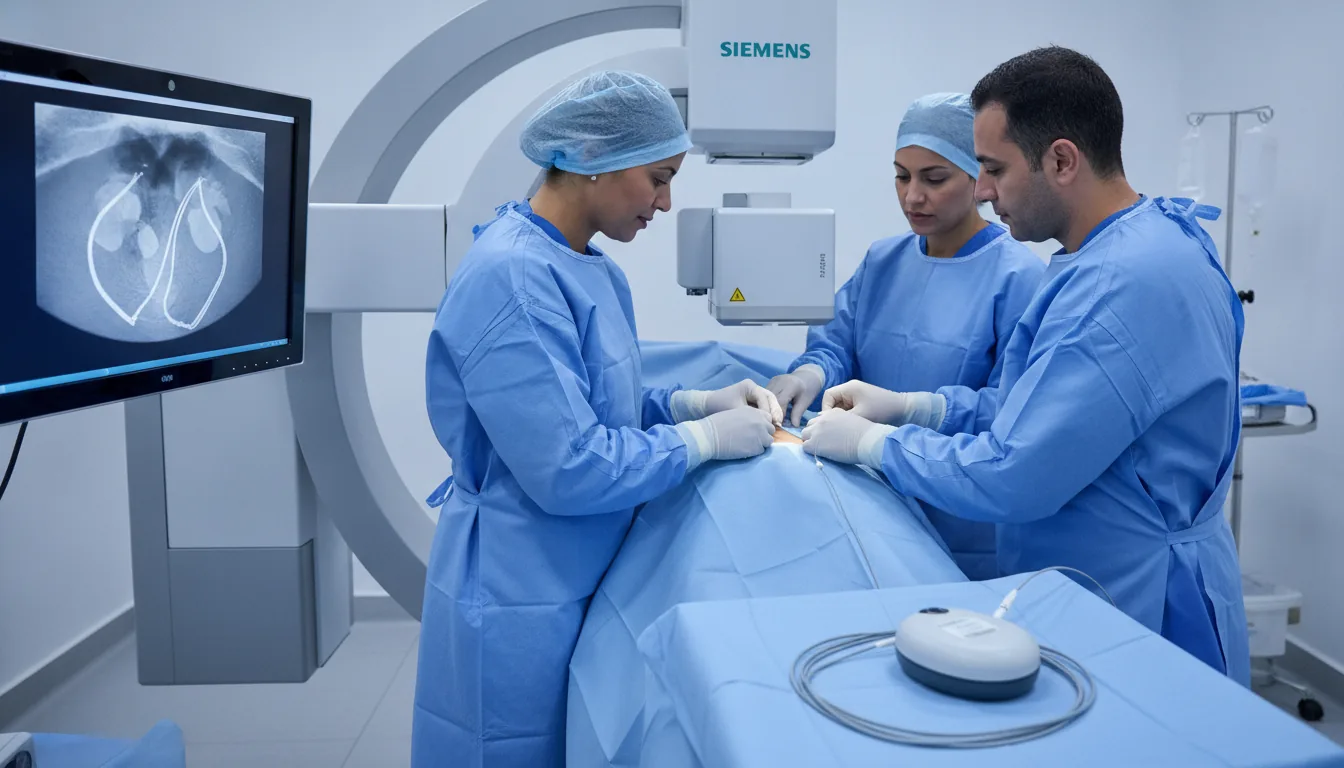
Positioning in a dedicated room, local anaesthesia with sedation

2

Incision below the collarbone

3

Placement of the leads, including the left ventricular lead via the heart's venous network

4

Stimulation tests and verification of resynchronisation

5

Connection of the device and closure

6

Fine adjustment of the device before discharge

Duration

1 hour 30 minutes to 3 hours

Results

Improvement in symptoms is often noticeable in the weeks following implantation: less breathlessness, more endurance during exertion and better quality of life. The device is checked regularly in consultation and its settings are optimised according to the patient's progress.

Risks and side effects

Bruising at the pocket, generally without severity
Positioning of the left ventricular lead sometimes delicate, mastered by the team's experience
Regular follow-up required to optimise the device settings

These risks remain rare. Your physician will inform you in detail before the examination.

Book an Appointment

Contact us to schedule your examination or request a quote.

Request a Quote +216 36 402 000

At a glance

Duration: 1 hour 30 minutes to 3 hours
Preparation: Required
Book an appointment