
Intracardiac electrophysiology study
Centres/Interventional Cardiology/Electrophysiology study

Intracardiac electrophysiology study

The reference examination for analysing the heart's electrical circuit from the inside and precisely identifying the origin of a rhythm disorder.

What is it?

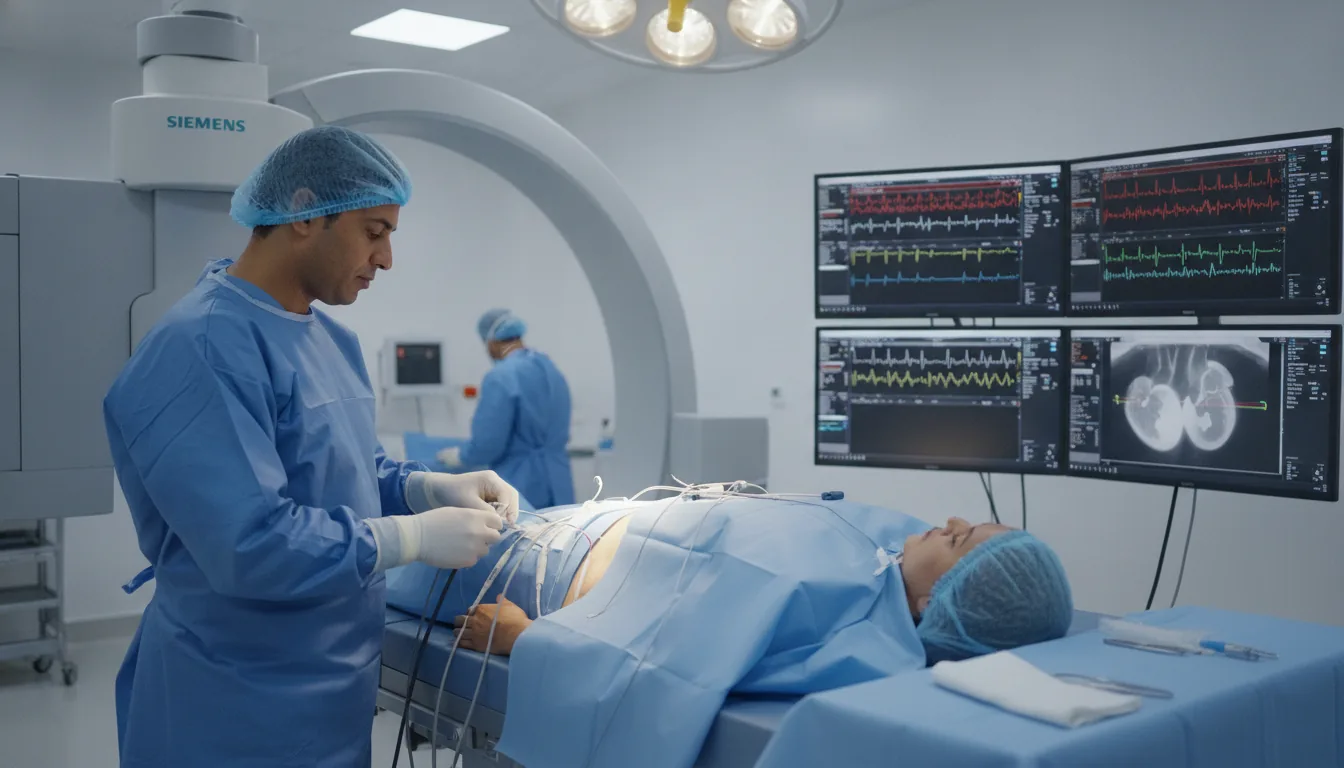
The intracardiac electrophysiology study is the most precise examination for studying the electrical activity of the heart. It involves introducing fine catheters through a vein, usually at the groin crease, and positioning them inside the cardiac chambers in order to record the electrical signals directly at their source. This examination makes it possible to understand the exact origin of unexplained palpitations, dizzy spells or syncope, and to precisely characterise a rhythm disorder: location of the abnormal circuit, mechanism of the arrhythmia, response to stimulation. The physician can thus reproduce the arrhythmia under controlled conditions to analyse it more accurately. The electrophysiology study is often the first step of ablation treatment: when the circuit responsible for the arrhythmia is identified, it can be treated in the same session, avoiding a second procedure. At Clinique Pasteur Tunis, this examination is performed in a fully equipped electrophysiology laboratory dedicated to heart rhythm care, by a specialised team that supports the patient at every step.
Intracardiac electrophysiology study

When is it indicated?

Recurrent unexplained palpitations

When the heart races regularly without the usual examinations finding the cause, this study records the electrical signals directly inside the heart to identify the origin of the problem.

Syncope or dizzy spells suspected to be of rhythmic origin

After unexplained losses of consciousness, the examination looks for an electrical disorder of the heart, too fast or too slow, that could be responsible.

Characterisation of a tachycardia documented on an ECG

When a racing heart has been recorded, this study specifies its exact mechanism and location, information that is essential for choosing the right treatment.

Assessment of arrhythmic risk in certain heart diseases

Some heart diseases can promote serious rhythm disorders: the study tests the electrical sensitivity of the heart and helps decide on protective measures.

Work-up before a possible ablation

Before treating an arrhythmia definitively, the abnormal circuit must be precisely mapped; this mapping is often followed by ablation during the same session.

Preparation

1Cardiology work-up with ECG and echocardiography
2Blood tests including coagulation
3Possible discontinuation of certain antiarrhythmic medications according to the physician's instructions
4Fast for 6 hours before the examination
5Anaesthesia consultation if sedation is planned

Procedure

1

Positioning in the electrophysiology laboratory and local anaesthesia at the groin crease

2

Introduction of recording catheters through a vein

3

Positioning of the catheters in the heart under radiological guidance

4

Recording of electrical signals and stimulation tests

5

Analysis of the arrhythmia mechanism, with ablation treatment in the same session if indicated

6

Removal of the catheters and compression of the puncture site

Duration

1 to 2 hours

Results

The conclusions of the examination are available immediately and explained to the patient. They make it possible to establish a precise diagnosis and define the best treatment strategy: simple monitoring, drug therapy, ablation or implantation of a device.

Risks and side effects

Well-tolerated examination, performed under local anaesthesia
Possible small bruise at the puncture site, without severity
Serious complications very rare, prevented by the team's experience and continuous monitoring

These risks remain rare. Your physician will inform you in detail before the examination.

Book an Appointment

Contact us to schedule your examination or request a quote.

Request a Quote +216 36 402 000

At a glance

Duration: 1 to 2 hours
Preparation: Required
Book an appointment