
Pacemaker implantation
Placement of a cardiac pacemaker that constantly watches over the heart rhythm and stimulates it whenever it beats too slowly.
What is it?
When is it indicated?
When the heart beats too slowly and this results in unusual fatigue, dizziness or faintness, the pacemaker restores an adequate rhythm and makes these symptoms disappear.
When the electrical current no longer passes correctly between the upper and lower chambers of the heart, the pacemaker takes over to guarantee regular beats in all circumstances.
If the heart's natural pacemaker becomes deficient and pauses, the device keeps constant watch and intervenes as soon as the rhythm slows too much.
When losses of consciousness are due to excessive slowing of the heart proven by recordings, pacemaker implantation effectively prevents recurrences.
In some patients with atrial fibrillation, the heart beats too slowly overall; the pacemaker then ensures a sufficient heart rate for daily life.
Preparation
Procedure
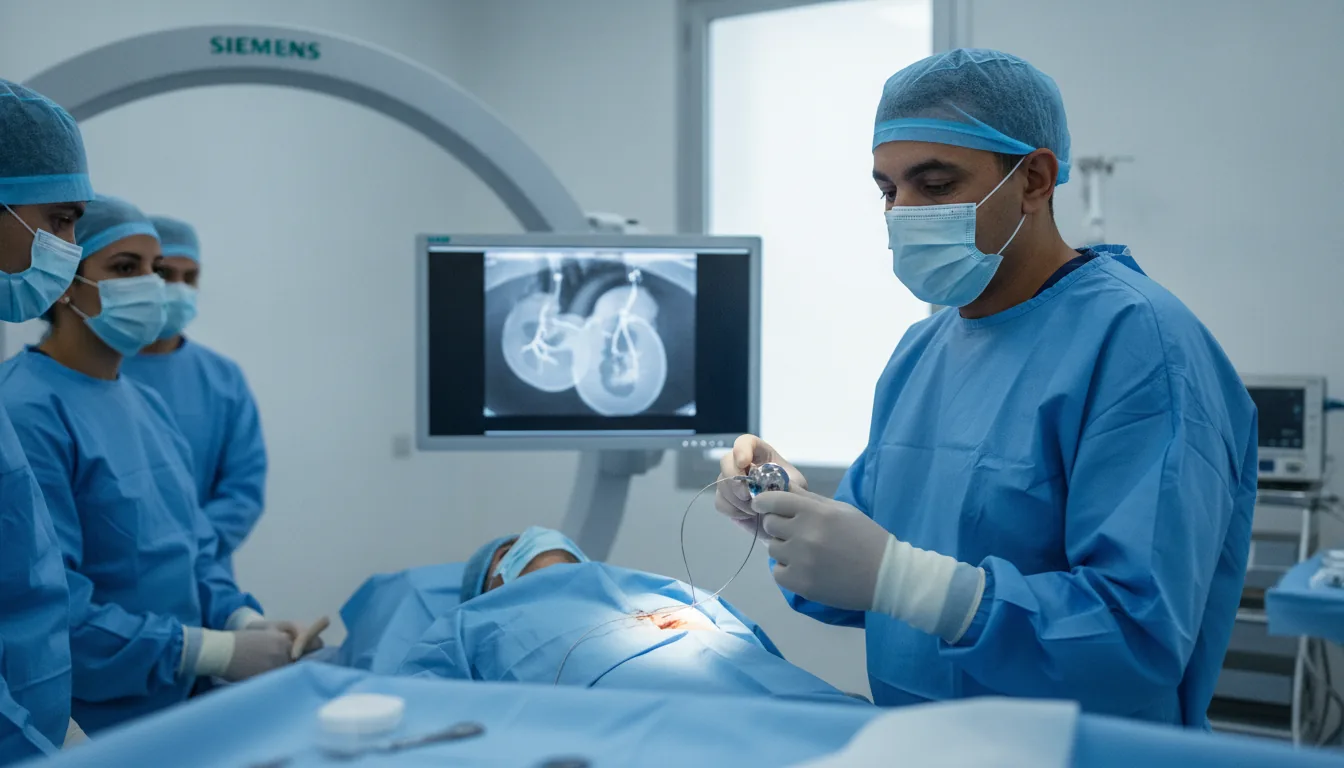
Positioning in a dedicated room, local anaesthesia and light sedation
Small incision below the collarbone
Introduction of the lead(s) through a vein under radiological guidance
Positioning of the leads in the heart and electrical tests
Connection of the device and closure of the pocket
Device check and verification X-ray
Duration
About 1 hour
Results
The pacemaker works as soon as it is placed and the symptoms related to the slow rhythm disappear rapidly. After 24 to 48 hours of monitoring, the patient goes home with simple instructions and a schedule of regular device checks.
Risks and side effects
These risks remain rare. Your physician will inform you in detail before the examination.
Book an Appointment
Contact us to schedule your examination or request a quote.
Request a Quote +216 36 402 000