
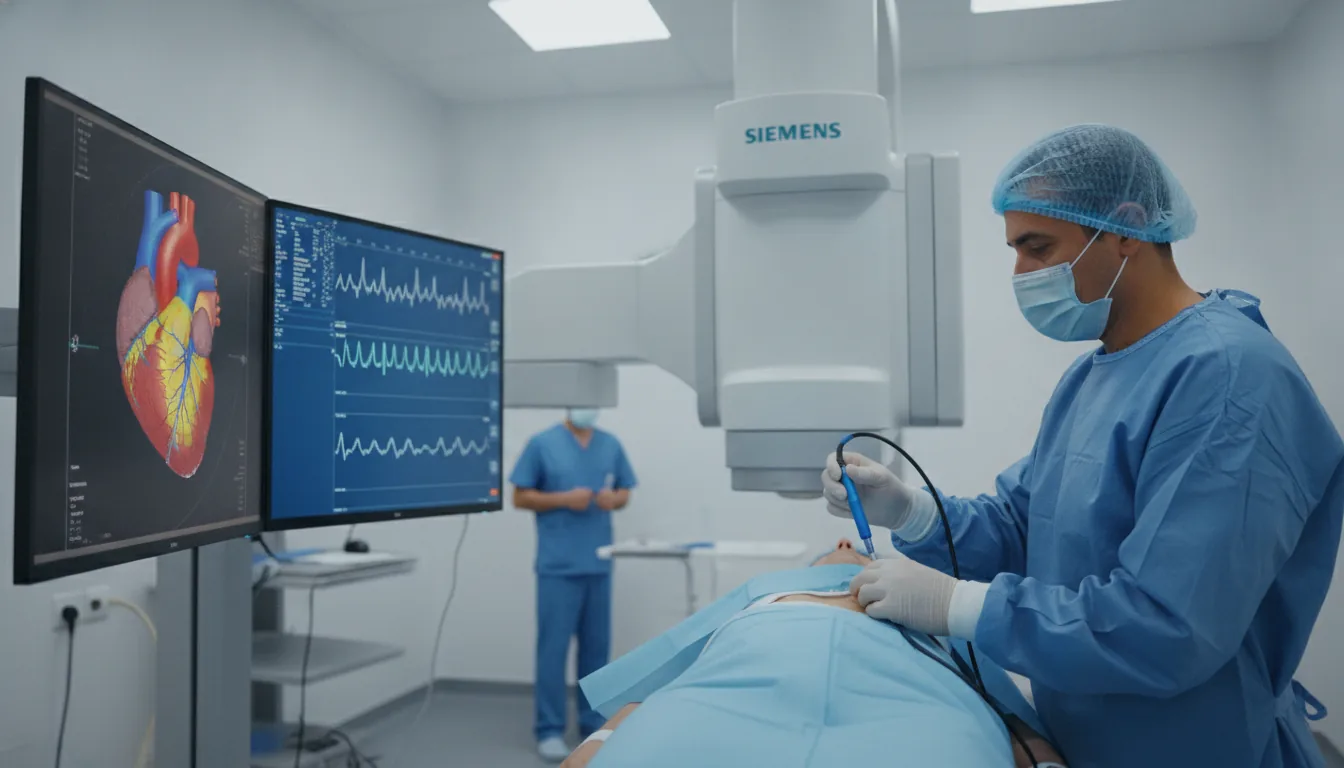
Radiofrequency ablation of arrhythmias
Curative treatment of heart rhythm disorders that neutralises, with a radiofrequency current, the area of the heart responsible for the arrhythmia.
What is it?
When is it indicated?
These episodes of a racing heart, often troublesome in daily life, are linked to a small abnormal electrical circuit that ablation can most often eliminate definitively.
This rhythm disorder follows a well-known circuit in the atrium; ablation interrupts this circuit and offers excellent lasting results.
When this common arrhythmia causes palpitations, fatigue or breathlessness, ablation helps restore a regular rhythm and a better quality of life.
Very frequent extra beats can become distressing and tire the heart over time; neutralising their source makes these symptoms disappear.
When drug treatment is insufficient, poorly tolerated or burdensome, ablation offers a lasting alternative that often allows medication to be stopped.
Preparation
Procedure
Positioning in the electrophysiology laboratory, local anaesthesia with appropriate sedation
Introduction of the catheters through a vein at the groin crease
Electrical mapping of the heart and precise location of the abnormal circuit
Application of radiofrequency energy to the target area
Verification of the disappearance of the arrhythmia by stimulation tests
Removal of the catheters and monitoring in a specialised unit
Duration
2 to 4 hours depending on the type of arrhythmia
Results
In the majority of cases, ablation brings a marked improvement or even complete disappearance of the arrhythmia. Discharge usually takes place after 24 to 48 hours of monitoring, with a rapid return to daily activities and scheduled heart rhythm follow-up.
Risks and side effects
These risks remain rare. Your physician will inform you in detail before the examination.
Book an Appointment
Contact us to schedule your examination or request a quote.
Request a Quote +216 36 402 000