
Treatment of trigeminal neuralgia
Surgeries/Neurosurgery/Trigeminal neuralgia

Treatment of trigeminal neuralgia

Surgical management of the excruciating facial pain of trigeminal neuralgia when medication is no longer sufficient.

What is it?

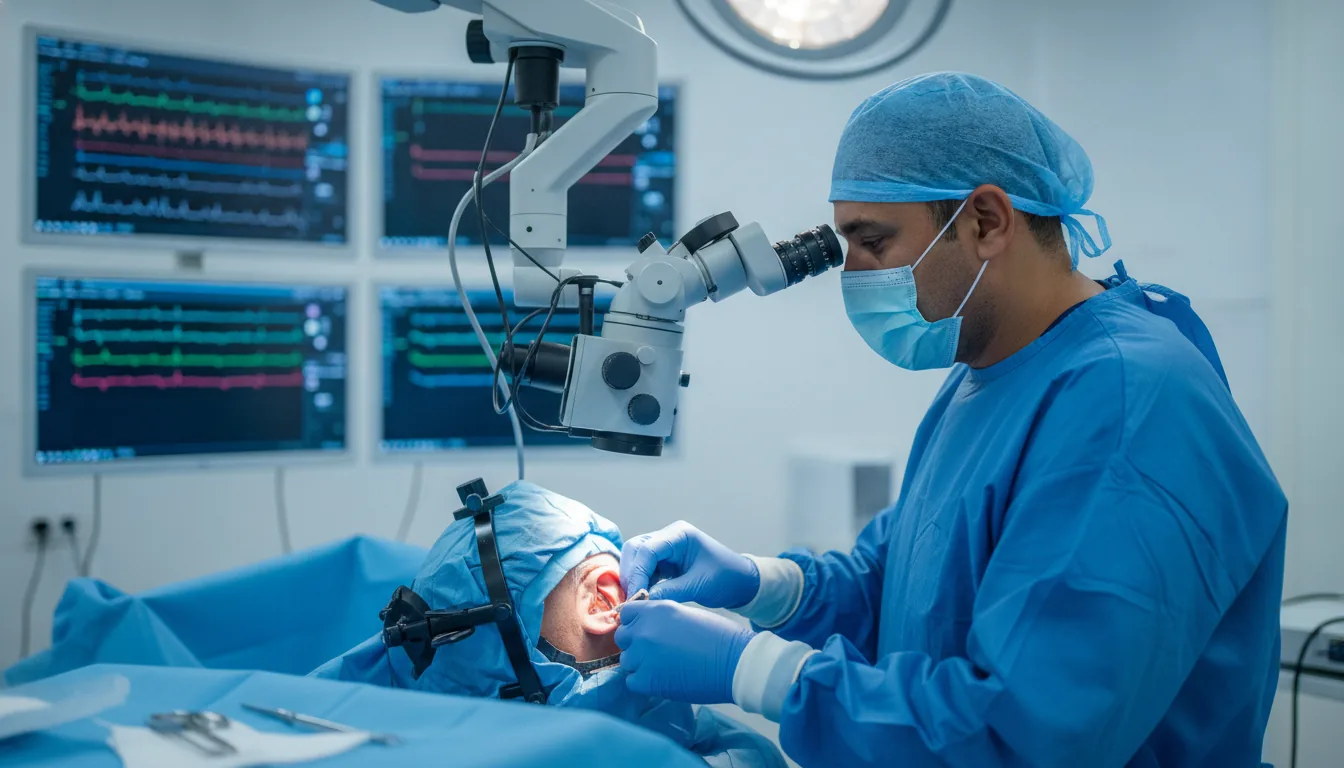
Trigeminal neuralgia manifests as sudden, excruciating facial pain, comparable to electric shocks, triggered by everyday gestures: speaking, chewing, shaving, brushing one's teeth. This pain, among the most intense there is, profoundly affects quality of life when it recurs. Treatment is based first on specific medications, which are effective in most patients. When the pain resists medical treatment or the treatment is poorly tolerated, several surgical solutions exist. The most comprehensive is microvascular decompression: in many cases, the neuralgia is caused by a small artery pulsating against the trigeminal nerve; the operation consists of placing a protective cushion between the vessel and the nerve, under the microscope, through a small opening behind the ear. Less invasive techniques (thermocoagulation, balloon compression) may also be offered depending on the patient's age, general condition and preferences. The choice of technique is discussed case by case with the neurosurgeon. At Clinique Pasteur Tunis, the management of trigeminal neuralgia combines precise assessment — high-resolution MRI looking for the conflict between vessel and nerve — and the expertise of a neurosurgical team equipped with the operating microscope and intraoperative monitoring.
Treatment of trigeminal neuralgia

When is it indicated?

Trigeminal neuralgia resistant to drug treatment

When the excruciating facial pain persists despite specific medications, a surgical solution can bring lasting relief.

Medication side effects preventing continued treatment

Some patients tolerate neuralgia treatments poorly (drowsiness, dizziness). Surgery then offers an alternative so they are not left without a solution.

Conflict between a vessel and the trigeminal nerve identified on MRI

In many cases, the pain comes from a small artery pulsating against the nerve. When the MRI shows this conflict, placing a protective cushion treats the very cause of the neuralgia.

Disabling facial pain affecting eating and social life

When speaking, chewing or brushing one's teeth triggers unbearable shocks, daily life becomes very difficult. The operation aims to restore a normal life.

Preparation

1High-resolution brain MRI focused on the trigeminal nerve
2Precise assessment of the type of pain by the neurosurgeon
3Pre-operative work-up and anesthesia consultation
4Fasting for 6 hours before the operation

Procedure

1

General anesthesia

2

Small opening of the skull behind the ear (microvascular decompression)

3

Identification under the microscope of the conflict between the vessel and the nerve

4

Placement of a protective cushion between the vessel and the nerve

5

Intraoperative monitoring to preserve hearing and the neighboring nerves

6

Careful closure and close monitoring

Duration

2 to 3 hours

Aftercare & Recovery

Pain relief is often rapid, sometimes immediate, after successful decompression. Drug treatment is then gradually reduced under medical supervision. Regular follow-up verifies the stability of the result over time.

Risks and side effects

Temporary headaches and fatigue after the operation
Temporary facial numbness
Hearing loss on the operated side, rare thanks to intraoperative monitoring
Possible long-term recurrence, amenable to further treatment

These risks remain rare. Your surgeon will inform you in detail before the procedure.

Request a Quote

Contact us to schedule a consultation or receive a personalized quote.

Request a Quote +216 36 402 000

At a glance

Duration: 2 to 3 hours
Preparation: Required
Dedicated specialist team