
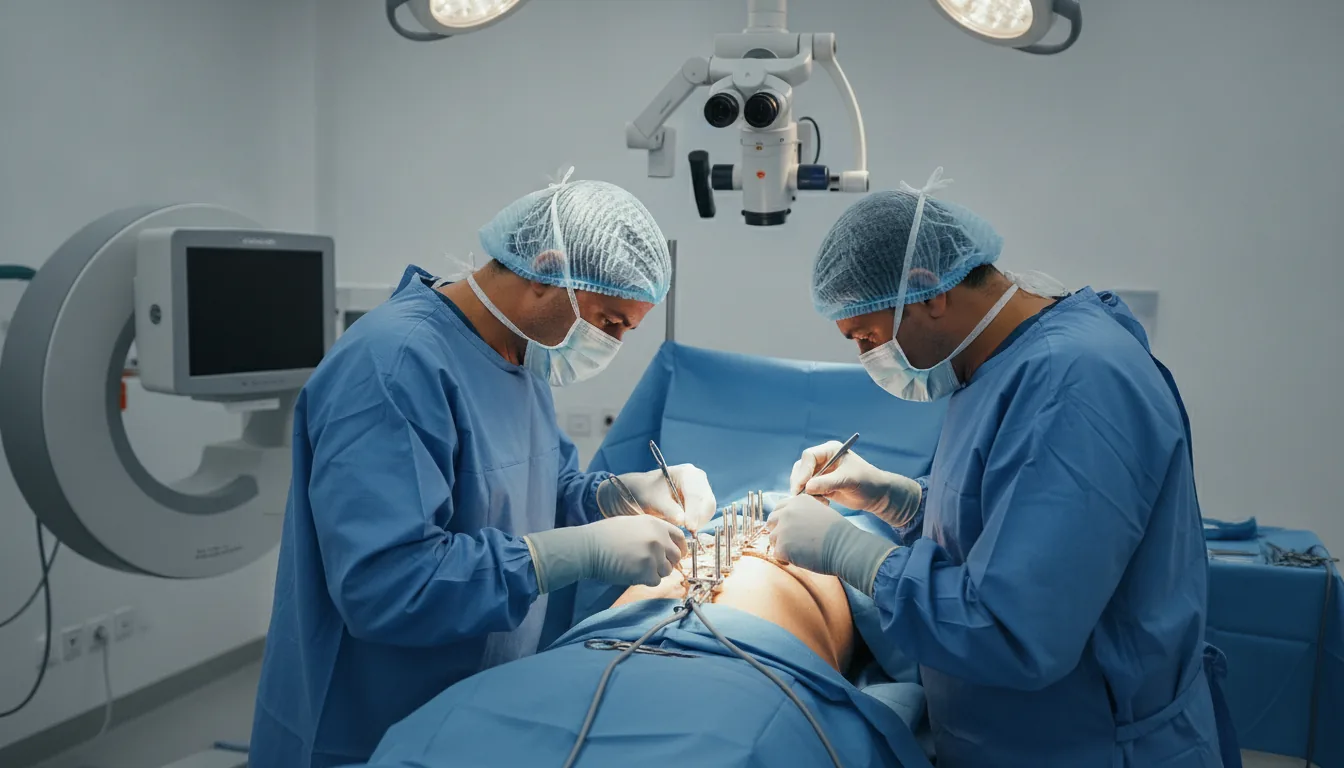
Spine surgery (stabilization, fusion)
Surgeries/Neurosurgery/Spine surgery

Spine surgery (stabilization, fusion)

Surgical stabilization of the spine by arthrodesis (vertebral fusion) in cases of instability, vertebral slippage or fracture.

What is it?

Some spinal conditions are accompanied by instability: slippage of one vertebra over another (spondylolisthesis), advanced disc degeneration, vertebral fracture, deformity or the aftermath of previous surgery. When this instability causes chronic pain or threatens the nerve structures, surgical stabilization may be offered. Arthrodesis consists of permanently joining two or more vertebrae together using implants (screws, rods, intervertebral cages) and bone graft, in order to eliminate the painful movement and restore the alignment of the spine. It is frequently combined with decompression of the compressed nerves. Planning is rigorous, based on complete imaging, and the procedure is performed with intraoperative radiological control ensuring precise implant positioning. Patients are mobilized early, and bone fusion continues over several months, supported by tailored rehabilitation. At Clinique Pasteur Tunis, spinal stabilization surgery is performed by an experienced neurosurgical team, with a complete imaging platform and attentive post-operative monitoring, for a gradual and safe return to activities.
Spine surgery (stabilization, fusion)

When is it indicated?

Painful or progressive vertebral slippage (spondylolisthesis)

When a vertebra gradually slips over the one below it, it causes pain and can compress the nerves. Fusing the vertebrae stops this slippage.

Vertebral instability causing chronic pain

Abnormal movement between two vertebrae can sustain persistent back pain. Joining them together eliminates this painful movement.

Vertebral fracture requiring stabilization

Some spinal fractures are unstable and must be fixed with implants to protect the spinal cord and nerves while the bone heals.

Advanced disc degeneration resistant to treatment

When a severely worn disc remains painful despite all medical treatments, fusing the affected segment can bring lasting relief.

Spinal deformities requiring correction

Some abnormal curvatures of the spine worsen over time and warrant surgical correction to restore good spinal balance.

Preparation

1Complete imaging work-up (MRI, CT scan, dynamic X-rays)
2Pre-operative work-up and anesthesia consultation
3Stopping smoking is strongly recommended: it promotes bone fusion
4Adjustment of anticoagulant treatments
5Fasting for 6 hours before the operation

Procedure

1

General anesthesia

2

Surgical approach to the spine adapted to the levels to be treated

3

Decompression of the compressed nerve structures if necessary

4

Placement of the implants (screws, rods, cages) under radiological control

5

Placement of bone graft to achieve fusion

6

Careful closure

7

Early first mobilization assisted by the team

Duration

2 to 5 hours depending on the extent of the construct

Aftercare & Recovery

The hospital stay generally lasts a few days. Bone fusion is achieved gradually over several months, during which heavy exertion is avoided. Rehabilitation, started gently, supports the return to activities. Regular radiological check-ups verify proper fusion.

Risks and side effects

Post-operative pain, well controlled by pain medication
Sometimes slow bone fusion, promoted by stopping smoking
Implant-related discomfort, rare and amenable to an additional procedure if needed
Rare neurological complications, prevented by intraoperative radiological control

These risks remain rare. Your surgeon will inform you in detail before the procedure.

Request a Quote

Contact us to schedule a consultation or receive a personalized quote.

Request a Quote +216 36 402 000

At a glance

Duration: 2 to 5 hours depending on the extent of the construct
Preparation: Required
Dedicated specialist team