
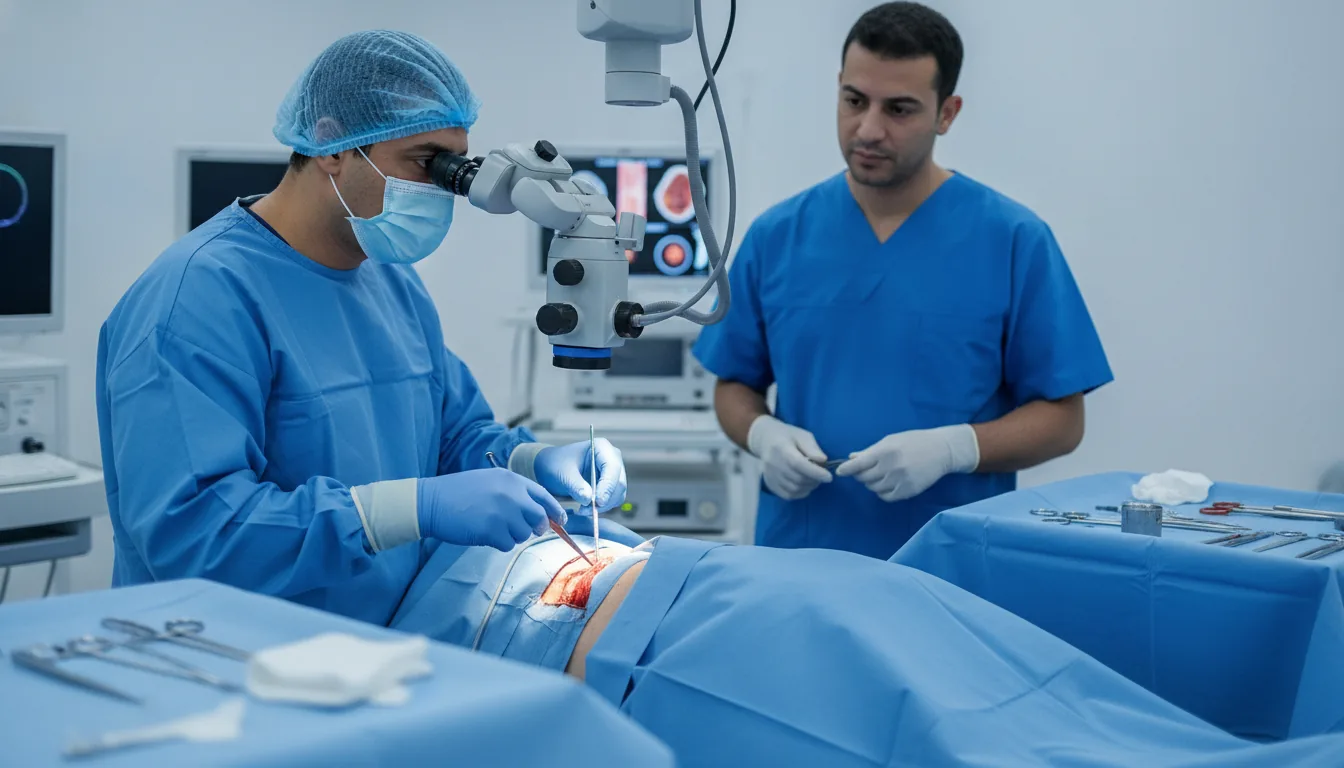
Cervical and lumbar herniated disc surgery
Surgeries/Neurosurgery/Herniated disc

Cervical and lumbar herniated disc surgery

Minimally invasive surgical treatment of herniated discs to relieve the nerve compression responsible for sciatica and neuralgia.

What is it?

A herniated disc occurs when a fragment of an intervertebral disc shifts and compresses a nerve root. In the lumbar spine, it causes the classic sciatica or femoral neuralgia; in the cervical spine, arm pain (cervicobrachial neuralgia). Surgery is considered when the pain resists well-conducted medical treatment, or in the event of a neurological deficit. The operation consists of freeing the compressed nerve root by removing the disc fragment responsible. In the lumbar spine, it is performed through a short posterior approach, under the operating microscope, with maximum preservation of the muscles. In the cervical spine, the approach is most often through the front of the neck, with placement of an intervertebral implant replacing the removed disc. Relief of limb pain is usually rapid, sometimes as soon as the patient wakes up. Recovery is aided by early mobilization and simple postural advice. At Clinique Pasteur Tunis, herniated disc surgery is performed under the operating microscope by an experienced neurosurgical team, with a short hospital stay and attentive support throughout convalescence.
Cervical and lumbar herniated disc surgery

When is it indicated?

Sciatica or femoral neuralgia resistant to well-conducted medical treatment

When pain radiating down the leg persists despite medication, rehabilitation and injections, removing the disc fragment compressing the nerve usually brings rapid relief.

Persistent cervicobrachial neuralgia

This is the equivalent of sciatica in the arm: a herniated disc in the neck compresses a nerve and causes pain radiating into the upper limb. Surgery frees this nerve.

Motor deficit related to nerve compression

When the compressed nerve begins to lose strength, for example with a foot or hand that responds less well, it is important to operate without delay to promote recovery.

Disabling pain affecting quality of life despite treatment

When pain prevents sleeping, working or leading a normal life despite well-followed treatment, surgery becomes a reasonable and effective option.

Herniated disc confirmed by MRI and consistent with the symptoms

The operation is only offered when imaging shows a hernia that corresponds exactly to the pain experienced, which is the key to a good surgical outcome.

Preparation

1Recent spinal MRI confirming the hernia
2Anesthesia consultation
3Adjustment of anticoagulant treatments according to instructions
4Fasting for 6 hours before the operation
5Stopping smoking is recommended to promote healing

Procedure

1

General anesthesia

2

Short incision over the affected disc (back or front of the neck)

3

Freeing of the nerve root under the operating microscope

4

Removal of the disc fragment responsible for the compression

5

Placement of an intervertebral implant in the cervical spine if necessary

6

Careful closure and early mobilization from the following day

Duration

1 to 2 hours

Aftercare & Recovery

Limb pain is usually markedly relieved within the first few days. The hospital stay is short and the return to activities is gradual, guided by the team's advice. Heavy lifting is avoided for a few weeks, and gentle rehabilitation may support recovery.

Risks and side effects

Temporary scar pain
Residual tingling that fades gradually
Possible recurrence of a hernia at the same level, prevented by postural advice
Rare neurological complications, minimized by the microsurgical technique

These risks remain rare. Your surgeon will inform you in detail before the procedure.

Request a Quote

Contact us to schedule a consultation or receive a personalized quote.

Request a Quote +216 36 402 000

At a glance

Duration: 1 to 2 hours
Preparation: Required
Dedicated specialist team