
Surgical treatment of epilepsy
Surgeries/Neurosurgery/Epilepsy surgery

Surgical treatment of epilepsy

Surgical management of drug-resistant epilepsy, after a complete neurophysiological work-up.

What is it?

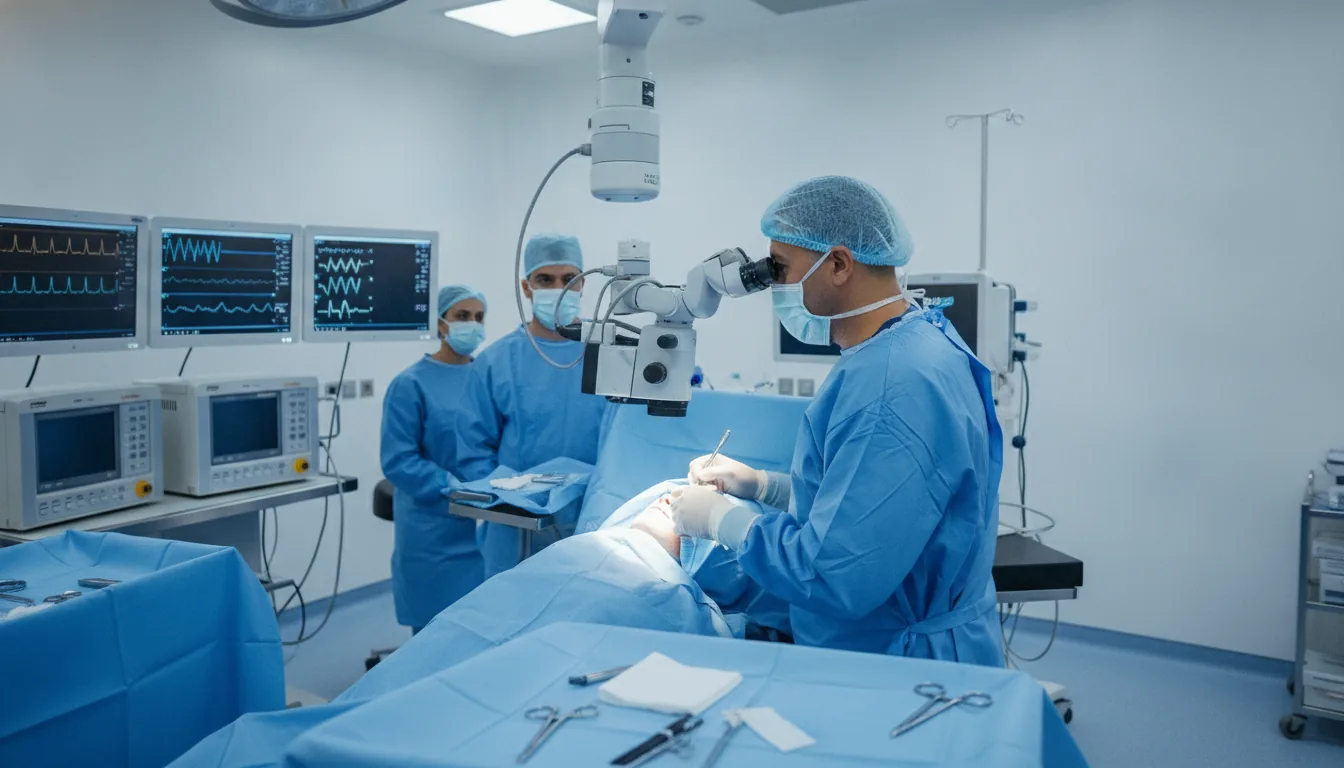
Most epilepsies are well controlled with medication. But when seizures persist despite well-conducted treatment — known as drug-resistant epilepsy — a surgical solution may be considered in certain carefully selected patients. The principle is to identify precisely the area of the brain where the seizures originate and then, when it can be removed without functional risk, to treat it surgically. This identification relies on a rigorous pre-surgical work-up: prolonged video-EEG recordings, high-resolution brain MRI and neuropsychological assessment, carried out in close collaboration between neurologists, neurophysiologists and neurosurgeons. The operation itself is performed under the microscope, guided by neuronavigation and secured by intraoperative neurophysiological monitoring. The goal is a major reduction, or even complete disappearance, of the seizures, resulting in a transformation of quality of life. At Clinique Pasteur Tunis, this care relies on close collaboration between the neurosurgery department and the clinic's neurophysiological exploration center, which performs the pre-surgical video-EEG work-ups and the intraoperative monitoring.
Surgical treatment of epilepsy

When is it indicated?

Epilepsy resistant to well-conducted drug treatment

When seizures persist despite several well-followed antiepileptic treatments, a surgical solution can be considered in certain carefully selected patients.

Disabling seizures affecting daily, school or professional life

Frequent seizures limit driving, work, studies and social life. The goal of surgery is to greatly reduce, or even eliminate, these seizures.

Epileptogenic zone identified and accessible to a surgical procedure

The operation is only possible if the region of the brain where the seizures originate is precisely located and can be treated without affecting essential functions.

Complete pre-surgical work-up concluding that surgery is indicated

Seizure recordings, MRI and neuropsychological assessment are analyzed as a team: surgery is only offered if all of these findings are consistent.

Preparation

1Prolonged video-EEG work-up at the neurophysiological exploration center
2High-resolution brain MRI
3Complete neuropsychological assessment
4Multidisciplinary meeting validating the indication
5Anesthesia consultation and fasting for 6 hours before the operation

Procedure

1

General anesthesia

2

Precise localization of the area to be treated using neuronavigation

3

Targeted craniotomy

4

Removal of the epileptogenic zone under the microscope

5

Continuous neurophysiological monitoring to protect brain functions

6

Closure and monitoring in intensive care or a step-down unit

Duration

3 to 5 hours

Aftercare & Recovery

Antiepileptic treatment is continued after the operation and then gradually reassessed by the neurologist. The evolution of the seizures is closely followed at regular consultations, with EEG check-ups at the neurophysiological exploration center. Recovery is supported step by step by the team.

Risks and side effects

Temporary fatigue and headaches after the operation
Temporary neurological disturbances, minimized by intraoperative monitoring
Possible persistence of some seizures, requiring continued appropriate treatment

These risks remain rare. Your surgeon will inform you in detail before the procedure.

Request a Quote

Contact us to schedule a consultation or receive a personalized quote.

Request a Quote +216 36 402 000

At a glance

Duration: 3 to 5 hours
Preparation: Required
Dedicated specialist team