
Peripheral nerve surgery
Surgeries/Neurosurgery/Peripheral nerves

Peripheral nerve surgery

Surgical treatment of nerve compressions (carpal tunnel, ulnar nerve) and traumatic injuries of the nerves of the limbs.

What is it?

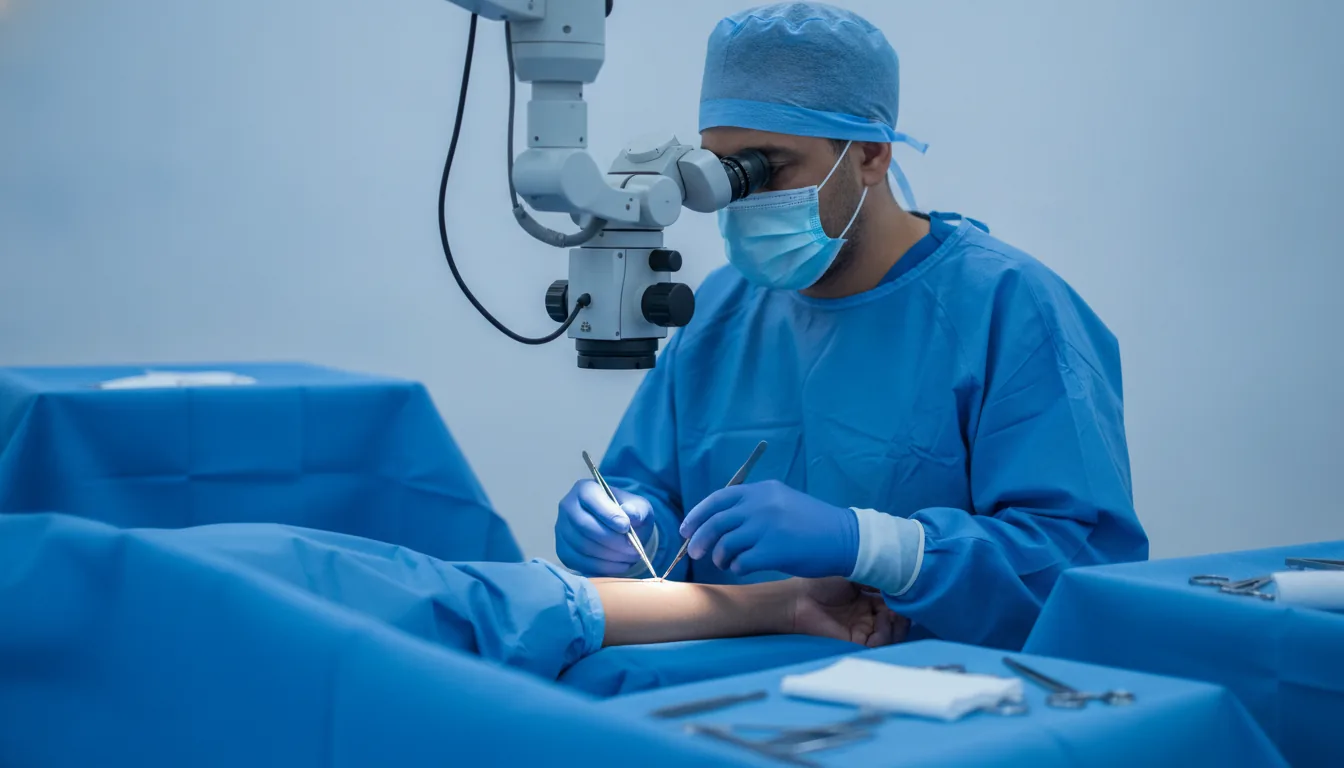
Peripheral nerves, which run through the arms and legs, can be compressed at narrow anatomical passages or injured during trauma. The most frequent compression is carpal tunnel syndrome, which affects the median nerve at the wrist and causes nighttime tingling in the fingers; compression of the ulnar nerve at the elbow is another classic cause. Nerve release surgery consists of opening the anatomical tunnel responsible for the compression to give the nerve more space. It is a short operation, often performed as day surgery, and relief of symptoms is generally rapid, particularly for nighttime tingling. In the event of a traumatic nerve injury (wound, stretching), microsurgical repair can be performed: direct suturing of the nerve or nerve grafting under the microscope. Recovery is then gradual, as the nerve regrows slowly, and is supported by tailored rehabilitation. At Clinique Pasteur Tunis, peripheral nerve surgery is performed under the operating microscope by an experienced neurosurgical team, in coordination with the clinic's neurophysiological exploration center, which performs the diagnostic and follow-up electromyograms.
Peripheral nerve surgery

When is it indicated?

Carpal tunnel syndrome with bothersome tingling or loss of strength

The nerve compressed at the wrist causes tingling in the fingers, especially at night, then loss of strength. A short operation releases it and quickly relieves these symptoms.

Compression of the ulnar nerve at the elbow

This nerve, the one that causes an electric shock when you bump your elbow, can be compressed and cause tingling and weakness in the last fingers. Its surgical release prevents worsening.

Other nerve compression syndromes confirmed by electromyogram

Other nerves in the arms or legs can be trapped in narrow passages. The electromyogram confirms the compression before release surgery is offered.

Traumatic nerve injury requiring repair

After a wound or stretching injury, a severed nerve can be repaired under the microscope. The nerve then regrows slowly, with gradual recovery.

Benign tumor of a peripheral nerve

Some small benign tumors develop on the nerves and become bothersome or painful. They are removed while carefully preserving the nerve.

Preparation

1Electromyogram (EMG) confirming the compression or injury
2Consultation with the surgeon to define the procedure
3Anesthesia consultation
4Fasting depending on the type of anesthesia planned

Procedure

1

Regional or general anesthesia depending on the procedure

2

Short incision over the area of compression

3

Release of the nerve under visual control, or under the microscope

4

Microsurgical repair in the event of traumatic injury

5

Careful closure and dressing

6

Return home the same day in most cases

Duration

30 minutes to 2 hours depending on the procedure

Aftercare & Recovery

For nerve releases, nighttime tingling often disappears quickly; strength and sensation then recover gradually. After repair of an injured nerve, recovery is slower, as the nerve regrows little by little, and is supported by rehabilitation followed by the team.

Risks and side effects

Temporary scar sensitivity
Sometimes incomplete recovery when the compression was longstanding
Temporary stiffness, improved by rehabilitation

These risks remain rare. Your surgeon will inform you in detail before the procedure.

Request a Quote

Contact us to schedule a consultation or receive a personalized quote.

Request a Quote +216 36 402 000

At a glance

Duration: 30 minutes to 2 hours depending on the procedure
Preparation: Required
Dedicated specialist team