
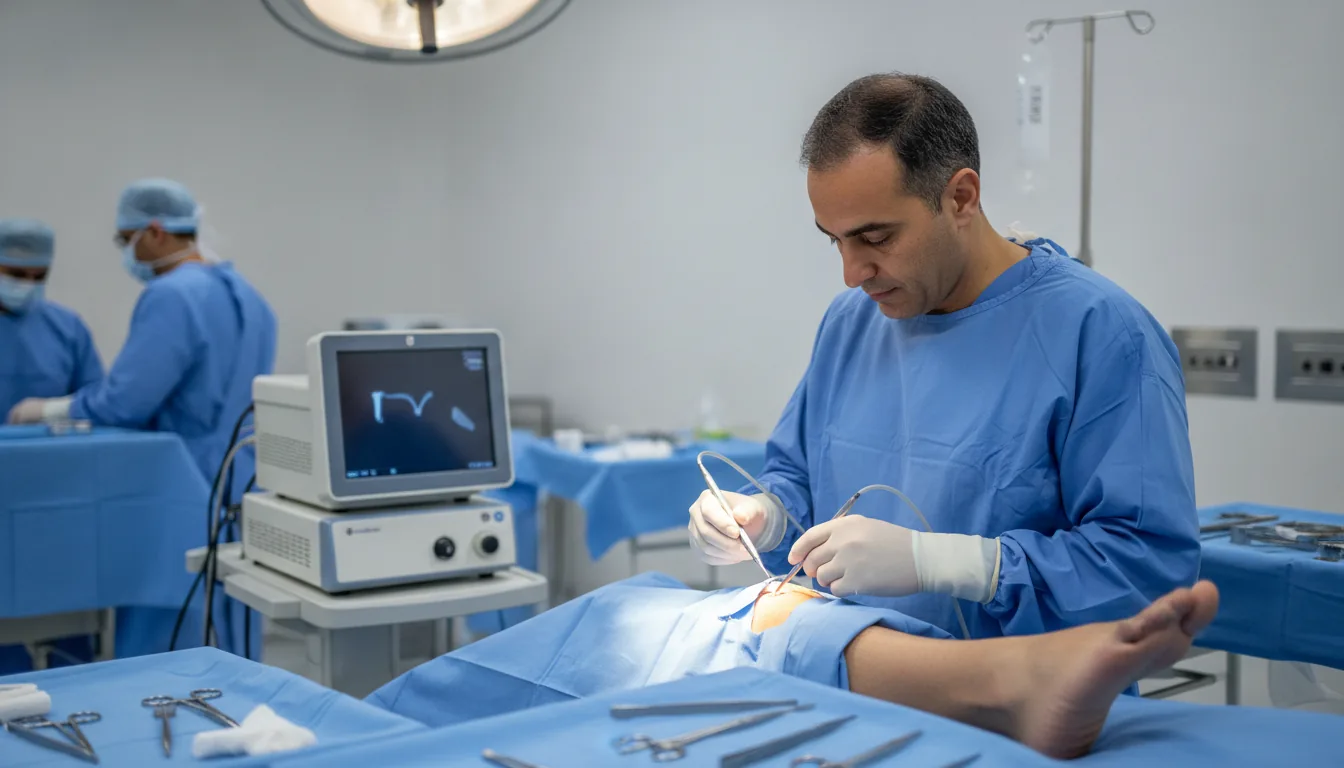
Foot surgery
Surgeries/Orthopedic/Foot surgery

Foot surgery

Surgical correction of deformities and conditions of the foot: hallux valgus (bunion), claw toes, Morton's neuroma, heel spur.

What is it?

Foot surgery treats the deformities and pain that interfere with footwear and walking: hallux valgus ("bunion"), claw toes, Morton's neuroma, forefoot osteoarthritis and certain heel pains. These conditions, often endured for a long time, impair quality of life and can worsen over time. Modern techniques, particularly percutaneous and minimally invasive approaches, make it possible to correct deformities through very short incisions, with reduced post-operative pain and a rapid return to weight-bearing. The choice of technique is adapted to each foot, after a careful clinical examination and weight-bearing X-rays. In the majority of cases, the procedure is performed on an outpatient basis and walking resumes the same day with a specific post-operative shoe, without a cast or crutches in many situations. At Clinique Pasteur Tunis, foot surgery is performed by orthopedic surgeons who have mastered minimally invasive techniques, within a comfortable outpatient pathway with clear follow-up instructions and support until normal footwear can be worn again.
Foot surgery

When is it indicated?

Hallux valgus (deviation of the big toe) that is painful or interferes with footwear

The big toe deviates toward the others and a "bunion" protrudes and rubs in the shoe. Surgery realigns the toe to restore comfortable footwear.

Claw toes

The toes curl up and rub against the shoe, causing pain and calluses. A simple surgical procedure restores their natural position.

Morton's neuroma (forefoot pain)

A small irritated nerve between the toes causes electric-shock sensations or burning when walking. The operation eliminates this irritation when insoles and injections are no longer sufficient.

Metatarsalgia (weight-bearing pain under the forefoot)

Poorly distributed pressure under the front of the foot causes pain as if walking on pebbles. Surgery rebalances these pressure points.

Osteoarthritis of the big toe (hallux rigidus)

Wear of the big toe joint makes it stiff and painful with every step. The operation relieves the pain and makes the rolling motion of the step easier.

Certain chronic heel pains

When persistent heel pain resists insoles, rehabilitation and medical treatments, a targeted surgical procedure may be proposed.

Preparation

1Specialist consultation and weight-bearing X-rays of the foot
2Pre-operative anesthesia consultation
3Obtain the prescribed post-operative shoe before the operation
4Fast for 6 hours before the operation
5Arrange for someone to accompany you home

Procedure

1

Regional anesthesia of the ankle and foot in most cases

2

Correction of the deformity using a percutaneous or minimally invasive technique

3

Intra-operative radiological check of the correction

4

Specific dressing that helps maintain the correction

5

Walking resumed the same day with the post-operative shoe

6

Return home within the day in most cases

Duration

30 minutes to 1 hour

Aftercare & Recovery

Weight-bearing is allowed immediately with a suitable shoe, worn for a few weeks. The swelling of the foot gradually decreases and normal footwear is resumed over the following weeks. Correction of the deformity brings lasting comfort when walking.

Risks and side effects

Swelling of the foot persisting for a few weeks, normal after this type of surgery
Sensitivity of the scar or forefoot, temporary
Partial recurrence of the deformity, uncommon with current techniques

These risks remain rare. Your surgeon will inform you in detail before the procedure.

Request a Quote

Contact us to schedule a consultation or receive a personalized quote.

Request a Quote +216 36 402 000

At a glance

Duration: 30 minutes to 1 hour
Preparation: Required
Dedicated specialist team