
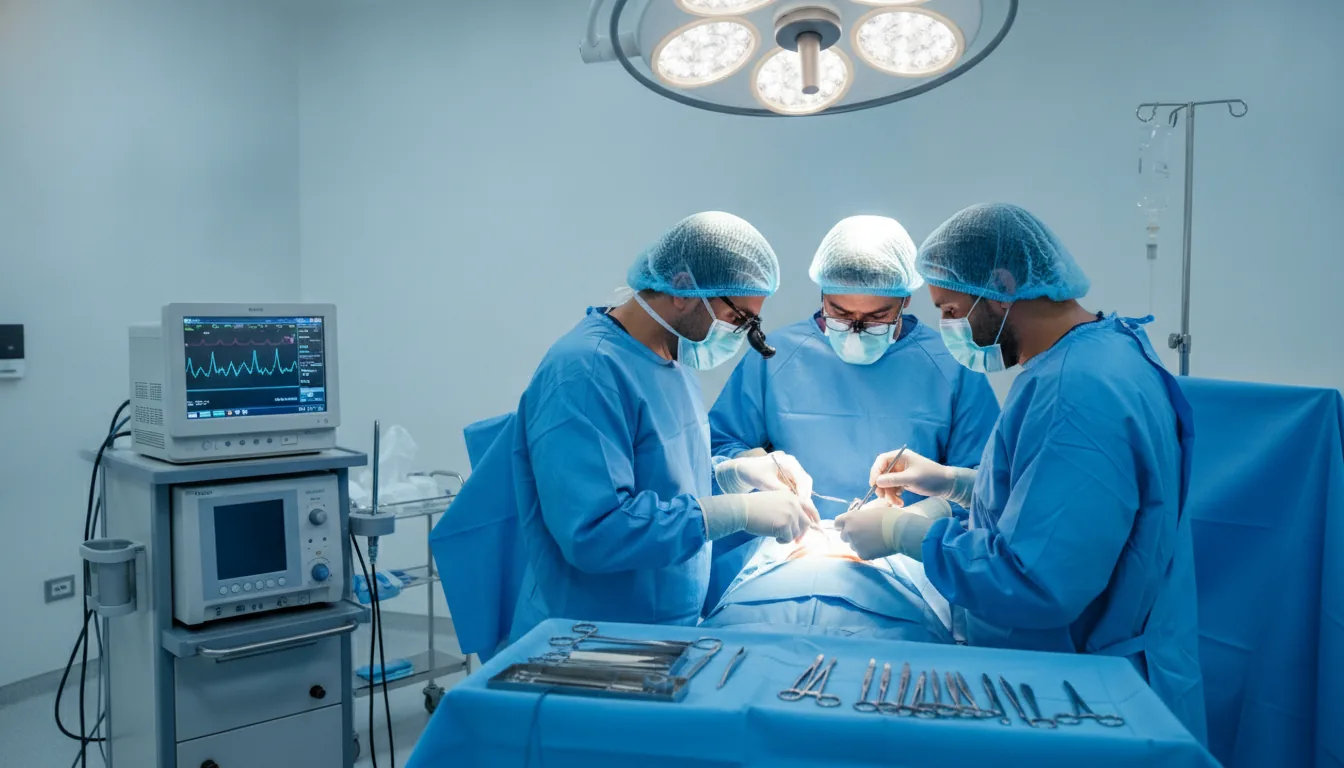
Salivary gland surgery
Surgeries/ENT/Salivary glands

Salivary gland surgery

Partial or total removal of a salivary gland (parotid, submandibular) in the event of a tumour or recurrent stones.

What is it?

The major salivary glands — the parotid, located in front of the ear, and the submandibular gland, under the jaw — can be the site of tumours, most often benign, or of stones responsible for painful swelling and repeated infections. Surgery consists of removing the diseased part of the gland, or even the entire gland depending on the nature of the lesion. Parotid surgery is a delicate procedure because the facial nerve, which controls the muscles of the face, runs through the gland: its preservation is the surgeon's absolute priority, assisted by facial nerve monitoring throughout the operation. The incisions are placed along the natural folds of the skin for a discreet aesthetic result. Every surgical specimen is analysed under the microscope to confirm the exact nature of the lesion. At Clinique Pasteur Tunis, salivary gland surgery is carried out by ENT surgeons experienced in neck surgery, with facial nerve monitoring and microsurgical instruments, for a precise and safe procedure.
Salivary gland surgery

When is it indicated?

Tumour of the parotid or submandibular gland

A lump appearing in front of the ear or under the jaw, most often benign, must be removed and analysed to confirm its nature.

Recurrent salivary stones with painful swelling

Stones can block the flow of saliva and cause the gland to swell painfully, especially at mealtimes; surgery resolves the problem at its source.

Repeated infections of a salivary gland

When a gland becomes infected regularly despite treatments, its removal puts an end to these painful episodes.

Persistent enlargement of a gland requiring analysis

A gland that remains swollen without explanation must be examined; the operation allows a complete analysis and a precise diagnosis.

Preparation

1Imaging of the gland (ultrasound, MRI depending on the case)
2Diagnostic needle aspiration sometimes performed before the procedure
3Anaesthesia consultation
4Fast for 6 hours before the procedure

Procedure

1

General anaesthesia

2

Discreet incision hidden in the natural folds of the skin

3

Identification and protection of the facial nerve under continuous monitoring (parotid surgery)

4

Removal of the lesion or the gland depending on the findings

5

Possible placement of a small temporary drain

6

Careful closure for a discreet aesthetic result

Duration

1 to 3 hours depending on the gland and the lesion

Aftercare & Recovery

The hospital stay is short, with any drain removed before discharge or at an early follow-up consultation. The results of the analysis of the surgical specimen are explained at a consultation. The scar fades gradually over the months.

Risks and side effects

Transient weakness of some facial muscles after parotid surgery, resolving in the vast majority of cases
Reduced sensation in the earlobe, often temporary
Temporary haematoma or local swelling

These risks remain rare. Your surgeon will inform you in detail before the procedure.

Request a Quote

Contact us to schedule a consultation or receive a personalized quote.

Request a Quote +216 36 402 000

At a glance

Duration: 1 to 3 hours depending on the gland and the lesion
Preparation: Required
Dedicated specialist team