
Surgery for chronic otitis
Surgeries/ENT/Chronic otitis

Surgery for chronic otitis

Surgical treatment of chronic ear infections and cholesteatoma, to durably clear the ear and preserve hearing.

What is it?

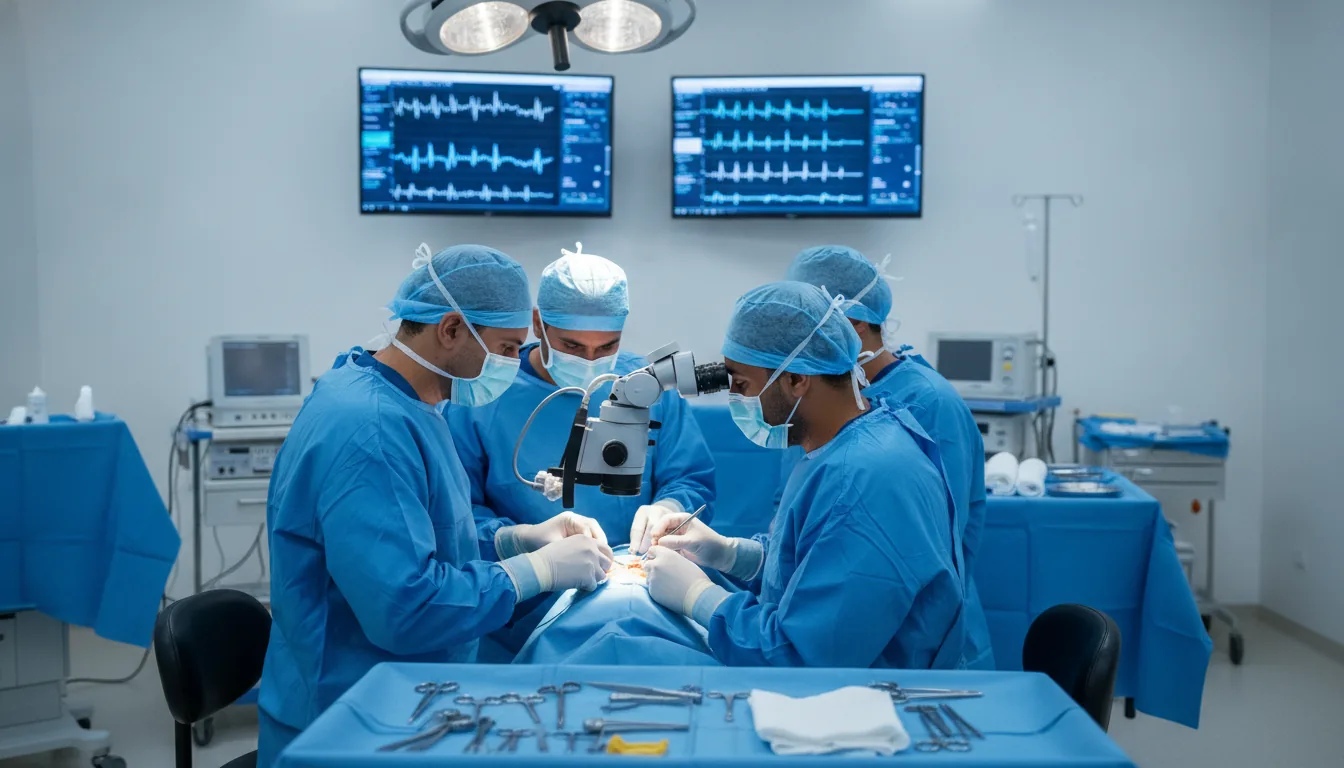
Chronic otitis is a persistent inflammation of the middle ear that presents as repeated discharge, gradually worsening hearing loss and sometimes pain. Certain forms, such as cholesteatoma, correspond to a build-up of skin in the middle ear that can erode neighbouring structures and must be removed surgically. Surgery for chronic otitis aims first to clear the ear: removing the inflamed tissue or the cholesteatoma, treating lesions of the mastoid bone if necessary, then rebuilding the eardrum and, where possible, the ossicular chain to preserve or improve hearing. The operation takes place under an operating microscope, with microsurgical instruments and, where useful, facial nerve monitoring which secures the surgical procedure. Regular follow-up is then essential, particularly after cholesteatoma surgery. At Clinique Pasteur Tunis, this specialised surgery is carried out by ENT surgeons experienced in otology, with a complete technical platform — operating microscope and facial nerve monitoring — guaranteeing precision and safety.
Surgery for chronic otitis

When is it indicated?

Chronic otitis with repeated discharge despite treatments

When the ear becomes infected and discharges despite repeated treatments, surgery clears the ear thoroughly and durably.

Cholesteatoma of the middle ear

A cholesteatoma is a build-up of skin in the ear that can damage neighbouring structures; its surgical removal is essential.

Hearing loss related to middle ear lesions

When chronic infection has damaged the eardrum or the ossicles, their reconstruction aims to preserve or improve hearing.

Mastoid bone lesions associated with chronic infection

The infection can spread to the bone behind the ear; its surgical treatment eliminates this focus and protects the ear.

Preparation

1Complete ENT work-up with an audiogram
2CT scan of the temporal bones to determine the extent of the lesions
3Prior local treatment to dry the ear if possible
4Anaesthesia consultation
5Fast for 6 hours before the procedure

Procedure

1

General anaesthesia

2

Access to the ear, most often through a discreet incision behind the auricle

3

Removal of the diseased tissue (inflammation, cholesteatoma) under the microscope

4

Monitoring of the facial nerve throughout the procedure

5

Reconstruction of the eardrum and ossicles when possible

6

Protective ear dressing

Duration

2 to 3 hours

Aftercare & Recovery

The hospital stay is short. The ear must be kept dry for several weeks and local care is scheduled. Regular follow-up, sometimes with imaging, checks for any recurrence, particularly after a cholesteatoma. Hearing is reassessed later with an audiogram.

Risks and side effects

Transient dizziness or ringing in the ears
Residual hearing loss depending on the extent of the initial lesions
Possible recurrence of the cholesteatoma, detected through regular follow-up
The facial nerve is protected by intraoperative monitoring

These risks remain rare. Your surgeon will inform you in detail before the procedure.

Request a Quote

Contact us to schedule a consultation or receive a personalized quote.

Request a Quote +216 36 402 000

At a glance

Duration: 2 to 3 hours
Preparation: Required
Dedicated specialist team