
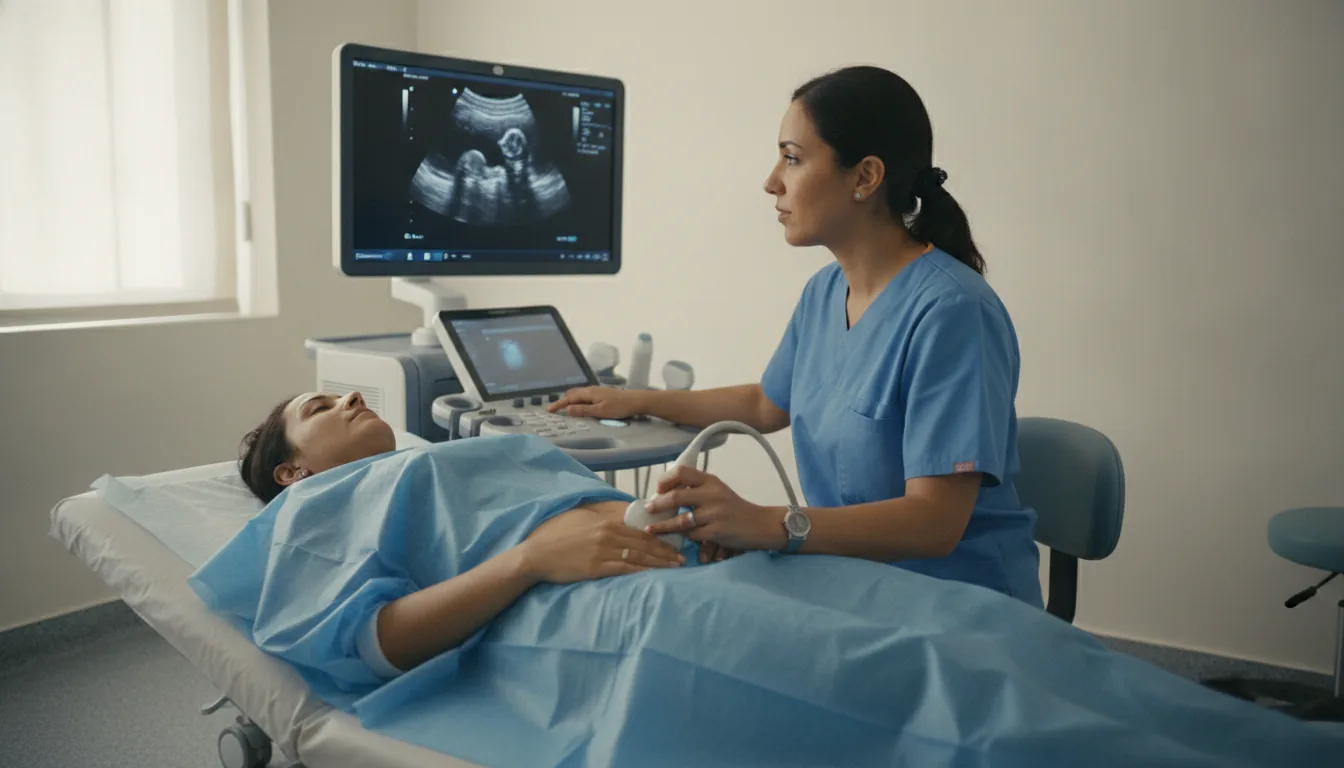
Ovarian surgery (cyst, tumor)

Ovarian surgery (cyst, tumor)

Surgical treatment of ovarian cysts and tumors, most often by laparoscopy, preserving the ovary whenever possible.

What is it?

Ovarian cysts are very common and most often benign. Many disappear spontaneously and require only simple monitoring. Surgery is offered when the cyst persists, grows, causes pain, shows particular features on imaging, or in the event of a complication such as torsion of the ovary. The procedure of choice is laparoscopy: through small incisions, the surgeon removes the cyst while preserving the healthy ovarian tissue (cystectomy), which is particularly important for young women or those wishing to become pregnant. In certain situations, notably after the menopause or in the case of a suspicious lesion, removal of the ovary may be preferable; this decision is always explained and discussed beforehand. The pre-operative work-up, combining ultrasound, sometimes MRI and blood tests, allows the lesion to be characterized as accurately as possible and the most appropriate procedure to be planned. If there is any doubt about the nature of the lesion, an analysis can be performed during the procedure so that the surgical approach can be adapted immediately. At Clinique Pasteur Tunis, ovarian surgery is performed by gynecologists experienced in laparoscopy, with constant care to preserve ovarian function and fertility. Recovery is generally straightforward, with a rapid return to normal life.
Ovarian surgery (cyst, tumor)

When is it indicated?

Persistent or growing ovarian cyst

A cyst that does not disappear on its own or keeps growing deserves to be removed, to prevent complications and verify its nature.

Cyst causing pelvic pain

When a cyst is responsible for pain in the lower abdomen, its removal brings rapid and lasting relief.

Ultrasound features requiring excision

Certain features seen on ultrasound lead, as a precaution, to removing the cyst so that it can be analyzed precisely.

Suspected torsion of the ovary (emergency)

When the ovary twists on itself, it is an emergency: prompt surgery makes it possible to untwist it and, in most cases, to preserve it.

Ovarian endometrioma

This cyst, linked to endometriosis, is removed delicately, preserving as much of the ovary's healthy tissue as possible.

Ovarian lesion requiring analysis

When the nature of an ovarian lesion is uncertain, removing it allows it to be analyzed and the most appropriate follow-up to be offered.

Preparation

1Complete imaging work-up (pelvic ultrasound, MRI if necessary)
2Blood tests prescribed depending on the case
3Pre-operative consultations with the surgeon and the anesthesiologist
4Fast for 6 hours before the procedure
5Report all current medications

Procedure

1

Admission on the day of the procedure

2

General anesthesia

3

Exploratory laparoscopy of the pelvis

4

Cystectomy preserving the ovary, or removal of the ovary if necessary

5

Analysis of the surgical specimen, sometimes during the procedure

6

Closure of the small incisions and monitoring in the recovery room

Duration

45 minutes to 1 hour 30 minutes

Aftercare & Recovery

After laparoscopy, patients are up early and return home quickly, often the very next day. Post-operative pain is moderate and normal activities resume within one to two weeks. The results of the analysis of the surgical specimen are explained at the follow-up consultation, along with any further steps required.

Risks and side effects

Minimally invasive surgery with a generally straightforward recovery
Shoulder pain is possible for a few days, related to the gas used in laparoscopy
Rare complications are prevented by the team's experience and post-operative monitoring

These risks remain rare. Your surgeon will inform you in detail before the procedure.

Request a Quote

Contact us to schedule a consultation or receive a personalized quote.

Request a Quote +216 36 402 000

At a glance

Duration: 45 minutes to 1 hour 30 minutes
Preparation: Required
Dedicated specialist team