
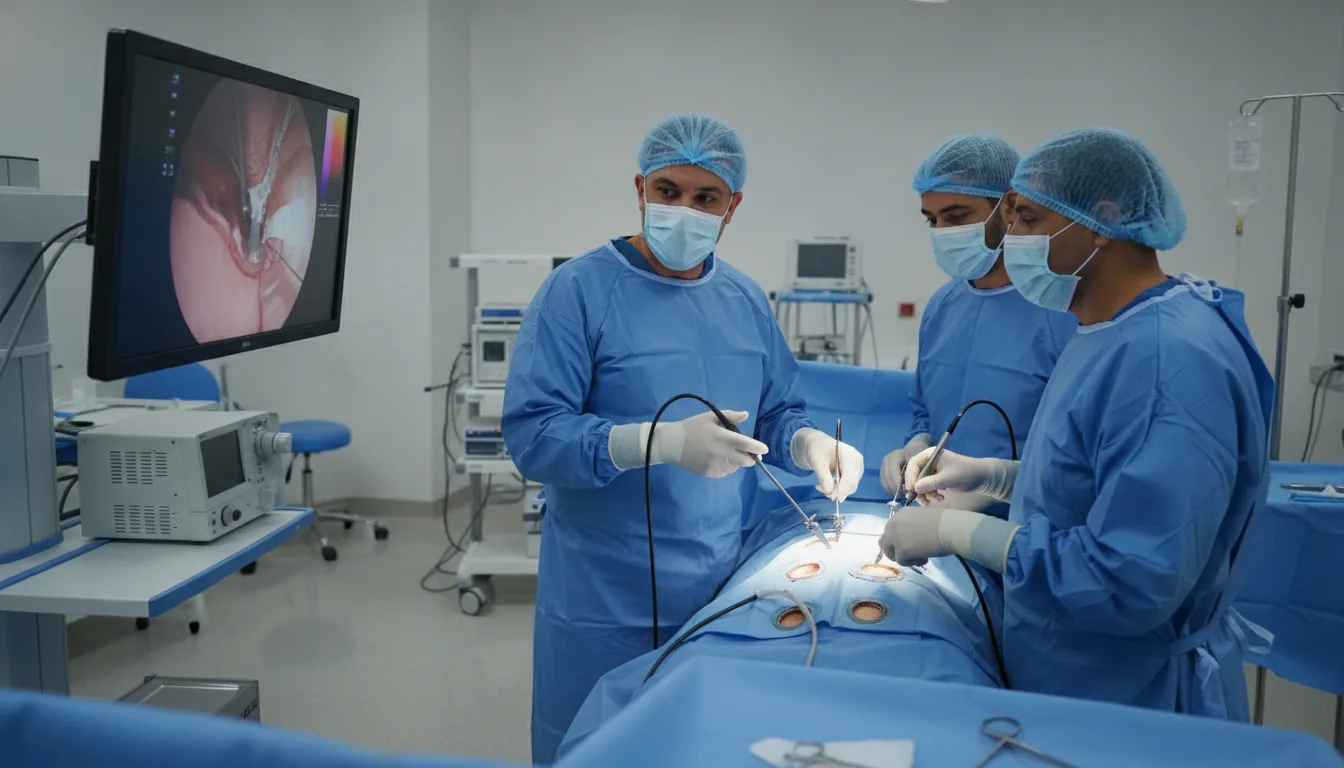
Laparoscopic prostatectomy
Surgeries/Laparoscopic/Prostatectomy

Laparoscopic prostatectomy

Removal of the prostate by laparoscopy, with precise dissection aimed at preserving the patient's continence and functions.

What is it?

Laparoscopic prostatectomy involves removing the prostate through small abdominal incisions, under the guidance of a high-definition camera. The magnified view offered by laparoscopy allows very precise dissection of the structures surrounding the prostate, particularly those involved in urinary continence and sexual function. This procedure is mainly proposed for the treatment of localised prostate cancer, after a complete work-up and a discussion of the various options with the patient. The continuity of the urinary tract is restored during the same operation, and a urinary catheter is left in place for a few days. At Clinique Pasteur Tunis, laparoscopic prostatectomy is performed by experienced urologists, with comprehensive support: detailed information before the procedure, attentive management of convalescence and, if needed, pelvic floor rehabilitation to support the recovery of continence. The surgical specimen is sent for pathological analysis.
Laparoscopic prostatectomy

When is it indicated?

Localised prostate cancer, after complete work-up and multidisciplinary discussion

When a cancer remains confined to the prostate, removing the gland aims for a cure while preserving the patient's continence and functions as much as possible.

Decision shared with the patient among the available treatment options

Several treatments exist for this disease; the operation is proposed after an open discussion of the advantages of each option.

Certain particular situations assessed by the urologist

In certain specific cases, the urologist may recommend this surgery after a thorough individual evaluation.

Preparation

1Complete urological work-up: blood markers, imaging and prior biopsies
2Multidisciplinary team meeting to validate the indication
3Anaesthesia consultation
4Fasting for 6 hours before the procedure
5Adjustment of anticoagulants according to medical advice

Procedure

1

General anaesthesia

2

Introduction of the camera and instruments through small incisions

3

Precise dissection of the prostate with preservation of neighbouring structures whenever possible

4

Removal of the prostate and seminal vesicles

5

Suturing of the bladder to the urethra to restore urinary continuity

6

Placement of a temporary urinary catheter

7

Closure of the incisions and post-operative monitoring

Duration

2 to 4 hours

Aftercare & Recovery

The hospital stay is short and the urinary catheter is removed after a few days, according to the surgeon's advice. Continence recovers gradually, aided if needed by pelvic floor rehabilitation. The result of the pathological analysis guides the regular urological follow-up put in place after the procedure.

Risks and side effects

Transient urinary leakage, improving with time and rehabilitation
Erectile dysfunction, variable depending on the situation, supported by appropriate solutions
Narrowing of the bladder-urethra suture, rare, amenable to treatment
Bleeding or infection, uncommon with the laparoscopic approach

These risks remain rare. Your surgeon will inform you in detail before the procedure.

Request a Quote

Contact us to schedule a consultation or receive a personalized quote.

Request a Quote +216 36 402 000

At a glance

Duration: 2 to 4 hours
Preparation: Required
Dedicated specialist team