
Valve repair

Valve repair

Conservative surgery that repairs the patient's own heart valve instead of replacing it, thereby preserving their natural tissue.

What is it?

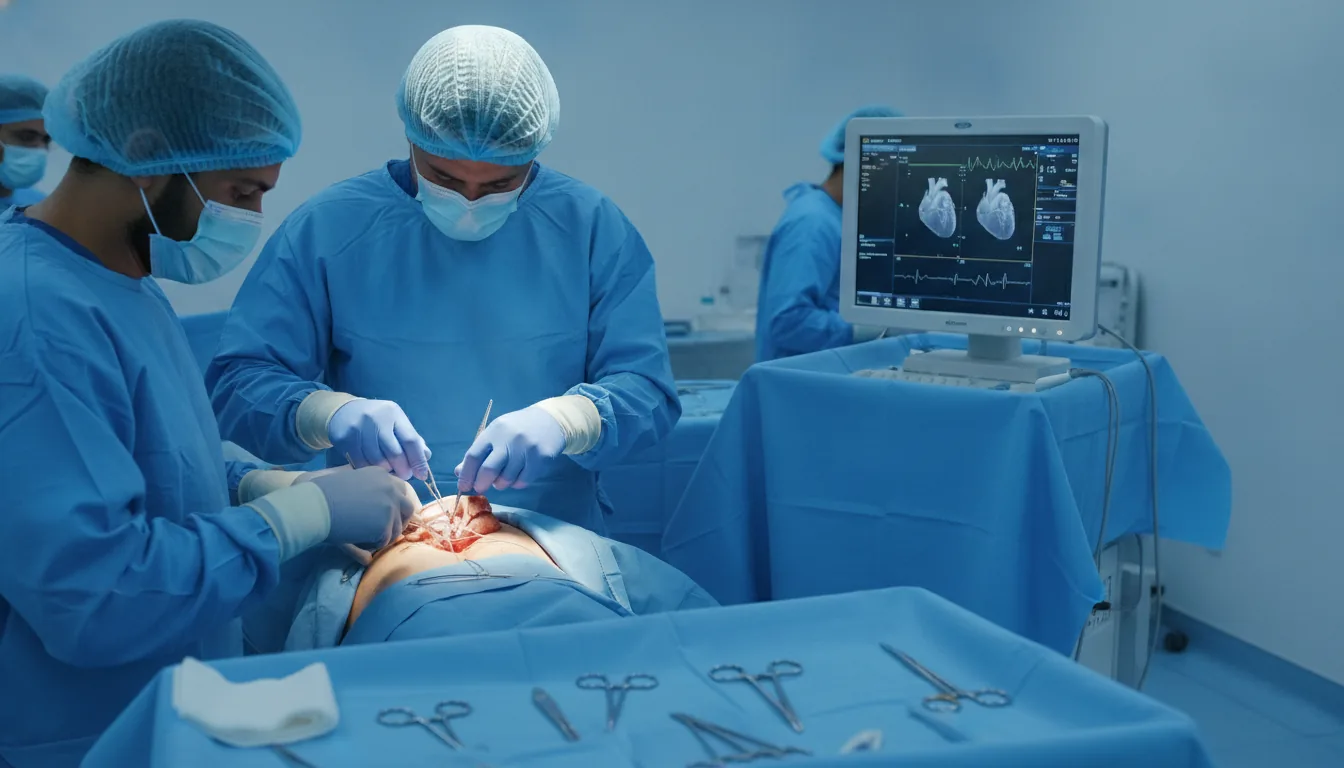
Whenever possible, repairing the patient's own heart valve rather than replacing it is often the best option. Valve repair, also called valvuloplasty, consists of restoring the valve's normal function while preserving the patient's natural tissue. This conservative surgery is mainly aimed at the mitral valve, whose leaks can frequently be corrected by repair techniques: reshaping the leaflets, implanting a support ring, adjusting the chordae. The tricuspid valve can also benefit from these techniques. The advantages of repair are significant: preservation of the natural valve, no lifelong anticoagulant treatment in most cases, better preservation of heart function and excellent durability of the result when the repair is performed by an experienced team. At Clinique Pasteur Tunis, every valve case is studied in detail in order to favour repair whenever it is feasible. The result is systematically checked by echocardiography during the procedure, guaranteeing the quality of the repair before the end of the operation.
Valve repair

When is it indicated?

Mitral regurgitation due to prolapse or degeneration of the leaflets

When the mitral valve leaks because its leaflets are deformed, a repair restores the patient's natural valve rather than replacing it.

Tricuspid valve leak associated with another cardiac operation

If a tricuspid valve leak is found during heart surgery, it can be corrected during the same operation.

Certain valve leaks of congenital origin

Some valves malformed from birth can be reshaped to work normally, without a prosthesis.

Young patients wishing to avoid a prosthesis and lifelong anticoagulation

Keeping one's own valve usually avoids having to take blood-thinning treatment for life, a precious advantage in young patients.

Preparation

1Transthoracic and transoesophageal echocardiography to analyse the valve
2Pre-operative work-up coronary angiography
3Blood tests and anaesthesia consultation
4Fast for 6 hours before the procedure

Procedure

1

General anaesthesia and establishment of cardiopulmonary bypass

2

Precise analysis of the valve by the surgeon

3

Repair of the leaflets and chordae, and implantation of a ring if necessary

4

Intraoperative echocardiographic check of the valve's competence

5

Closure and transfer to cardiac intensive care

Duration

3 to 4 hours

Aftercare & Recovery

Valve repair offers excellent, lasting results, with gradual recovery over a few weeks. As the natural valve is preserved, most patients do not need long-term anticoagulation. Regular echocardiographic follow-up is organised.

Risks and side effects

Operative risks comparable to those of conventional valve surgery
In rare cases, valve replacement may prove necessary during the procedure if the repair is not satisfactory
Regular long-term cardiology follow-up recommended

These risks remain rare. Your surgeon will inform you in detail before the procedure.

Request a Quote

Contact us to schedule a consultation or receive a personalized quote.

Request a Quote +216 36 402 000

At a glance

Duration: 3 to 4 hours
Preparation: Required
Dedicated specialist team