
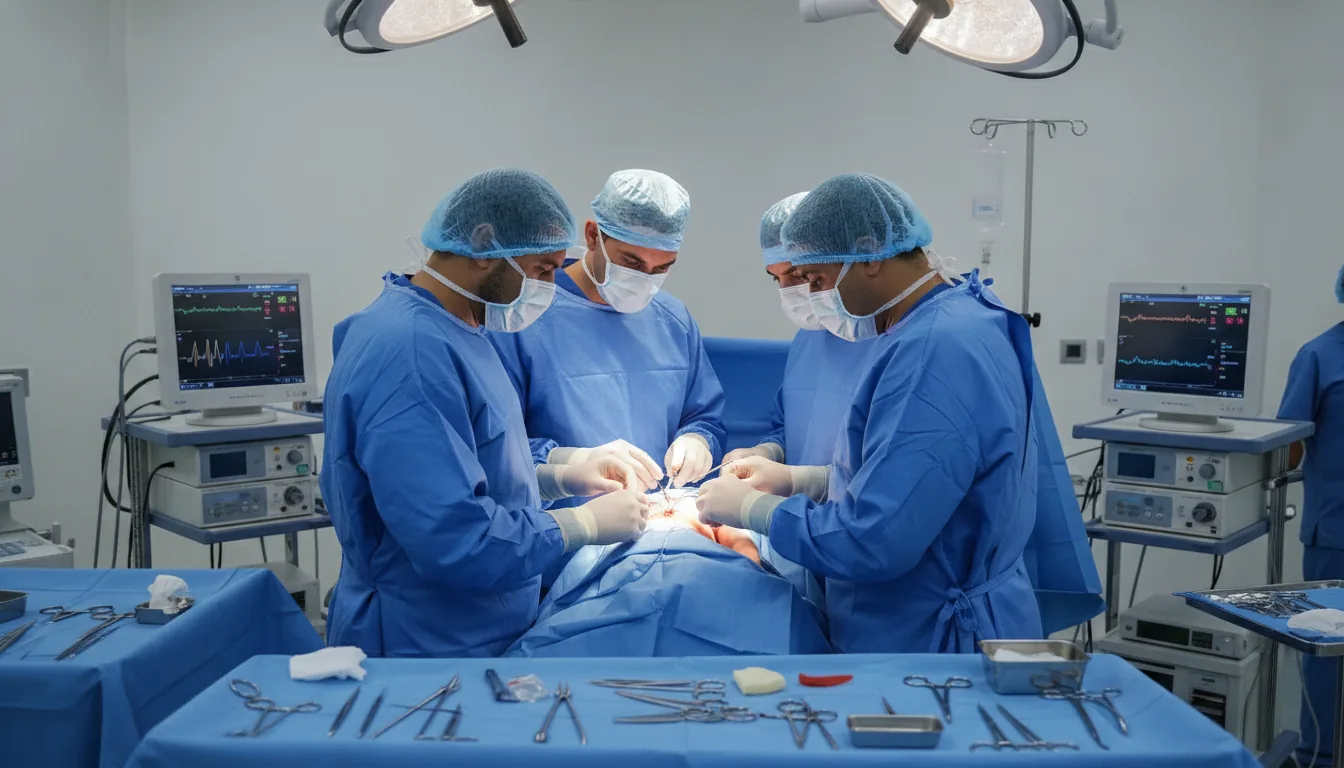
Surgery for congenital heart disease
Surgeries/Cardiovascular/Congenital heart disease

Surgery for congenital heart disease

Surgical correction of heart malformations present from birth, in children and adults alike.

What is it?

Congenital heart diseases are malformations of the heart present from birth: abnormal communication between the cardiac chambers, valve anomalies, malposition of the great vessels. Thanks to advances in cardiac surgery, the vast majority of these malformations can now be corrected with excellent results. Managing these conditions requires particular expertise: precise diagnosis relies on in-depth cardiac imaging, and the surgical procedure must be tailored to each patient's individual anatomy. Some corrections are performed in early childhood, others can be scheduled later, including in adulthood when the malformation was discovered late. The procedure is generally performed under cardiopulmonary bypass, with specifically adapted heart-protection techniques. Long-term follow-up by a cardiologist is an essential part of the care. Clinique Pasteur Tunis manages congenital heart disease in both children and adults, thanks to a surgical team experienced in this demanding field and a post-cardiac surgery intensive care unit fully equipped to receive these patients.
Surgery for congenital heart disease

When is it indicated?

Atrial septal defect (ASD) or ventricular septal defect (VSD)

An abnormal opening between the chambers of the heart tires it out over time; surgical closure restores normal circulation.

Patent ductus arteriosus

A small duct that should have closed after birth sometimes remains open; the procedure closes it and relieves the heart.

Tetralogy of Fallot and complex malformations

Malformations combining several heart anomalies can be corrected by specialised surgery, with excellent results.

Congenital anomalies of the heart valves

A valve malformed from birth can be repaired or replaced to allow the heart to work normally.

Congenital heart disease discovered in adulthood

Some malformations go unnoticed for years; they can be corrected even in adulthood.

Preparation

1Complete cardiology work-up with detailed echocardiography
2Additional imaging (cardiac CT or MRI) if necessary
3Pre-operative work-up suited to the patient's age
4Specialised anaesthesia consultation
5Fasting according to age-appropriate instructions

Procedure

1

General anaesthesia adapted to the patient's age and weight

2

Establishment of cardiopulmonary bypass

3

Correction of the malformation according to the planned technique

4

Intraoperative echocardiographic check of the result

5

Transfer to intensive care for close monitoring

Duration

3 to 6 hours depending on the complexity of the malformation

Aftercare & Recovery

Correcting a congenital heart defect most often transforms the patient's life: better exercise tolerance, harmonious growth in children, a normal daily life. Regular cardiology follow-up is maintained throughout life.

Risks and side effects

Operative risks depending on the complexity of the malformation, explained in detail to families
Extended monitoring in intensive care for complex corrections
Need for long-term cardiology follow-up

These risks remain rare. Your surgeon will inform you in detail before the procedure.

Request a Quote

Contact us to schedule a consultation or receive a personalized quote.

Request a Quote +216 36 402 000

At a glance

Duration: 3 to 6 hours depending on the complexity of the malformation
Preparation: Required
Dedicated specialist team