
Pre-surgical assessment of epilepsy
Centres/Neurophysiological Testing/Pre-surgical epilepsy assessment

Pre-surgical assessment of epilepsy

Complete multidisciplinary assessment aimed at precisely identifying the epileptogenic focus in patients with drug-resistant epilepsy who are candidates for surgery.

What is it?

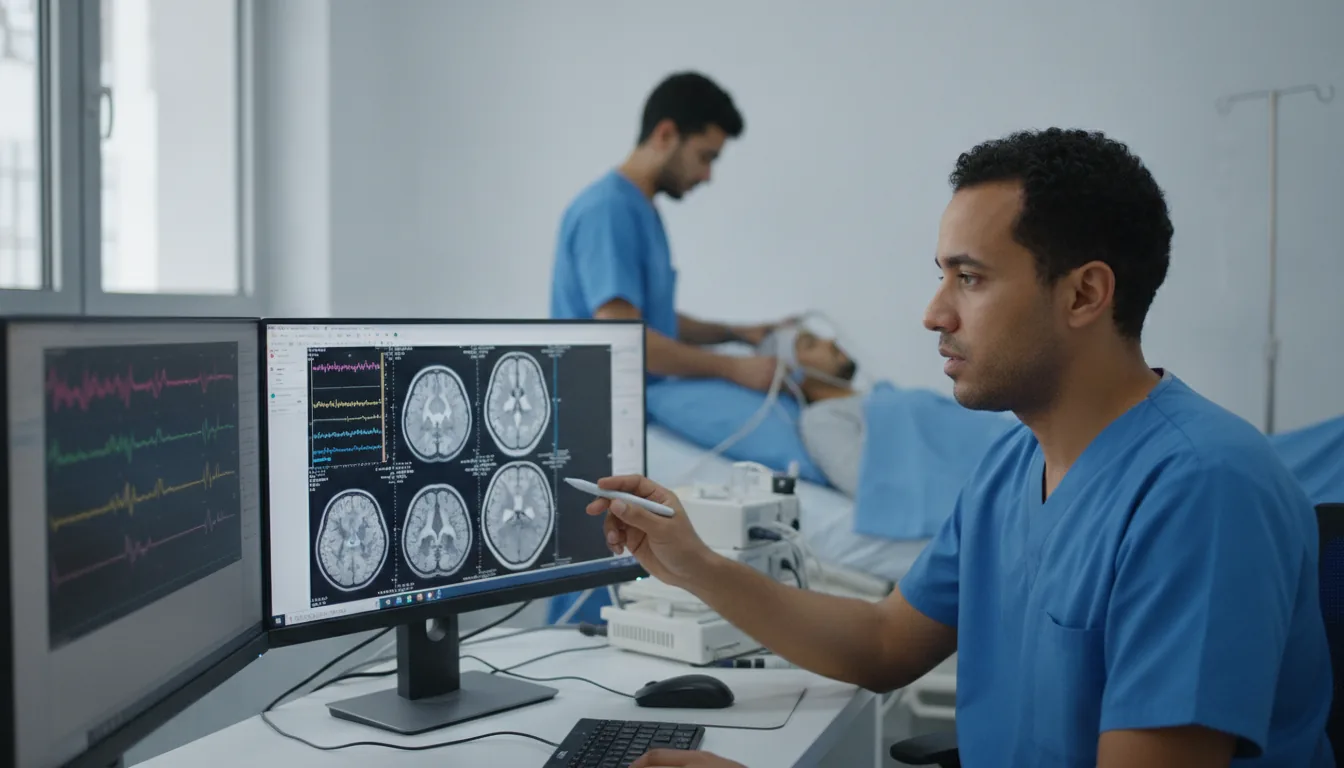
The pre-surgical assessment of epilepsy is a comprehensive multidisciplinary evaluation programme intended for patients suffering from drug-resistant epilepsy. About 30 % of epileptic patients do not respond satisfactorily to drug treatments, and for some of them, epilepsy surgery offers a possibility of cure or significant improvement. This assessment is based on the convergence of several complementary examinations whose objective is to precisely localise the epileptogenic focus (the area of the brain from which the seizures originate) and to ensure that its removal is possible without causing an unacceptable neurological deficit. The examinations carried out include prolonged video-EEG, high-resolution brain MRI, positron emission tomography (PET), ictal single-photon emission computed tomography (SPECT), a complete neuropsychological assessment and, in some cases, intracranial EEG (SEEG). The surgical decision is taken collegially at a multidisciplinary team meeting (MDT) bringing together neurologists, neurophysiologists, neurosurgeons, neuroradiologists and neuropsychologists. Each case is discussed individually to determine the best therapeutic strategy. The Clinique Pasteur in Tunis coordinates the pre-surgical assessment of epilepsy in collaboration with the various specialists, ensuring complete and personalised management of each patient.
Pre-surgical assessment of epilepsy

When is it indicated?

Drug-resistant epilepsy (failure of at least 2 well-conducted antiepileptic treatments)

This assessment is intended for people whose epilepsy continues despite several well-followed treatments, in order to consider other solutions.

Disabling epileptic seizures affecting quality of life

It is offered when the seizures have a strong impact on daily life and justify an in-depth assessment.

Mesial temporal lobe epilepsy with hippocampal sclerosis

It helps specify this frequent type of epilepsy, which is often amenable to an operation.

Lesional epilepsy (tumour, cortical malformation, cavernoma)

It is useful when the seizures are related to a visible abnormality of the brain that can be operated on.

Partial epilepsy with a presumed single and operable focus

It makes it possible to verify that the seizures originate from a single area of the brain that could be removed safely.

Preparation

1An initial consultation with an epileptologist neurologist to assess the indication for the assessment.
2Gather the whole medical file: consultation reports, previous EEGs, brain MRIs, treatments tried.
3Plan a hospital stay of 5 to 10 days for the prolonged video-EEG.
4Do not change antiepileptic treatments without prior medical advice.
5Be accompanied by a relative who can describe the seizures (a video recording of the seizures by those around you is very useful).
6Allow availability for the various examinations scheduled over several weeks.

Procedure

1

In-depth consultation by the epileptologist neurologist: history of the disease, semiological description of the seizures, previous treatments.

2

Prolonged video-EEG (3 to 7 days) with controlled treatment reduction to record seizures.

3

High-resolution brain MRI with an epilepsy protocol (specific sequences, thin slices).

4

Complete neuropsychological assessment: evaluation of memory, language, executive and visuospatial functions.

5

Brain PET with 18-FDG (interictally) to identify areas of hypometabolism.

6

Ictal SPECT if necessary (injection of the tracer during a seizure).

7

Wada test (if temporal surgery is being considered): assessment of the lateralisation of language and memory.

8

Multidisciplinary team meeting for a collegial discussion of the case and a therapeutic decision.

Duration

Several weeks (staggered assessment)

Results

The conclusions of the assessment are presented to the patient and their family at a dedicated consultation. A complete report is drawn up, including the summary of all the examinations and the therapeutic proposal chosen by the MDT (surgery, vagus nerve stimulation, other options).

Risks and side effects

Risk of more frequent or more severe seizures during treatment reduction for the video-EEG (under continuous medical supervision).
Exceptional risk of status epilepticus (immediate management possible).
Risks related to any invasive examinations (SEEG): infection, haemorrhage (explained in detail before the procedure).
Risks related to the Wada test: allergic reaction to the contrast agent, stroke (exceptional).

These risks remain rare. Your physician will inform you in detail before the examination.

Book an Appointment

Contact us to schedule your examination or request a quote.

Request a Quote +216 36 402 000

At a glance

Duration: Several weeks (staggered assessment)
Preparation: Required
Book an appointment