
Standard electroencephalogram (EEG)

Standard electroencephalogram (EEG)

Recording of the brain's electrical activity at rest and during stimulation, making it possible to detect functional abnormalities of the brain.

What is it?

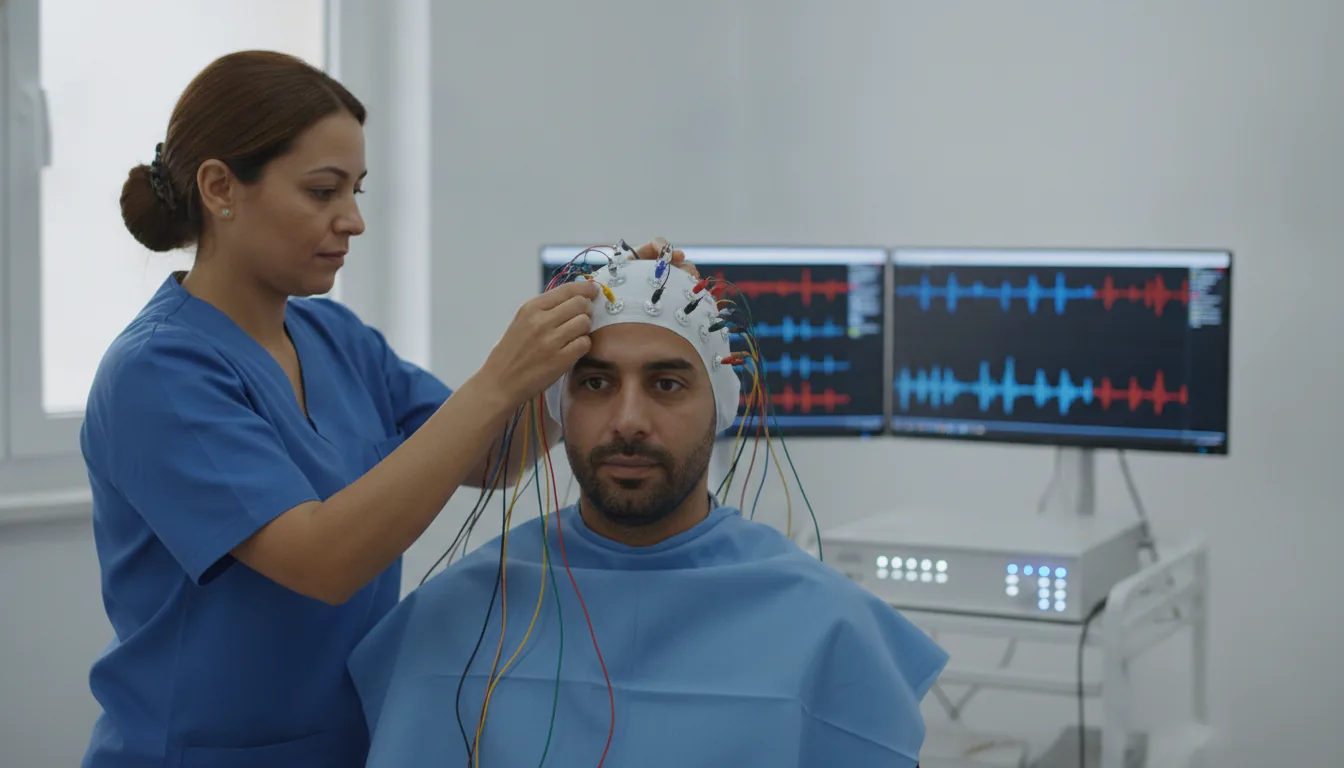
The standard electroencephalogram (EEG) is a non-invasive examination that records the brain's electrical activity using electrodes placed on the scalp. It is one of the fundamental examinations in neurology, offering a direct window onto brain function in real time. This examination is essential for the diagnosis and follow-up of epilepsy, but it is also valuable in the assessment of many other neurological conditions. The EEG can reveal abnormalities in the brain's electrical activity such as spikes, slow waves or paroxysmal discharges, which guide the diagnosis and direct therapeutic management. During the recording, activation procedures are carried out: hyperpnoea (deep, rapid breathing for three minutes) and intermittent photic stimulation (IPS). These procedures help reveal abnormalities that would not be visible at rest. The examination is completely painless and safe. At the Clinique Pasteur in Tunis, the EEG is performed by technicians specialised in neurophysiology and interpreted by experienced neurophysiologists, ensuring optimal recording and interpretation quality.
Standard electroencephalogram (EEG)

When is it indicated?

Suspected epilepsy or epilepsy follow-up

This examination helps determine whether seizures could be epileptic in origin and to monitor the course of an already known epilepsy.

Febrile convulsions in children

It is offered when a child has convulsions during high fevers, to better understand these episodes and reassure the parents.

Fainting with unexplained loss of consciousness

After fainting with loss of consciousness with no obvious cause, the examination looks for a possible cerebral origin.

Disturbances of consciousness or mental confusion

It is useful for exploring states of confusion or altered consciousness whose cause has not yet been identified.

Chronic or unusual headaches

It may be requested for persistent or unusually presenting headaches, in order to rule out a neurological cause.

Behavioural or cognitive disorders

It provides information when changes in behaviour or difficulties with memory and reasoning are of concern.

Metabolic or toxic encephalopathies

It helps the physician assess the impact on the brain of certain metabolic imbalances or poisonings.

Follow-up of antiepileptic treatments

It makes it possible to check the effect of a treatment for epilepsy and to adjust management over time.

Pre-operative neurosurgical assessment

It is one of the preparatory examinations before an operation on the brain, to assess how it is functioning.

Preparation

1Wash your hair the day before or the morning of the examination, without applying gel, hairspray or hair oil.
2Do not fast: have a light meal before the examination.
3Avoid coffee, tea or stimulating drinks in the 12 hours before the examination.
4Do not stop any ongoing medication, unless advised otherwise by the prescribing physician.
5If possible, sleep a little less than usual the night before (partial sleep deprivation) if the physician requests it.
6Bring the prescription, the results of previous examinations and the list of current medications.

Procedure

1

Comfortable positioning of the patient in a semi-seated or lying position in a quiet, dimly lit room.

2

Placement of 21 electrodes on the scalp according to the international 10-20 system, secured with a conductive paste.

3

Checking the impedance of each electrode to ensure recording quality.

4

Recording of brain activity at rest, eyes closed then eyes open, for about 10 minutes.

5

Hyperpnoea procedure: the patient breathes deeply and rapidly for 3 minutes.

6

Intermittent photic stimulation (IPS) procedure at different frequencies.

7

Removal of the electrodes and cleaning of the scalp.

Duration

30 to 45 minutes

Results

The results are interpreted by the neurophysiologist and a detailed report is generally available within 24 to 48 hours. In an emergency, an immediate interpretation can be carried out.

Book an Appointment

Contact us to schedule your examination or request a quote.

Request a Quote +216 36 402 000

At a glance

Duration: 30 to 45 minutes
Preparation: Required
Non-invasive examination
Book an appointment