
Esophageal variceal band ligation
Centres/Endoscopy/Variceal ligation

Esophageal variceal band ligation

Endoscopic treatment of esophageal varices by placing elastic bands, the reference technique for preventing or treating digestive hemorrhages related to portal hypertension.

What is it?

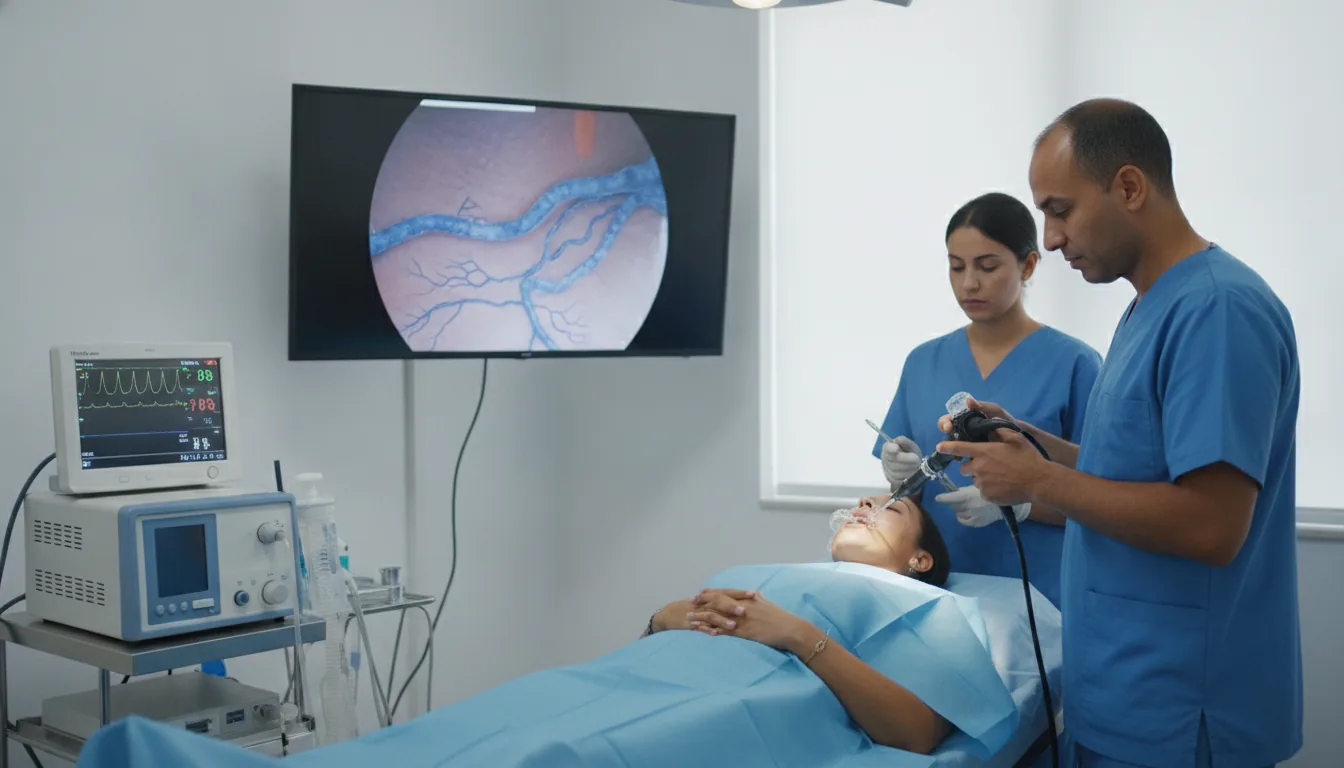
Esophageal variceal band ligation is a therapeutic endoscopic technique that involves placing small elastic bands at the base of dilated varices in the esophagus in order to strangle them, causing their necrosis and subsequent disappearance. This technique is now the reference treatment for esophageal varices, outperforming sclerotherapy in terms of both efficacy and safety. Esophageal varices are a consequence of portal hypertension, most often related to cirrhosis of the liver. The increased pressure in the portal system leads to the development of collateral venous circulation, including esophageal varices, which can rupture and cause severe, life-threatening digestive hemorrhages. Ligation is used both as an emergency measure to stop active bleeding and prophylactically to prevent a first episode or a recurrence of bleeding. Endoscopic band ligation treatment is carried out over several sessions spaced 2 to 4 weeks apart, until the varices are completely eradicated. Each session allows several bands to be placed on the largest variceal columns. After eradication, regular endoscopic surveillance is maintained to detect and treat any recurrence. At Clinique Pasteur in Tunis, esophageal variceal band ligation is performed by hepato-gastroenterologists experienced in the management of portal hypertension. The team has latest-generation multi-band ligation devices and an intensive care unit for the management of hemorrhagic emergencies.
Esophageal variceal band ligation

When is it indicated?

Acute digestive hemorrhage due to ruptured esophageal varices (emergency)

When an esophageal varix ruptures and bleeds, placing elastic bands as an emergency measure stops the hemorrhage directly at its source. It is a procedure that can save a life.

Secondary prophylaxis after a first episode of variceal bleeding

After a first bleed, the risk of recurrence is high. Scheduled ligation sessions gradually eliminate the remaining varices and greatly reduce this risk.

Primary prophylaxis in cirrhotic patients with large varices

In people with cirrhosis, large varices can be treated even before they have bled. This prevention avoids a potentially serious first hemorrhage.

Grade II or III esophageal varices with red signs

Some varices display signs on their surface that herald an imminent risk of rupture. Their preventive ligation is then recommended without delay.

Cirrhotic patient with a history of upper digestive bleeding

In a cirrhotic patient who has already experienced digestive bleeding, endoscopic surveillance and variceal ligation are part of regular follow-up to prevent any recurrence.

Complement to treatment with non-selective beta-blockers

Medications that lower the pressure in the digestive veins and band ligation act in a complementary way: their combination offers the best protection against bleeding.

Contraindication or intolerance to beta-blockers

When the usual medications are not tolerated or are inadvisable, endoscopic ligation is an effective alternative for protecting the patient from the risk of bleeding.

Preparation

1Fast for at least 6 hours (except in a bleeding emergency)
2Complete blood tests: complete blood count, coagulation, liver panel, blood typing
3Correction of coagulation disorders if necessary (plasma or platelet transfusion)
4A peripheral venous line is placed for infusion and administration of treatments
5Report all current medications (beta-blockers, anticoagulants)
6Pre-anesthesia consultation if the procedure is scheduled
7In an emergency: prior hemodynamic stabilization by the intensive care team

Procedure

1

Deep sedation or general anesthesia is induced

2

The endoscope fitted with the multi-band ligation device is introduced through the mouth

3

The esophageal varices are identified and classified according to their size and risk

4

Each varix is suctioned into the cap of the ligation device

5

An elastic band is deployed at the base of the varix, strangling it

6

Several ligations are placed per session (generally 4 to 8 bands)

7

The procedure starts with the varices near the gastroesophageal junction and moves upward

8

The patient is monitored in hospital for 24 to 48 hours

9

A follow-up session is scheduled 2 to 4 weeks later

Duration

15 to 30 minutes per session

Results

Eradication of the varices is achieved in 2 to 4 sessions on average. A follow-up endoscopy is performed 1 to 3 months after the last session, then every 6 to 12 months to monitor for recurrence.

Risks and side effects

Transient dysphagia or retrosternal pain (common for 24 to 48 hours)
Ulcerations at the ligation site (expected, heal within 1 to 3 weeks)
Post-ligation bleeding (2 to 5 % of cases, related to the sloughing of the band site)
Transient bacteremia (rare)
Esophageal stricture (rare, in case of repeated circumferential ligations)
Recurrence of varices requiring further sessions

These risks remain rare. Your physician will inform you in detail before the examination.

Book an Appointment

Contact us to schedule your examination or request a quote.

Request a Quote +216 36 402 000

At a glance

Duration: 15 to 30 minutes per session
Preparation: Required
Book an appointment