
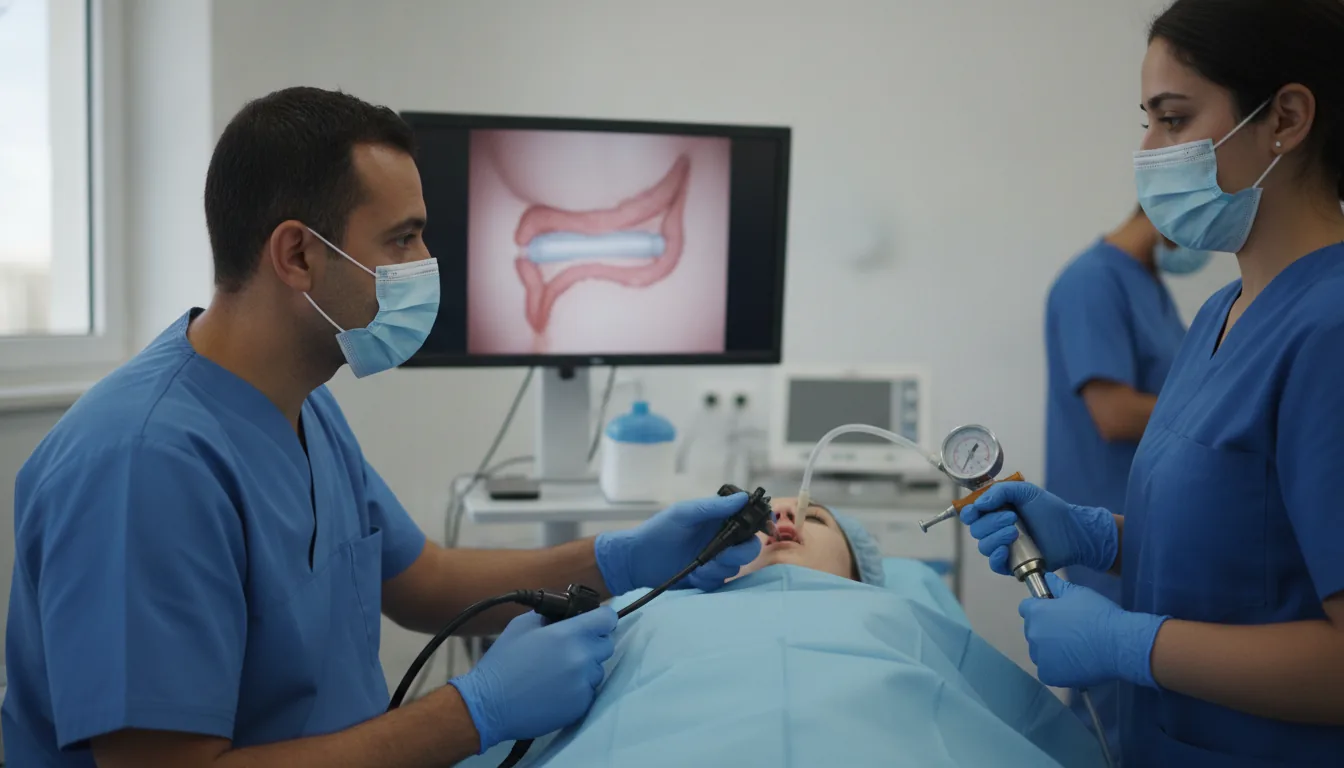
Endoscopic dilation
Endoscopic widening of a narrowing (stricture) of the digestive tract using balloons or bougies, to restore the normal passage of food.
What is it?
When is it indicated?
Long-standing, intense acid reflux can heal by narrowing the esophagus, making eating difficult. Dilation gently widens this passage and restores comfortable swallowing.
After the accidental ingestion of a corrosive product, the esophagus may narrow as it heals. Progressive dilation sessions restore the passage to a caliber sufficient for eating.
The suture area from digestive surgery sometimes narrows as it heals. Gentle balloon dilation makes it possible to reopen the passage without a new operation.
The chronic inflammation of Crohn's disease can thicken the intestinal wall to the point of narrowing it. Endoscopic dilation relieves this blockage and can avoid or delay surgery.
Over time, radiotherapy can stiffen and narrow a segment of the digestive tract. Dilation improves the passage of food and the patient's comfort.
In this disease, the muscle at the entrance to the stomach does not relax properly and blocks food. A balloon inflated at this level relaxes the muscle and makes swallowing easier again.
When the outlet of the stomach is narrowed, the stomach empties poorly, causing heaviness and vomiting. Balloon dilation restores normal emptying.
A non-cancerous narrowing of the large intestine, often due to scarring or inflammation, can be widened with a balloon to restore normal transit without surgery.
Preparation
Procedure
General anesthesia is induced
The endoscope is introduced and the stricture is visualized
A guidewire is passed through the stricture under visual or fluoroscopic guidance
The dilation balloon is positioned at the level of the stricture and gradually inflated
Alternatively, bougies of increasing diameter are passed successively over the guidewire
The degree of dilation is checked endoscopically after each pass
The mucosa is examined to detect any complications (tear, bleeding)
Biopsies may be taken if necessary
The patient is monitored in the recovery room and then in hospital
Duration
15 to 30 minutes for the procedure, 2 to 4 hours of monitoring
Results
Improvement is generally felt within the first few days. Several sessions spaced 1 to 4 weeks apart may be necessary for severe or recurrent strictures.
Risks and side effects
These risks remain rare. Your physician will inform you in detail before the examination.
Book an Appointment
Contact us to schedule your examination or request a quote.
Request a Quote +216 36 402 000