
Ventricular tachycardia ablation

Ventricular tachycardia ablation

Specialised interventional treatment of rhythm disorders arising in the ventricles, guided by three-dimensional mapping.

What is it?

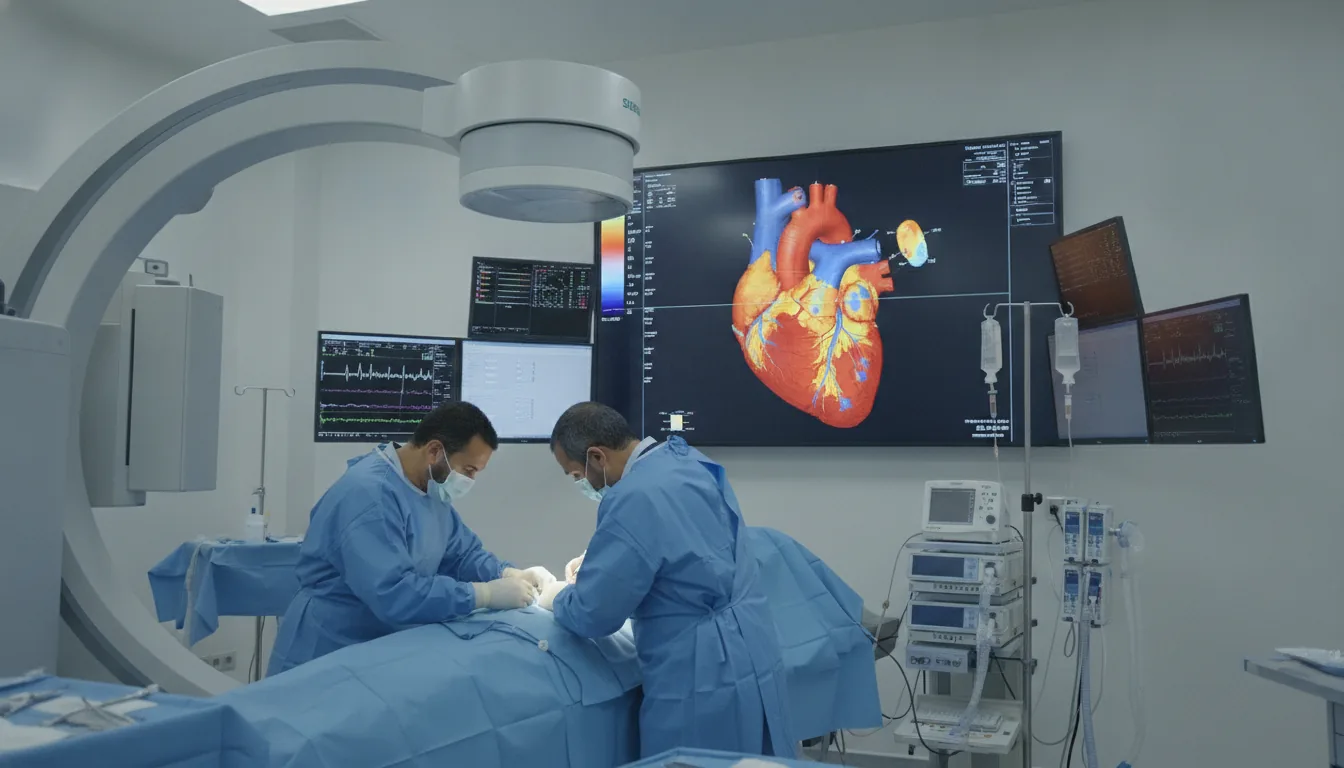
Ventricular tachycardias are rhythm disorders that originate in the ventricles, the chambers that propel blood through the body. They can occur in a healthy heart or complicate an existing heart disease, and require specialised management. Ventricular tachycardia ablation is an advanced heart rhythm procedure. It involves finely mapping the electrical activity of the ventricles using a three-dimensional reconstruction system, in order to locate the focus or circuit responsible for the arrhythmia, and then neutralising it with targeted radiofrequency applications. This procedure significantly reduces tachycardia episodes, improves quality of life and, in patients with a defibrillator, decreases the number of therapies delivered by the device. It is performed by a trained team, in a high-safety environment. At Clinique Pasteur Tunis, ventricular tachycardia ablation benefits from a fully equipped electrophysiology laboratory, a 3D arrhythmia mapping system and the immediate proximity of the cardiac intensive care units, guaranteeing optimal care.
Ventricular tachycardia ablation

When is it indicated?

Recurrent symptomatic ventricular tachycardias

When racing heartbeats arising in the ventricles recur and cause dizzy spells or palpitations, ablation targets their origin to greatly reduce their frequency.

Very numerous ventricular extrasystoles affecting cardiac function

Extremely frequent extra beats can weaken the heart muscle over time; eliminating their source allows the heart to recover.

Reduction of therapies from an implanted defibrillator

In patients with a defibrillator that delivers repeated shocks, ablation reduces the number of arrhythmias and therefore the device's interventions, markedly improving comfort of life.

Ventricular tachycardias poorly controlled by medication

When drug treatment is no longer enough to prevent episodes, this specialised procedure offers an effective complementary solution.

Certain tachycardias occurring in a healthy heart, amenable to curative treatment

In people with an otherwise normal heart, certain forms of ventricular tachycardia can be definitively cured by targeted ablation.

Preparation

1In-depth cardiology work-up with echocardiography and, if needed, cardiac MRI
2Precise documentation of the arrhythmia (ECG, Holter, defibrillator memory)
3Blood tests and management of treatments according to the electrophysiologist's instructions
4Fast for 6 hours before the procedure
5Anaesthesia consultation

Procedure

1

Positioning in the electrophysiology laboratory under sedation or general anaesthesia

2

Introduction of the catheters through a vascular access

3

Detailed three-dimensional mapping of the ventricles

4

Location of the focus or circuit of the tachycardia

5

Targeted radiofrequency applications

6

Stimulation tests to verify the effectiveness of the treatment

7

Close monitoring in the cardiac intensive care unit

Duration

3 to 5 hours

Results

Ablation most often brings a marked reduction in tachycardia episodes and a notable improvement in comfort of life. Initial monitoring takes place in a specialised unit for 24 to 48 hours, followed by close heart rhythm follow-up.

Risks and side effects

Specialised procedure performed in a high-safety environment
Possible recurrence that may require additional treatment
Rare complications, prevented by 3D mapping and continuous monitoring

These risks remain rare. Your physician will inform you in detail before the examination.

Book an Appointment

Contact us to schedule your examination or request a quote.

Request a Quote +216 36 402 000

At a glance

Duration: 3 to 5 hours
Preparation: Required
Book an appointment