
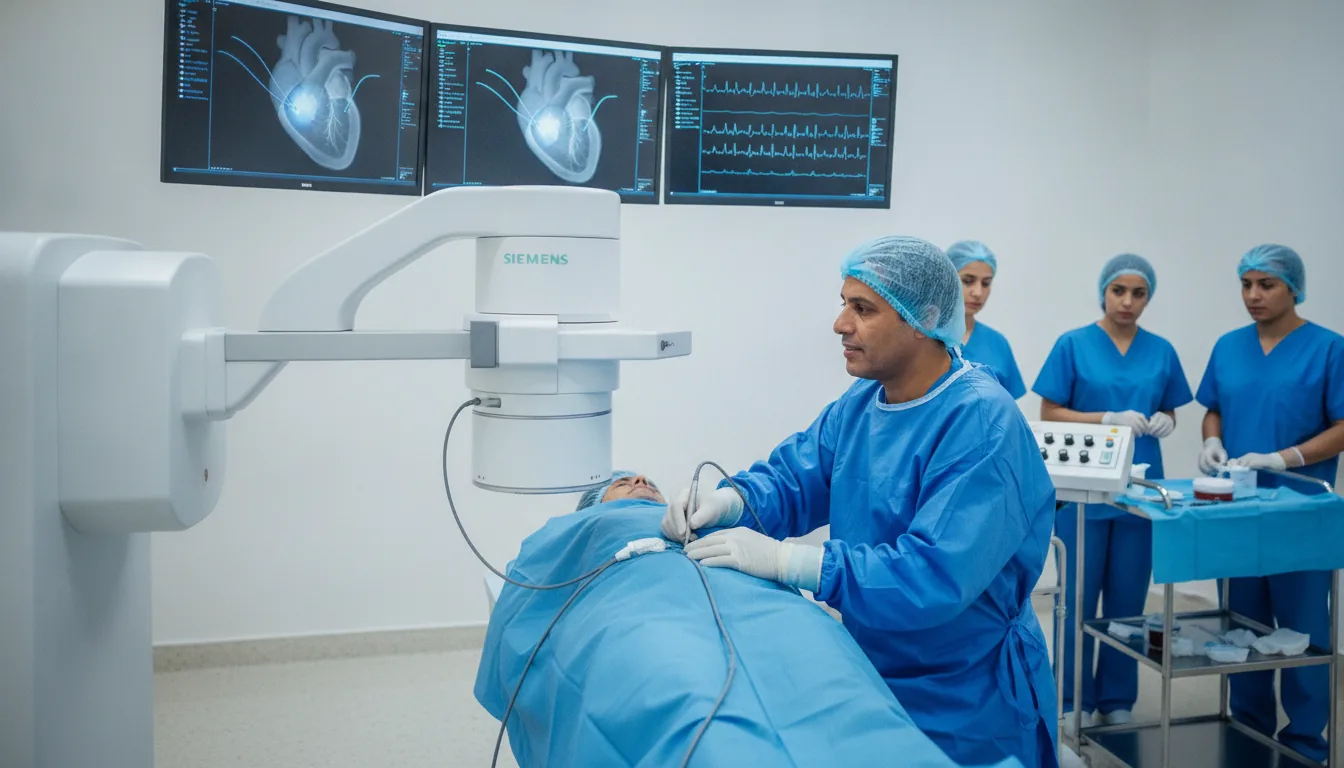
Atrial flutter ablation

Atrial flutter ablation

The reference treatment for atrial flutter, an organised rhythm disorder of the atrium, with excellent lasting results.

What is it?

Atrial flutter is a rhythm disorder in which the atrium of the heart is traversed by an abnormal electrical circuit that loops around, resulting in a fast and regular heart rhythm. It causes palpitations, breathlessness and fatigue, and can affect cardiac function if it persists. Ablation is now the reference treatment for common flutter. It involves interrupting the arrhythmia circuit by creating a fine line of electrical block in a well-identified area of the right atrium, called the cavotricuspid isthmus, using a radiofrequency catheter. It is one of the most effective and best-standardised ablation procedures in heart rhythm care: since the flutter circuit is well known and accessible, the treatment offers excellent lasting results and most often makes it possible to avoid long-term antiarrhythmic medication. At Clinique Pasteur Tunis, flutter ablation is performed in the dedicated electrophysiology laboratory by an experienced team, during a short hospital stay, with heart rhythm follow-up organised after the procedure.
Atrial flutter ablation

When is it indicated?

Symptomatic atrial flutter (palpitations, breathlessness, fatigue)

When this fast and regular atrial rhythm is felt in daily life, ablation eliminates the responsible circuit and makes the symptoms disappear.

Recurrent flutter despite drug treatment

If episodes return despite medication, ablation is the reference treatment, with excellent chances of a definitive cure.

Flutter affecting cardiac function

A flutter that persists can tire the heart muscle; interrupting the abnormal circuit allows the heart to gradually recover its efficiency.

Patient preference for a curative treatment rather than long-term medication

Rather than taking medication for years, it is possible to choose this well-standardised procedure that treats the very cause of the arrhythmia.

Preparation

1ECG documenting the flutter and cardiology work-up with echocardiography
2Blood tests including coagulation
3Management of anticoagulant treatment according to the physician's instructions
4Fast for 6 hours before the procedure

Procedure

1

Positioning in the electrophysiology laboratory, local anaesthesia and light sedation

2

Introduction of the catheters through the femoral vein

3

Identification of the flutter circuit in the right atrium

4

Creation of the ablation line on the cavotricuspid isthmus

5

Verification of complete block of the circuit

6

Removal of the catheters and monitoring

Duration

1 to 2 hours

Results

Flutter ablation offers lasting results in the vast majority of cases, with disappearance of palpitations and rapid improvement in comfort of life. Discharge usually takes place after 24 hours of monitoring, with a scheduled heart rhythm check-up.

Risks and side effects

Bruising at the puncture site, most often benign
Rare recurrence, which can be treated by a new procedure
Serious complications exceptional in this well-standardised procedure

These risks remain rare. Your physician will inform you in detail before the examination.

Book an Appointment

Contact us to schedule your examination or request a quote.

Request a Quote +216 36 402 000

At a glance

Duration: 1 to 2 hours
Preparation: Required
Book an appointment