
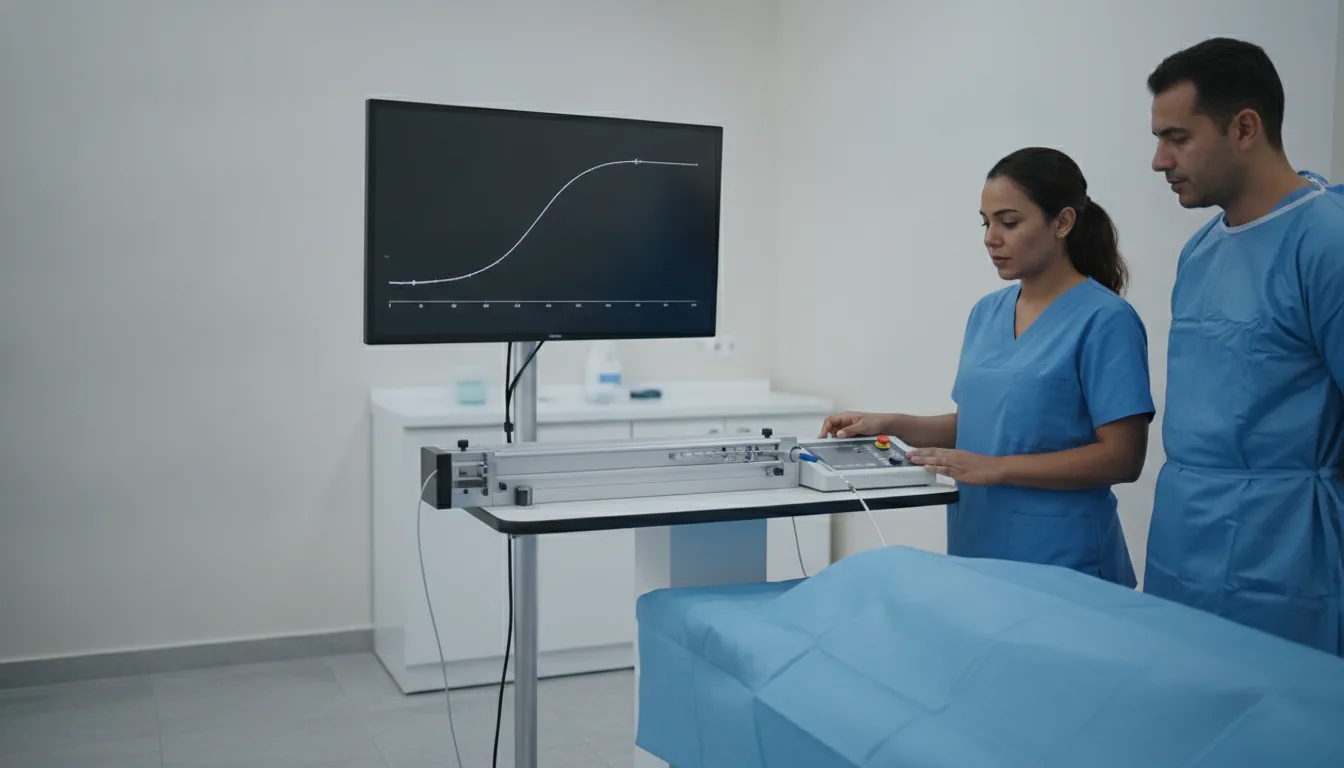
Urethral pressure profile (profilometry)
Measurement of pressures along the urethra used to assess sphincter function and quantify urethral resistance.
What is it?
When is it prescribed?
It helps explain leakage that occurs during effort, coughing or sneezing.
It is one of the preparatory tests before an operation for urinary leakage, in order to choose the appropriate technique.
It helps assess the ability of the muscle that closes the bladder to hold urine properly.
It monitors the outcome after an operation for urinary leakage.
It helps assess the urinary closure mechanism when a man experiences leakage after a prostate operation.
It is useful when a neurological disease disturbs the muscle that controls the closure of the bladder.
Preparation
How the exam is performed
Comfortable installation in the gynaecological position (women) or lying down (men)
Careful local disinfection
Introduction of a fine profilometry catheter into the bladder
Slow, continuous withdrawal of the catheter through the urethra at a constant speed
Recording of urethral pressures along the entire path
Repetition of the measurement at rest and during effort (coughing)
Removal of the catheter at the end of the test
Duration
15 to 20 minutes
Results
The urethral pressure profile is analysed by measuring the maximum closure pressure, the functional length of the urethra and the transmission of pressures. These parameters make it possible to distinguish intrinsic sphincter deficiency from urethral hypermobility in the context of stress incontinence.
Risks and side effects
These risks remain rare. Your physician will explain them in detail before the exam.
Book an Appointment
Contact us to schedule your Profilometry or request a quote.
Request a Quote +216 36 402 000