
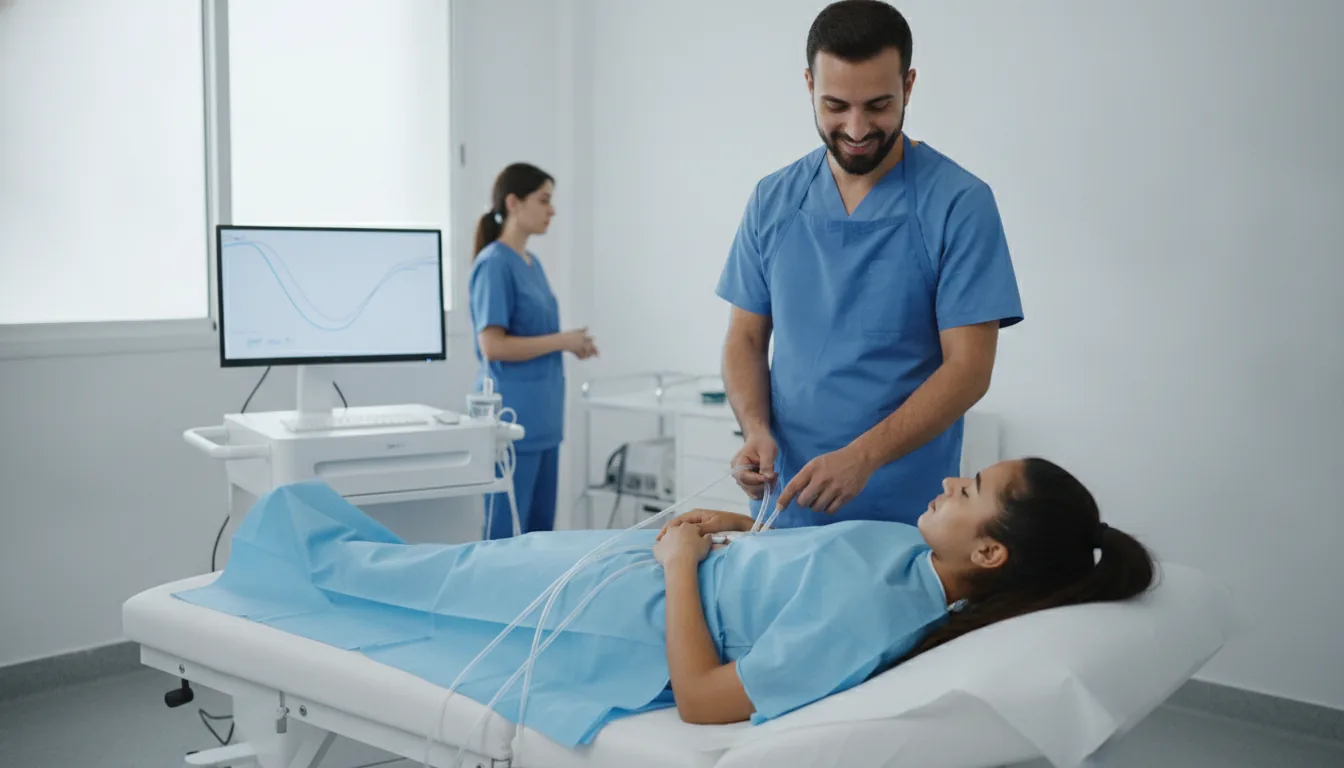
Cystometry

Cystometry

Study of intravesical pressures during bladder filling and emptying, used to assess the compliance and contractility of the detrusor.

What is it?

Cystometry is the key test of the urodynamic assessment. It consists of measuring the pressures inside the bladder while it is gradually filled with saline solution, and then during the emptying phase. This test provides essential information on the behaviour of the detrusor muscle. During the filling phase, cystometry assesses bladder sensation (first desire, normal desire, urgent desire to void), bladder compliance (the ability of the bladder to distend without an excessive rise in pressure) and detrusor stability (the absence or presence of involuntary contractions). During the emptying phase, the test measures the detrusor contraction pressure and assesses the coordination between bladder contraction and relaxation of the urethral sphincter. These data are essential for distinguishing bladder outlet obstruction from detrusor underactivity. Cystometry is indispensable in the diagnosis of unstable bladders, poorly compliant bladders and detrusor-sphincter dyssynergia, and in the pre-operative evaluation of many urological conditions.
Cystometry

When is it prescribed?

Urinary incontinence in women or men

It helps identify the cause of urinary leakage in order to guide the most appropriate treatment.

Overactive bladder (urgency, urinary frequency)

It is useful when there are pressing and frequent urges to urinate, to explore the behaviour of the bladder.

Neurogenic bladder (spinal cord injury, multiple sclerosis, Parkinson's disease)

It assesses the bladder when a neurological disease disturbs its function.

Pre-operative assessment before incontinence surgery

It is one of the tests performed before an operation for urinary leakage, to properly prepare the procedure.

Bladder outlet obstruction (prostatic hyperplasia)

It helps assess difficulty emptying the bladder, often related to the prostate in men.

Bladder emptying disorders

It is offered when the bladder has trouble emptying properly, to identify the cause.

Enuresis resistant to treatment

It helps investigate night-time leakage that persists despite the usual treatments.

Preparation

1Have a urine culture (cytobacteriological examination of the urine) performed within the 7 days before the test to rule out a urinary tract infection
2Arrive with a moderately full bladder
3Stop anticholinergics 48 hours beforehand (on medical advice)
4Report any allergies (particularly to latex)
5Bring a list of current treatments

How the exam is performed

1

Installation in the gynaecological position (women) or lying down (men)

2

Local disinfection and insertion of a fine dual-channel bladder catheter

3

Placement of a rectal pressure sensor to measure abdominal pressure

4

Gradual filling of the bladder with warm saline solution

5

Continuous recording of bladder and abdominal pressures

6

The patient reports their sensations of needing to void (first desire, normal desire, urgent desire)

7

Emptying phase with recording of the contraction pressure

8

Removal of the catheters at the end of the test

Duration

30 to 45 minutes

Results

The results are analysed by the specialist physician from the recorded pressure curves. The interpretation covers bladder capacity, compliance, sensation, detrusor stability and the quality of the voiding contraction. The detailed report is generally available within 48 hours.

Risks and side effects

Slight discomfort during catheter insertion (not painful)
Minimal risk of urinary tract infection (prevented by the prior urine culture)
Transient burning on urination in the 24 to 48 hours following the test
Possible traces of blood in the urine for 24 hours

These risks remain rare. Your physician will explain them in detail before the exam.

Book an Appointment

Contact us to schedule your Cystometry or request a quote.

Request a Quote +216 36 402 000

At a glance

Duration: 30 to 45 minutes
Preparation: Required
Book an appointment