
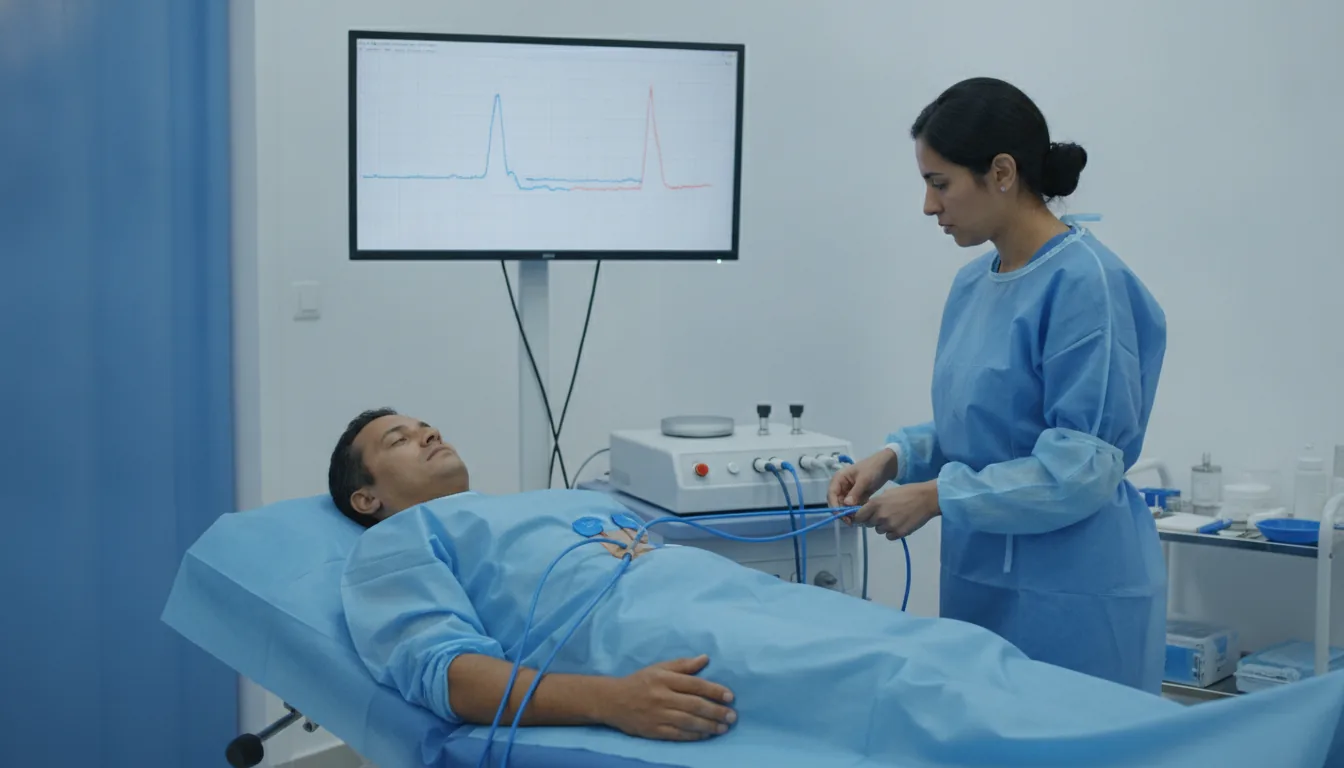
Evaluation of bladder emptying disorders
Diagnostic Testing/Urodynamic/Emptying disorders

Evaluation of bladder emptying disorders

Targeted functional exploration to identify the cause of bladder emptying difficulties: mechanical obstruction, detrusor underactivity or dyssynergia.

What is it?

The evaluation of bladder emptying disorders is a urodynamic assessment specifically directed at the analysis of the voiding phase. It aims to identify the cause of difficulties in expelling urine, which may be related to a mechanical obstacle (obstruction), a lack of contraction strength of the bladder (detrusor underactivity) or a disorder of coordination between the bladder and the sphincter (dyssynergia). Bladder outlet obstruction is the most common cause in men, mainly related to benign prostatic hyperplasia or urethral strictures. It is characterised by high detrusor pressure combined with a low flow rate. The pressure-flow study is the key test for confirming the diagnosis and quantifying the degree of obstruction. Detrusor underactivity manifests as insufficient contraction pressure and a low flow rate. It may be of neurological origin (diabetes, neuropathy), drug-related or linked to ageing. Its diagnosis is essential because it contraindicates certain deobstruction operations that could worsen the retention. Detrusor-sphincter dyssynergia, common in neurological conditions, combines a contraction of the detrusor with a paradoxical contraction of the sphincter during voiding. Its diagnosis relies on the combination of cystometry and perineal electromyography. Management involves self-catheterisation, sphincteric botulinum toxin or neuromodulation.
Evaluation of bladder emptying disorders

When is it prescribed?

Dysuria with a significant post-void residual

It helps explain why the bladder empties poorly when a large amount of urine remains after voiding.

Chronic or recurrent urinary retention

It is offered when the bladder persistently or repeatedly fails to empty, to find the cause.

Pre-operative assessment before prostate surgery

It clarifies the origin of difficulty urinating before a prostate operation.

Suspected detrusor underactivity in the elderly

It helps identify a bladder that does not contract enough, a common situation with age.

Neurogenic bladder with emptying disorders

It is useful when a neurological disease prevents the bladder from emptying properly.

Recurrent urethral stricture

It helps assess the impact of a recurring narrowing of the urinary channel.

Failure of alpha-blocker medical treatment

It is offered when the medications intended to make urination easier have not been enough.

Suspected detrusor-sphincter dyssynergia

It helps confirm a lack of coordination between the bladder and the sphincter when urinating.

Preparation

1Sterile urine culture less than 7 days old
2Arrive with a naturally full bladder
3Do not force voiding before the test
4Stop alpha-blockers 48 hours beforehand (on medical advice)
5Bring the imaging results (kidney and bladder ultrasound, previous uroflowmetry)
6Report any history of acute urinary retention

How the exam is performed

1

Free uroflowmetry and measurement of the initial post-void residual

2

Insertion of the bladder catheter and the rectal pressure sensor

3

Possible placement of perineal EMG electrodes

4

Controlled bladder filling until a comfortable desire to void is reached

5

Voiding phase with simultaneous recording of bladder and abdominal pressures, flow and EMG

6

Pressure-flow study with plotting on the Abrams-Griffiths nomogram

7

Assessment of bladder-sphincter coordination

8

Measurement of the final post-void residual

9

Removal of the equipment

Duration

30 to 45 minutes

Results

The assessment classifies the emptying disorder into three categories: bladder outlet obstruction (with quantification of the degree), detrusor underactivity or detrusor-sphincter dyssynergia. The Abrams-Griffiths nomogram provides an objective classification. The report guides management: deobstruction surgery, self-catheterisation, rehabilitation or neuromodulation.

Risks and side effects

Moderate discomfort from the catheters in place during voiding
Possible difficulty urinating under the test conditions
Low risk of urinary tract infection
Transient burning on urination
Possible transient urinary retention (rare), which may require drainage catheterisation

These risks remain rare. Your physician will explain them in detail before the exam.

Book an Appointment

Contact us to schedule your Emptying disorders or request a quote.

Request a Quote +216 36 402 000

At a glance

Duration: 30 to 45 minutes
Preparation: Required
Book an appointment