
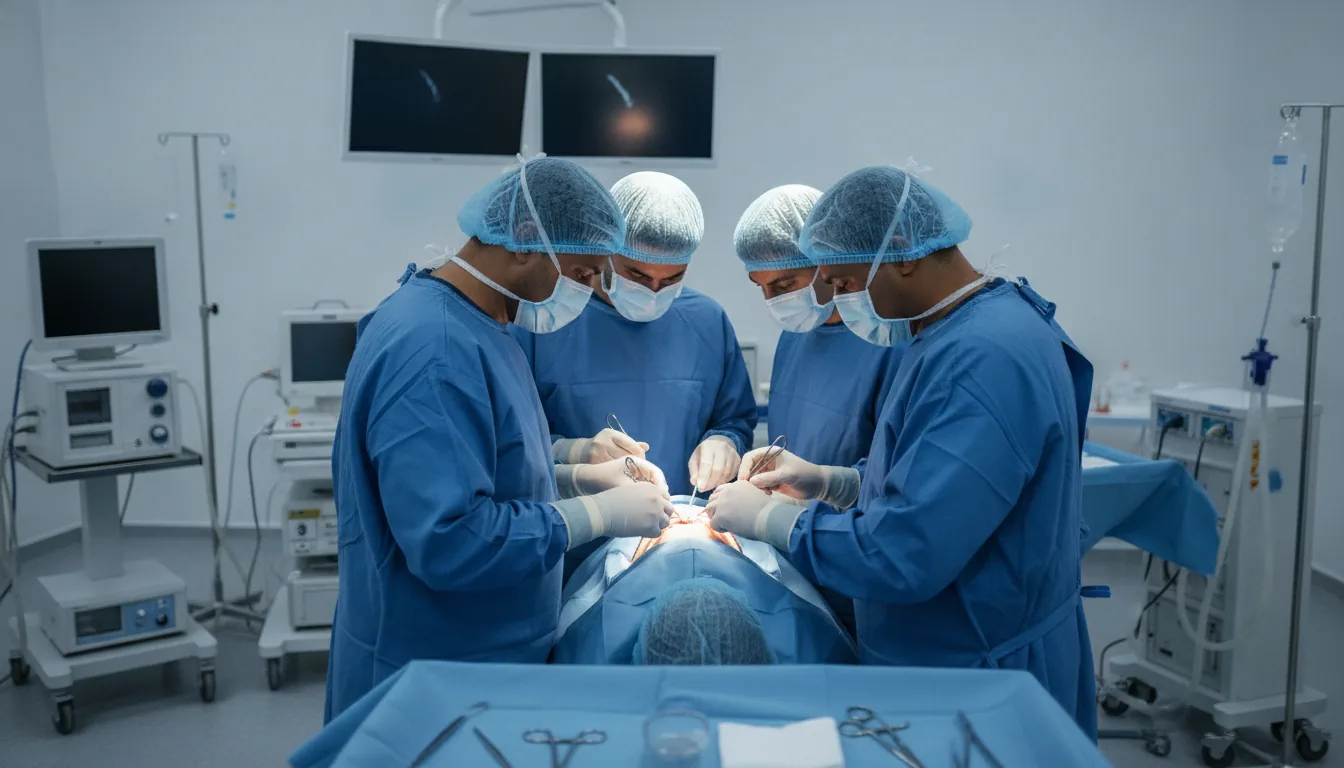
Neck tumour surgery
Surgeries/ENT/Neck tumours

Neck tumour surgery

Surgical management of neck masses and tumours: congenital cysts, enlarged lymph nodes, benign or malignant tumours.

What is it?

The neck can be the site of very diverse masses: congenital cysts present from birth, enlarged lymph nodes (lymphadenopathy), benign soft-tissue tumours or malignant tumours. Any persistent neck mass warrants a precise work-up to determine its nature. Neck tumour surgery has a twofold objective: to remove the lesion completely and to allow its full analysis under the microscope. Depending on the case, this may involve the excision of a cyst, an excisional lymph node biopsy, or a more extensive neck dissection as part of cancer treatment, always decided through multidisciplinary consultation. The neck contains critical structures — nerves, vessels — which the surgeon identifies and preserves with care. The incisions are placed in the natural folds of the skin for the most discreet aesthetic result possible. At Clinique Pasteur Tunis, this surgery is performed by ENT surgeons with solid expertise in neck surgery, within a complete environment — modern operating theatre, intensive care, imaging — for safe management.
Neck tumour surgery

When is it indicated?

Persistent neck mass whose nature must be determined

Any lump in the neck that persists warrants a work-up; its removal allows precise analysis and, if necessary, adaptation of subsequent care.

Congenital neck cyst (thyroglossal duct cyst, branchial cyst)

These cysts, present from birth, can swell or become infected; their complete removal prevents recurrence.

Enlarged neck lymph node requiring analysis

A lymph node that remains enlarged must sometimes be removed for analysis under the microscope, the only way to determine its cause with certainty.

Troublesome or growing benign neck tumour

Even when benign, a neck mass that grows or causes discomfort can be removed through a discreet incision hidden in a skin fold.

Neck dissection as part of ENT cancer treatment

In the treatment of certain cancers, removal of the neck lymph nodes is part of the care plan, always decided in consultation with the multidisciplinary team.

Preparation

1Neck imaging work-up (ultrasound, CT scan or MRI)
2Diagnostic needle aspiration sometimes performed beforehand
3Anaesthesia consultation
4Fast for 6 hours before the procedure

Procedure

1

General anaesthesia

2

Discreet incision placed in a natural fold of the neck

3

Identification and preservation of nerve and vascular structures

4

Complete excision of the lesion or neck dissection depending on the indication

5

Possible placement of a temporary drain

6

Careful closure for aesthetic purposes

Duration

1 to 3 hours depending on the extent of the procedure

Aftercare & Recovery

The hospital stay is short, with any drain removed quickly. The results of the analysis of the surgical specimen are explained at a consultation and guide subsequent care when necessary. The scar fades gradually.

Risks and side effects

Transient haematoma or local swelling
Temporary reduction in skin sensation on the neck
Difficulty moving the shoulder after certain neck dissections, improved by physiotherapy

These risks remain rare. Your surgeon will inform you in detail before the procedure.

Request a Quote

Contact us to schedule a consultation or receive a personalized quote.

Request a Quote +216 36 402 000

At a glance

Duration: 1 to 3 hours depending on the extent of the procedure
Preparation: Required
Dedicated specialist team