
Vocal cord surgery
Surgeries/ENT/Vocal cords

Vocal cord surgery

Endoscopic microsurgery of vocal cord lesions (nodules, polyps, cysts) to restore voice quality.

What is it?

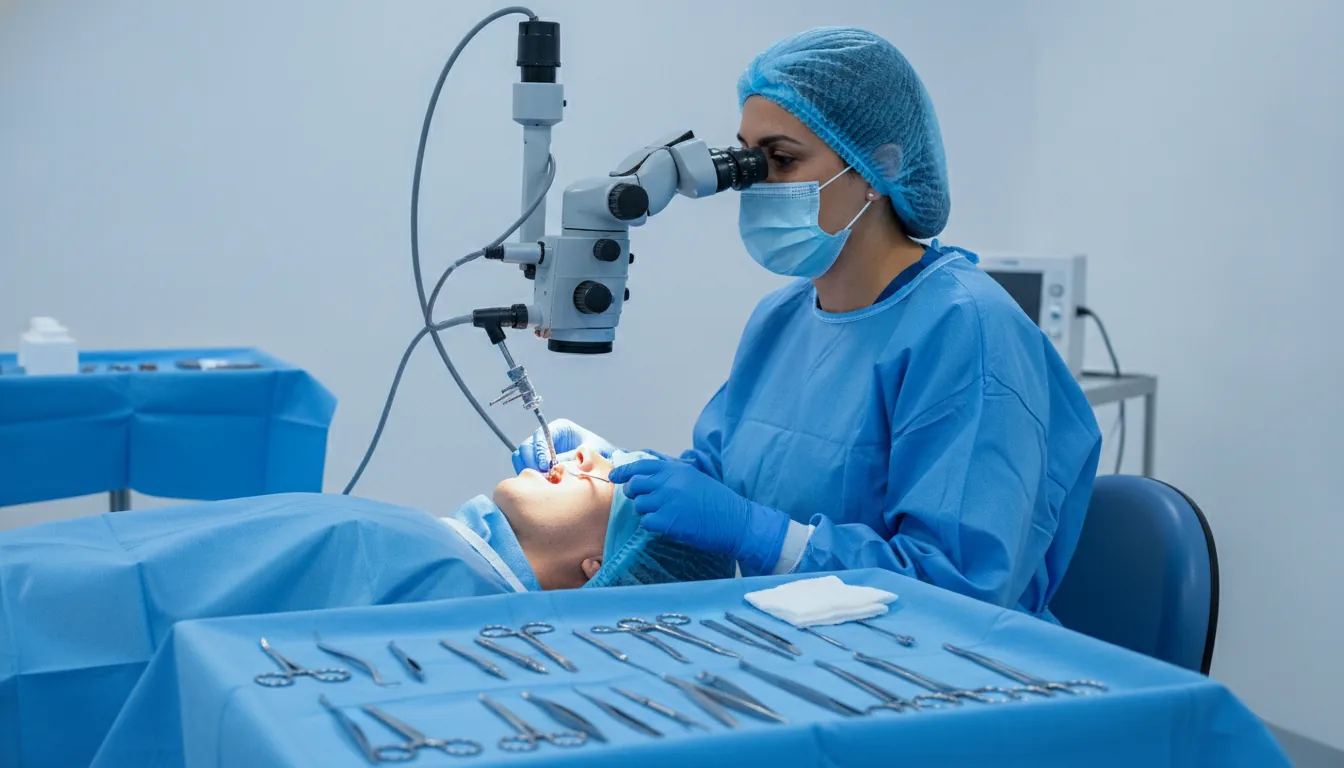
The vocal cords can develop benign lesions — nodules, polyps, cysts, oedema — often linked to vocal strain, reflux or smoking. These lesions present as a persistent hoarse, tired or muffled voice. Some lesions also require a sample to be taken for analysis. Vocal cord surgery is a microsurgery performed through the natural passages, with no incision: under general anaesthesia, a rigid endoscope (laryngoscope) exposes the vocal cords, and the surgeon operates under a microscope with extremely fine micro-instruments. The goal is to remove the lesion while scrupulously preserving the suppleness of the vocal cord, which guarantees voice quality. Vocal rest after the procedure and, often, speech therapy complete the surgical treatment for an optimal and lasting result. At Clinique Pasteur Tunis, this microsurgery benefits from an operating microscope and dedicated microsurgical instruments, with ENT surgeons attentive to restoring a natural voice.
Vocal cord surgery

When is it indicated?

Persistent hoarseness caused by a nodule, polyp or cyst

When the voice remains hoarse because of a small benign lesion, its removal by microsurgery restores a clear voice.

Chronic oedema of the vocal cords

Lasting swelling of the vocal cords, often linked to smoking, makes the voice deep and muffled; its treatment restores the voice's timbre.

Vocal cord lesion requiring a sample for analysis

Some lesions must be analysed under the microscope to determine their exact nature; the sample is taken with precision, with no incision.

Disabling vocal fatigue in voice professionals

Teachers, singers or public speakers can find their voice worn out by a lesion; correcting it allows them to recover their working tool.

Preparation

1ENT examination with fibroscopy or stroboscopy of the vocal cords
2Speech therapy assessment sometimes useful before the procedure
3Anaesthesia consultation
4Fast for 6 hours before the procedure
5Stopping smoking strongly recommended

Procedure

1

General anaesthesia

2

Exposure of the vocal cords using a laryngoscope, through the mouth

3

Microsurgery of the lesion under the microscope with micro-instruments

4

Maximum preservation of healthy vocal tissue

5

Monitored recovery, then return to the room

Duration

30 minutes to 1 hour

Aftercare & Recovery

Discharge takes place the same day or the following day. Strict vocal rest for a few days is essential, followed by a gradual return of the voice, often supported by speech therapy. Voice quality improves over the weeks.

Risks and side effects

Transient hoarseness while healing takes place
Temporary throat discomfort related to the laryngoscope
Possible recurrence if the contributing factors persist (vocal strain, smoking)

These risks remain rare. Your surgeon will inform you in detail before the procedure.

Request a Quote

Contact us to schedule a consultation or receive a personalized quote.

Request a Quote +216 36 402 000

At a glance

Duration: 30 minutes to 1 hour
Preparation: Required
Dedicated specialist team