
Hernia repair (inguinal, umbilical, hiatal)
Surgeries/General/Hernia repair

Hernia repair (inguinal, umbilical, hiatal)

Surgical repair of hernias of the abdominal wall and oesophageal hiatus, using minimally invasive or conventional techniques.

What is it?

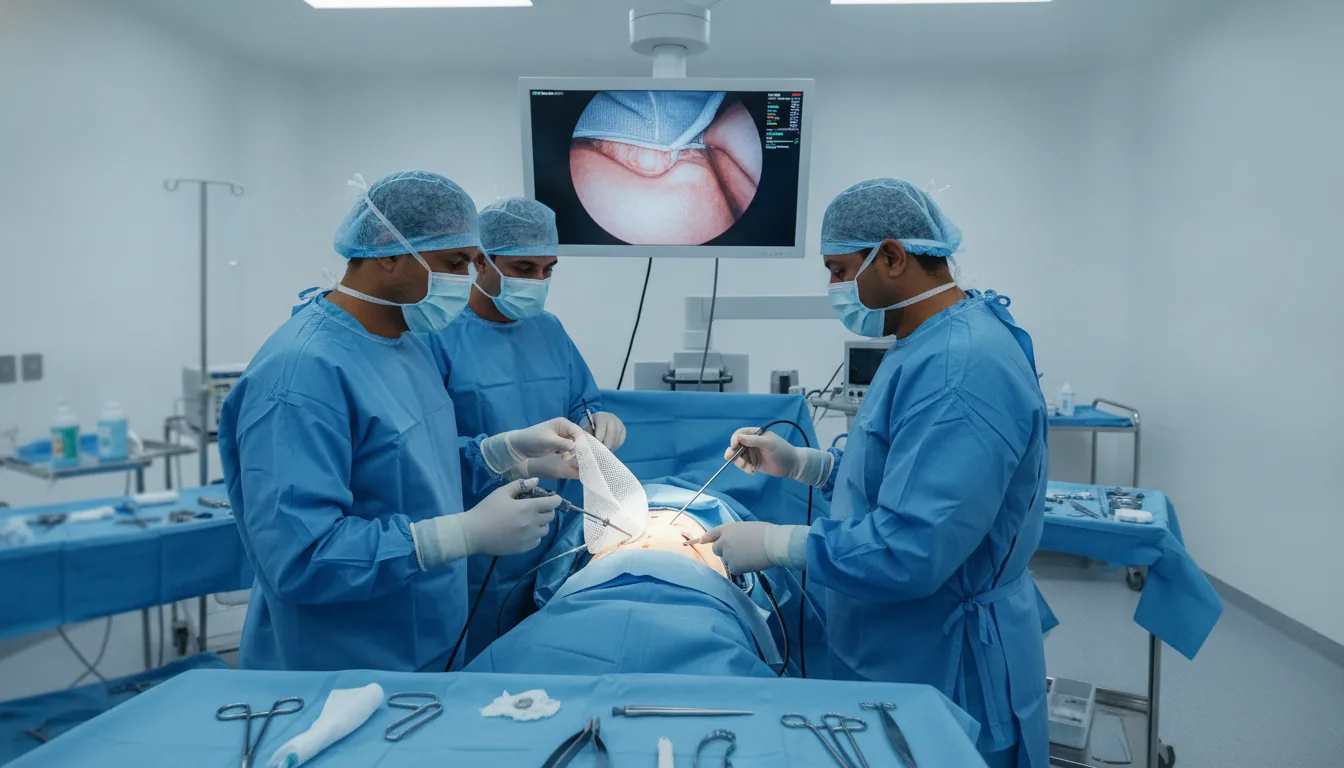
A hernia is the passage of part of the abdominal contents through a weak point in the wall. The most frequent are the inguinal hernia, in the groin, and the umbilical hernia, at the navel. A hiatal hernia, for its part, is the passage of part of the stomach into the chest through the diaphragm, often responsible for reflux. Hernia repair consists of returning the herniated contents to their place and solidly repairing the wall, most often by reinforcing it with a perfectly tolerated prosthetic mesh. For a hiatal hernia, the procedure repositions the stomach in the abdomen and rebuilds an effective anti-reflux mechanism. These procedures are performed laparoscopically whenever possible, with an uncomplicated recovery: limited pain, a short hospital stay and a quick return to normal activities. The technique is chosen according to the type of hernia, its size and the patient's profile. At Clinique Pasteur Tunis, hernia repairs are performed by experienced surgeons, as a short hospital stay in most cases, with personalised instructions for resuming activity provided at discharge.
Hernia repair (inguinal, umbilical, hiatal)

When is it indicated?

Bothersome or enlarging inguinal hernia

A lump in the groin that grows or becomes bothersome during exertion deserves to be repaired: the procedure is simple and recovery is quick.

Symptomatic umbilical or midline hernia

When a hernia of the navel or of the midline of the abdomen becomes painful or unsightly, surgical repair resolves the problem durably.

Hiatal hernia with reflux resistant to medical treatment

If part of the stomach rises into the chest and causes reflux that medication no longer controls, the procedure repositions the stomach and rebuilds an anti-reflux barrier.

Incisional hernia on a scar from previous surgery

An old abdominal scar can stretch and let the abdominal contents through: the wall is then repaired and reinforced with a prosthetic mesh.

Prevention of the risk of hernia strangulation

Operating on a hernia electively, before it suddenly becomes trapped, avoids emergency surgery and guarantees a smoother recovery.

Preparation

1Clinical examination and imaging if necessary
2Pre-operative blood tests
3Anaesthesia consultation
4Fast for 6 hours before the procedure
5Stopping smoking recommended to promote healing

Procedure

1

General or regional anaesthesia depending on the case

2

Laparoscopic approach or direct incision depending on the chosen technique

3

Return of the herniated contents to their place

4

Repair of the wall, reinforced with a prosthetic mesh if indicated

5

Closure of the incisions

Duration

45 minutes to 2 hours depending on the type of hernia

Aftercare & Recovery

Discharge takes place the same day or the next day in most cases. Walking resumes immediately, daily activities within a few days and physical exertion gradually according to the surgeon's instructions. Mesh repair offers strong and lasting results.

Risks and side effects

Temporary pain and swelling of the operated area
Possible small haematoma or seroma, resolving spontaneously
Infrequent recurrence thanks to prosthetic reinforcement techniques

These risks remain rare. Your surgeon will inform you in detail before the procedure.

Request a Quote

Contact us to schedule a consultation or receive a personalized quote.

Request a Quote +216 36 402 000

At a glance

Duration: 45 minutes to 2 hours depending on the type of hernia
Preparation: Required
Dedicated specialist team