
Liver and bile duct surgery
Surgeries/General/Hepatobiliary surgery

Liver and bile duct surgery

Specialised surgery for tumours and diseases of the liver and bile ducts, performed by a team expert in major surgery.

What is it?

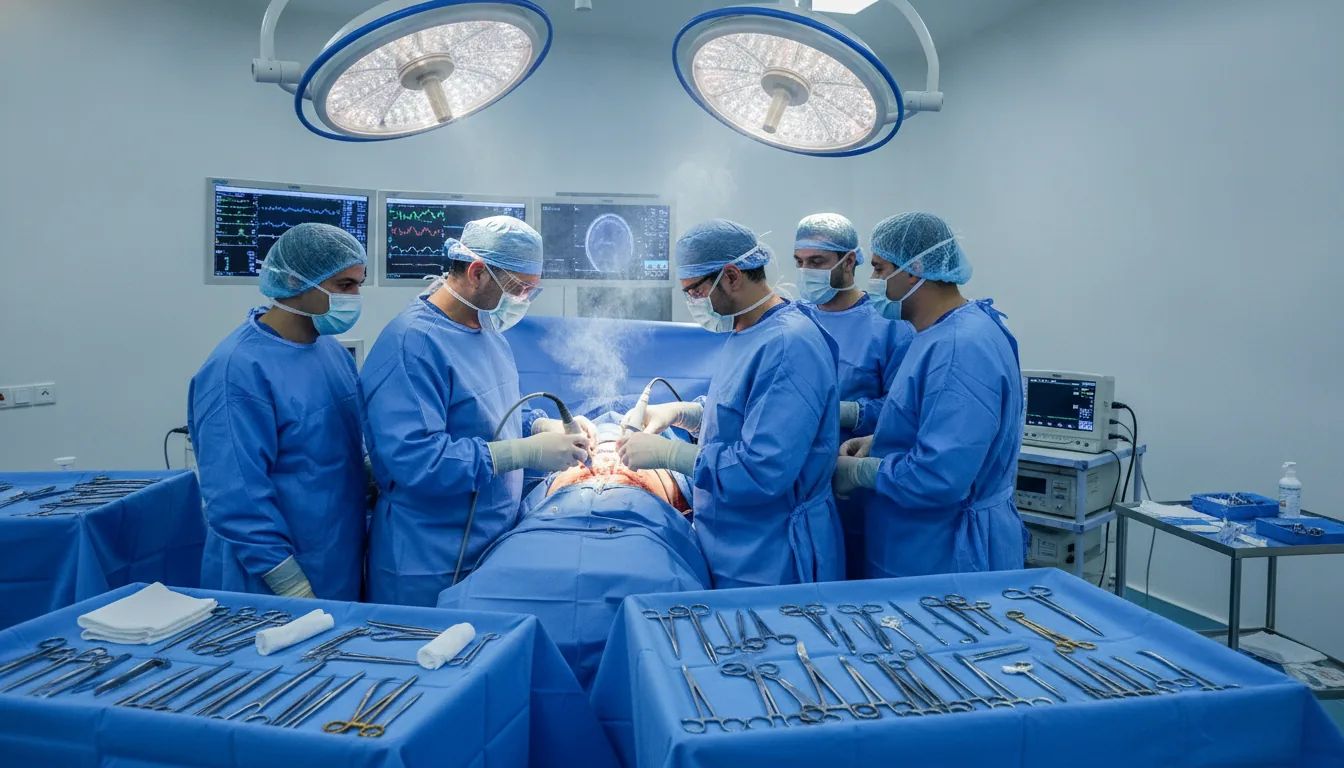
Liver and bile duct surgery, known as hepatobiliary surgery, treats tumours of the liver, benign or malignant, liver cysts, as well as diseases of the ducts that carry bile from the liver to the intestine: stones in the main bile duct, strictures or tumours of the bile ducts. The liver has a remarkable capacity for regeneration that allows the surgeon to remove part of it when necessary: this is liver resection, the extent of which is carefully planned using modern imaging. The remaining liver volume gradually takes over in the following weeks. This demanding surgery requires a team experienced in major surgery, specific equipment and a secure environment with intensive care available. The strategy is defined for each patient after a complete work-up and a multidisciplinary discussion for tumour-related conditions. At Clinique Pasteur Tunis, hepatobiliary surgery benefits from operating theatres equipped with the latest technologies, advanced intra-operative monitoring and a multipurpose intensive care unit ensuring close monitoring of the post-operative course.
Liver and bile duct surgery

When is it indicated?

Benign or malignant liver tumours amenable to resection

Thanks to its unique capacity for regeneration, the liver tolerates removal of its diseased part: the remaining volume gradually takes over.

Operable liver metastases

When a cancer from another organ has spread to the liver in a limited way, removing these lesions can be part of a treatment strategy with curative intent.

Large or symptomatic liver cysts

A liver cyst that grows, compresses neighbouring organs or causes pain can be treated surgically, with a generally uncomplicated recovery.

Stones in the main bile duct

Stones lodged in the duct that carries bile to the intestine can cause jaundice and infections: their extraction restores normal flow.

Strictures or tumours of the bile ducts

When the bile duct narrows or is the site of a tumour, specialised surgery restores the passage of bile to the intestine.

Preparation

1Complete liver imaging (CT scan, MRI) to plan the resection
2In-depth blood tests including liver function and coagulation
3Multidisciplinary team review of the case for tumour-related conditions
4Anaesthesia consultation
5Fast for 6 hours before the procedure

Procedure

1

General anaesthesia with advanced monitoring

2

Appropriate surgical approach, laparoscopic when possible

3

Exploration and precise identification of the vascular and biliary structures

4

Resection of the diseased area with maximum preservation of healthy liver

5

Rigorous control of haemostasis and biliary sealing

6

Closure and transfer to an appropriate monitoring unit

Duration

3 to 6 hours depending on the extent of the resection

Aftercare & Recovery

Initial monitoring takes place in a specialised unit, then the hospital stay continues for a few days on the ward. The remaining liver gradually regenerates over the following weeks. Regular follow-up with imaging and blood tests is organised after discharge.

Risks and side effects

Specialised surgery whose risks are controlled by an expert team and a secure environment
Temporary fatigue during the liver regeneration phase
Regular biological monitoring during convalescence

These risks remain rare. Your surgeon will inform you in detail before the procedure.

Request a Quote

Contact us to schedule a consultation or receive a personalized quote.

Request a Quote +216 36 402 000

At a glance

Duration: 3 to 6 hours depending on the extent of the resection
Preparation: Required
Dedicated specialist team